You’re standing in your living room, trying to decide between two of the most popular window styles on the market. Both look great. Both have loyal followings. But which one is actually right for your home?
Here’s the honest answer: casement windows and double-hung windows are both excellent choices, but they serve very different purposes. One offers superior energy efficiency and ventilation; the other gives you unmatched flexibility and easy cleaning.
In this guide, we’ll break down everything you need to know about casement windows vs. double-hung windows—from cost and energy efficiency to cleaning and style. By the end, you’ll know exactly which one fits your Arizona home.
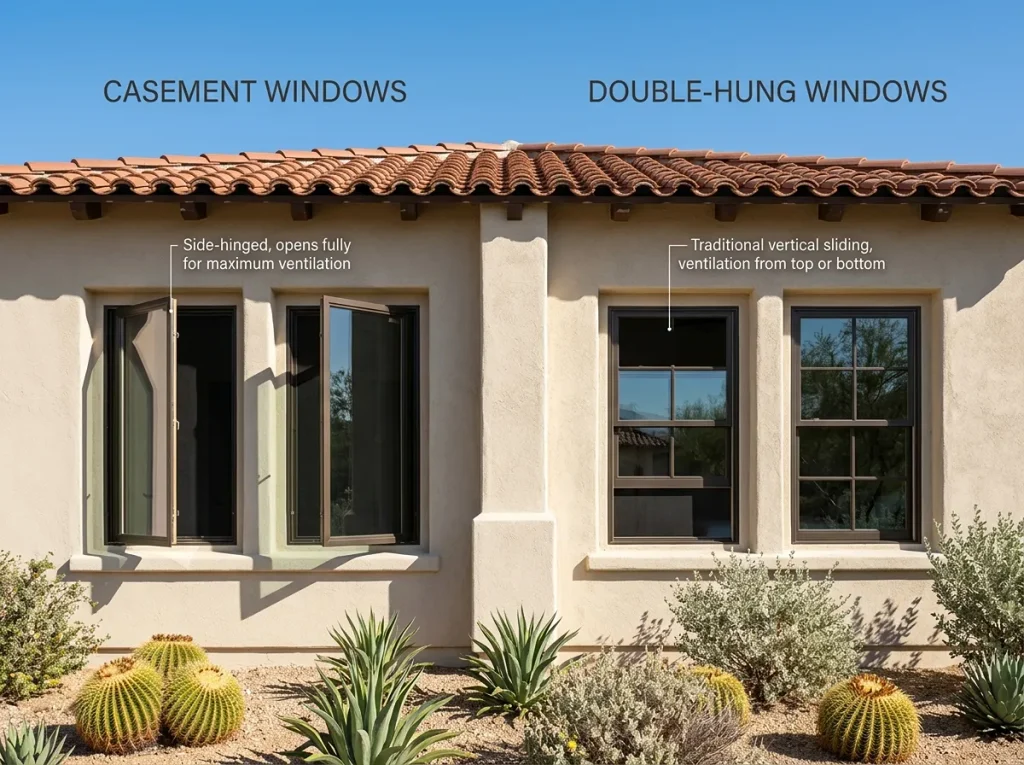
Table of Content
Casement vs. Double-Hung: Quick Comparison
Energy Efficiency: Casement Takes the Lead
Cleaning: Double-Hung’s Biggest Advantage
Security: Casement Windows Are More Secure
Real-World Conditions: The “If/Then” Guide
The Regrets Homeowners Mention Most
Key Takeaways / Quick Summary
- Casement windows cost 10–15% more than double-hung windows at wholesale, with installed prices ranging from $450–$1,800 vs. $400–$900
- Casement windows are more energy efficient due to their compression seal—typically 5–15% better thermal performance than equivalent double-hung windows
- Casement windows open 100% for maximum ventilation; double-hung windows only open about 50%
- Double-hung windows are easier to clean with tilt-in sashes that let you wash both sides from inside
- Casement windows offer superior security with multi-point locking systems
- Double-hung windows don’t require exterior clearance, making them ideal for walkways and patios
- Casement windows are the clear winner for energy efficiency and ventilation; double-hung wins on versatility and ease of cleaning
What Is a Casement Window?
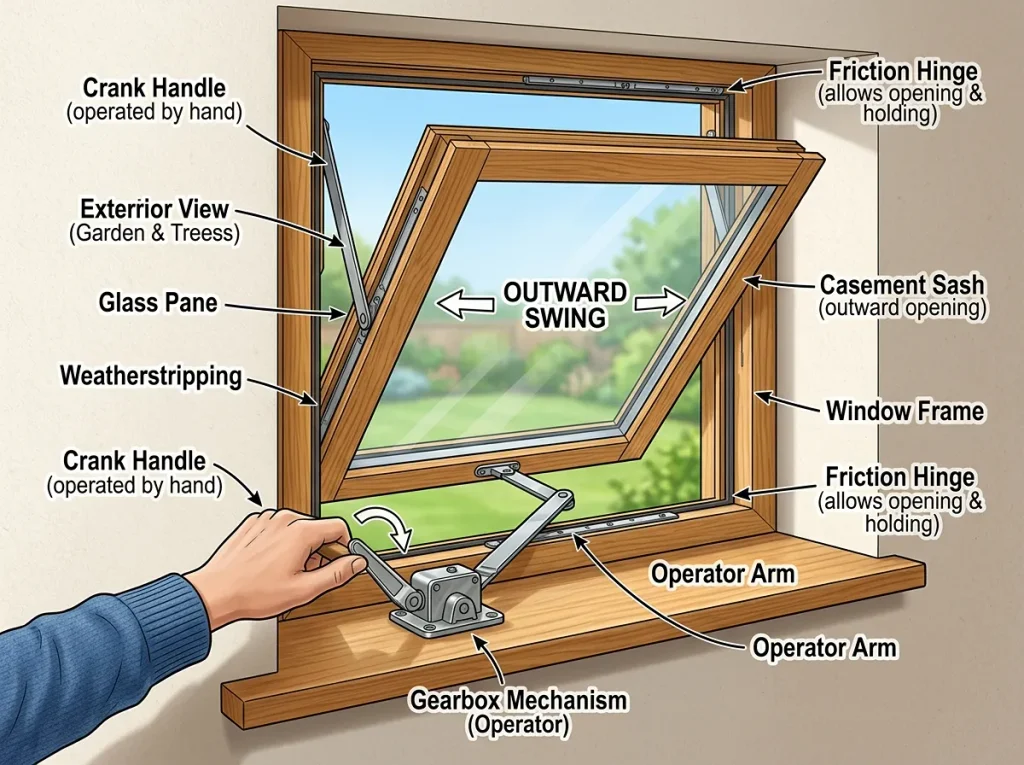
A casement window is hinged on one side and opens outward like a door using a crank mechanism. When you turn the crank, the sash swings open, allowing fresh air to flow in from top to bottom.
What makes casement windows distinctive is their single-sash design—one large pane of glass with minimal framing. This gives you an unobstructed view of the outdoors.
Best for: Modern homes, hard-to-reach places like above kitchen sinks, and homeowners who prioritize energy efficiency and ventilation.
What Is a Double-Hung Window?
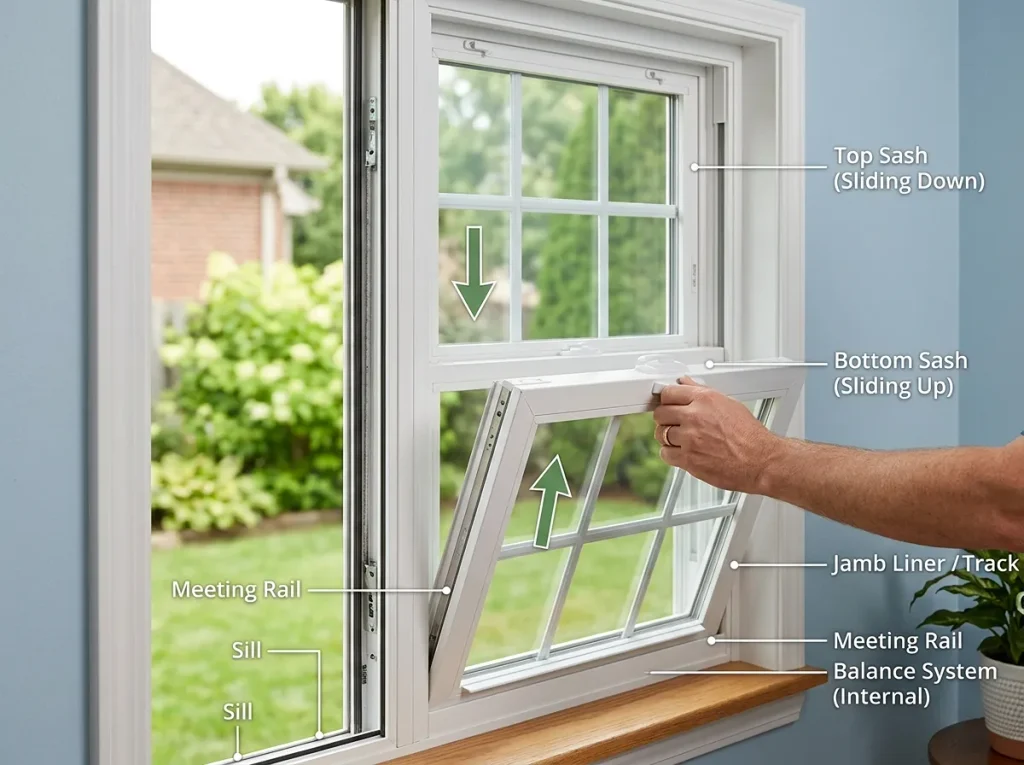
A double-hung window has two sashes that slide vertically within the frame. You can open the top sash, the bottom sash, or both at the same time. This is the classic “tic-tac-toe” window most people picture when they think of a traditional home.
The sashes slide within tracks, using weatherstripping and compression seals to help keep outside air where it belongs. Many modern double-hung windows feature tilt-in sashes that make cleaning the exterior glass from inside incredibly easy.
Best for: Traditional and historic homes, second-story windows, and areas with limited exterior space.
Casement vs. Double-Hung: Quick Comparison
| Feature | Casement Windows | Double-Hung Windows |
| Operation | Crank opens outward like a door | Sashes slide up and down |
| Installed Cost | $450 – $1,800 | $400 – $900 |
| Wholesale Premium | 10–15% more than double-hung | Lower cost, high production volume |
| Energy Efficiency | Superior—compression seal on all 4 sides | Good, but less airtight |
| Ventilation | 100% of sash opens | ~50% opens (one sash at a time) |
| Cleaning | Requires exterior access or specialty hardware | Easy—tilt-in sashes |
| Exterior Space | Needs clearance to swing outward | No exterior clearance needed |
| Security | Multi-point locking, very secure | Good, but fewer locking points |
| Window AC Units | Won’t fit | Can accommodate |
| Aesthetic | Modern, sleek, unobstructed views | Traditional, classic, timeless |
Cost Comparison
Let’s talk money first, because that’s often where the decision starts.
Casement windows are more expensive than double-hung windows. At wholesale, casements run about 10–15% higher—$275–$420 vs. $240–$380 for a comparable double-hung vinyl window.
The installed cost breakdown looks like this:
| Window Type | Installed Cost Range |
| Double-Hung (Vinyl) | $400 – $900 |
| Casement (Vinyl) | $500 – $1,800 |
Why the price difference? Casement windows have more complex hardware—the crank mechanism, multi-gear systems, and stainless steel hinges add 12–18% to fabrication costs compared to a simple sash lock. Double-hung windows, on the other hand, dominate more than 60% of the U.S. retrofit market, so factories run longer, highly automated production lines that keep costs down.
The bottom line: If budget is your primary concern, double-hung windows are the more affordable option. However, many homeowners find that the energy savings from casement windows recoup the premium in under 5 years.
Energy Efficiency: Casement Takes the Lead
Here’s where casement windows really shine.
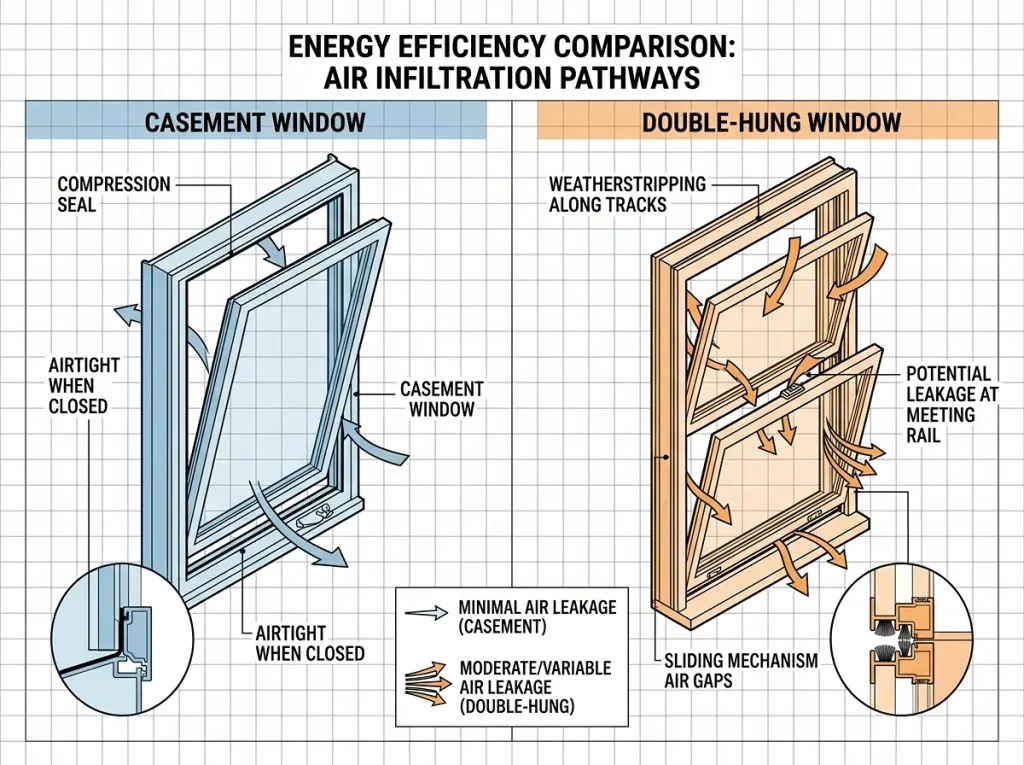
Casement windows are among the most energy-efficient window styles available. When you close a casement window, the sash presses tightly against the frame on all four sides, creating a compression seal that blocks airflow. This tight seal can significantly affect energy savings, especially in extreme climates like Arizona.
Double-hung windows, by contrast, use sliding sashes with weatherstripping. They have more seams and moving parts, which means higher air leakage rates. While modern double-hung windows perform well, they don’t seal as tightly as casement windows.
According to the U.S. Department of Energy’s Building Science Education, casement windows “generally have lower air leakage rates than sliding windows because the sash closes by pressing against the frame”. Single-hung and double-hung windows “generally have higher air leakage rates than projecting or hinged windows”.
In fact, casement windows typically deliver 5 to 15 percent better thermal performance than an equivalent double-hung window from the same manufacturer with the same glass package. Casement designs often achieve ENERGY STAR Tier 2–3 ratings, while double-hung models typically meet Tier 1–2 benchmarks.
For Arizona homeowners: This energy efficiency difference matters. In our extreme heat, a tighter seal means less cool air escaping and less hot air entering—which translates directly to lower cooling bills.
Ventilation: 100% vs. 50%
If fresh air is important to you, this is a major difference.
A casement window opens fully—the entire sash swings outward, exposing 100% of the window opening to airflow. It can also catch side breezes and direct airflow into your home like a sail. A fully open double-hung window, by contrast, can only expose half of the window area at most, because one sash is always covering the other half of the frame.
Double-hung windows do offer one ventilation advantage: flexibility. You can open the top sash, the bottom sash, or both. This allows you to let warm air escape from the top while bringing in fresh air from below—a feature that’s particularly useful in warmer climates.
The verdict: If you want maximum airflow, casement windows are the clear winner. If you value flexible, controlled ventilation, double-hung windows have the edge.
Cleaning: Double-Hung’s Biggest Advantage
This is where double-hung windows win, hands down.
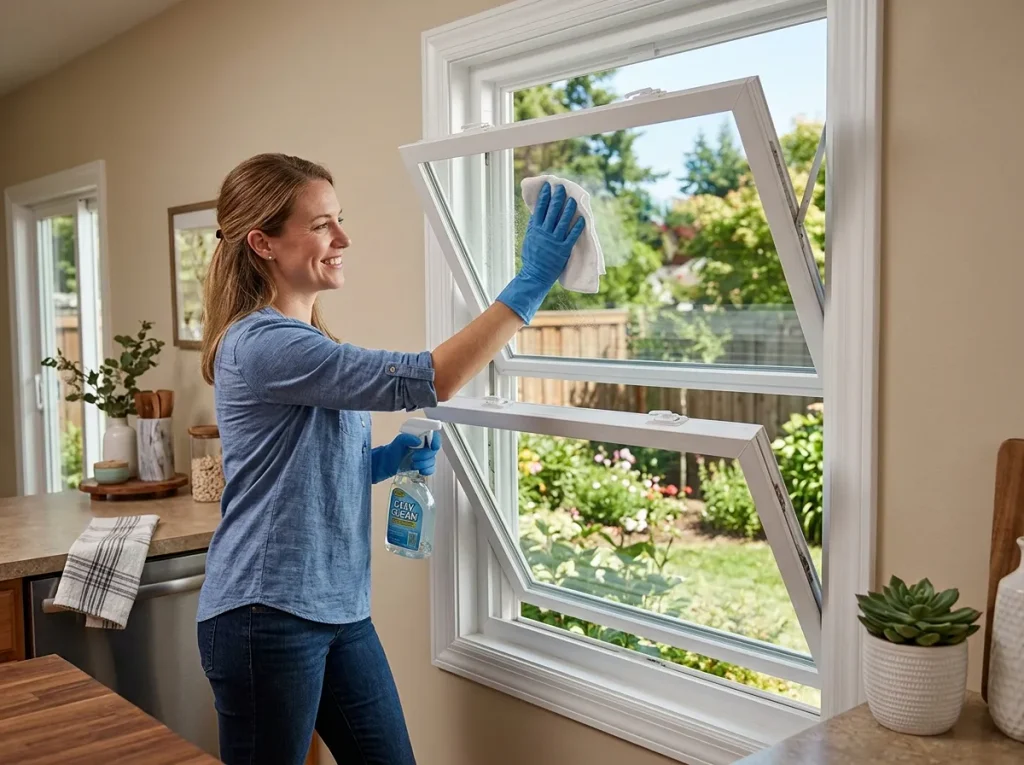
Most modern double-hung windows have tilt-in sashes that allow you to clean both the interior and exterior glass surfaces from inside your home. This is a huge advantage, especially for second-story windows where exterior access requires a ladder.
Casement windows, by contrast, swing outward. You can’t tilt them inward to clean the outside. You’ll need to go outside and clean them from there, which can be challenging—or even dangerous—for higher floors.
That said, some casement windows feature specialty hardware like Easy Wash® hinges that leave room between the sash and frame so you can reach through from inside to clean the exterior. And for first-floor installations, cleaning casements is straightforward—the window swings open wide enough to reach both sides.
The verdict: For multi-story homes, double-hung windows are much easier to maintain. For single-story homes, the cleaning difference is less significant.
Space Considerations
Double-hung windows open vertically—they don’t protrude outside at all. This makes them ideal for:
- Walkways and pathways
- Patios and decks
- Areas with landscaping or furniture
- Narrow spaces between buildings
Casement windows swing outward, which means they need clear exterior space. They can’t open onto walkways, patios, or areas with shrubs or furniture. In high-wind areas, they can also catch wind like a sail and potentially get damaged.
The verdict: If your windows face a walkway, patio, or any high-traffic area, double-hung windows are the practical choice.
Security: Casement Windows Are More Secure
Security is a top priority for most homeowners, and here casement windows have a clear advantage.
Casement windows typically come with multi-point locking systems that latch at multiple points along the frame. When locked, they are extremely difficult to force open from the outside. The hook-shaped locks are embedded in the frames, making them one of the most secure window types available.
Double-hung windows typically have one or two central locks at the meeting rail where the sashes overlap. Higher quality double-hung windows offer more secure features, but they don’t match the multi-point locking of casements.
However, double-hung windows offer a safety feature that casements don’t: you can lock the bottom sash and open just the top sash to keep children and pets safe while still getting ventilation.
The verdict: Casement windows win on security. Double-hung windows win on child/pet safety flexibility.
Aesthetics and Style
Your windows play a big role in your home’s curb appeal.
Casement windows offer a clean, modern aesthetic with uninterrupted glass and no center mullion. They’re a natural fit for contemporary, Prairie-style, and modern homes that emphasize horizontal lines and open views.
Double-hung windows are the timeless classic. They’re strongly associated with Colonial, Victorian, Craftsman, and Cape Cod styles. Their symmetrical design makes them a natural choice for homes with traditional architecture.
The verdict: If you have a modern home, casement windows will complement it beautifully. If you have a traditional or historic home, double-hung windows are the more authentic choice.
Window AC Units and Screens
Two practical considerations that often get overlooked:
Window AC units: Casement windows won’t fit standard window air conditioning units. Double-hung windows can accommodate them.
Screens: For outward-opening casement windows, screens are installed on the interior side. This means they’re more protected from weather and dirt, but they don’t provide the same protection against falling branches or debris as exterior screens. Double-hung windows have screens on the exterior side, which can accumulate more dirt but offer better physical protection.
Real-World Conditions: The “If/Then” Guide
Here’s how to decide based on your specific situation:
If energy efficiency is your top priority → Then choose casement windows. Their compression seal delivers 5–15% better thermal performance, which means lower cooling bills in Arizona’s extreme heat.
If you have second-story windows → Then choose double-hung windows with tilt-in sashes. Cleaning exterior glass from inside is a game-changer for multi-story homes.
If your windows face a walkway or patio → Then choose double-hung windows. They don’t need exterior clearance, so they won’t block pathways.
If you want maximum ventilation → Then choose casement windows. They open 100% and catch breezes from different angles.
If you’re on a tight budget → Then choose double-hung windows. They’re significantly more affordable, with lower upfront costs and simpler mechanisms.
If security is your main concern → Then choose casement windows with multi-point locking systems.
If you have hard-to-reach window locations (above a sink, behind a counter) → Then choose casement windows. The crank mechanism makes them easy to operate with one hand.
If you have children or pets → Then consider double-hung windows for the safety feature of opening only the top sash.
If you use window AC units → Then you’ll need double-hung windows.
If you have a modern or contemporary home → Then choose casement windows.
If you have a traditional, Colonial, or historic home → Then choose double-hung windows.
The Regrets Homeowners Mention Most
After years of helping Arizona homeowners choose between these two styles, here are the most common regrets:
Mistake 1: Not considering exterior clearance
A lot of homeowners install casement windows near walkways, only to realize the window can’t open fully because it hits the path. Check what’s outside before you choose.
Mistake 2: Choosing casements for second-story windows without a cleaning plan
Cleaning exterior glass on second-story casement windows requires a ladder or professional service. If you’re not prepared for that, double-hung windows with tilt-in sashes are the smarter choice.
Mistake 3: Assuming all windows are equally energy efficient
They’re not. The 5–15% thermal performance difference between casement and double-hung windows adds up over time—especially in Arizona’s extreme climate.
Mistake 4: Skimping on quality to afford casement windows
Buying a cheaper casement window to get the style you want can backfire. Cheap hardware fails, seals don’t compress properly, and you end up with a window that performs worse than a well-made double-hung.
Mistake 5: Not thinking about window AC units
If you rely on window AC units, casement windows simply won’t work. Plan ahead.
Frequently Asked Questions
Which is more energy efficient: casement or double-hung windows?
Casement windows are more energy efficient. Their compression seal on all four sides creates a tighter barrier against air leakage. Casement windows typically deliver 5–15% better thermal performance than equivalent double-hung windows.
Are casement windows more expensive than double-hung?
Yes. Casement windows cost about 10–15% more at wholesale and installed prices range from $450–$1,800, compared to $400–$900 for double-hung windows. The more complex crank mechanism and hardware add to the cost.
Which window is easier to clean?
Double-hung windows are easier to clean. Most modern models have tilt-in sashes that let you wash both sides of the glass from inside your home. Casement windows require exterior access or specialty hardware.
Can I install a window AC unit in a casement window?
No. Standard window AC units are designed for double-hung windows. Casement windows won’t fit standard units.
Which window style is more secure?
Casement windows are more secure. They typically feature multi-point locking systems that make them extremely difficult to force open from the outside.
Which window is better for a traditional home?
Double-hung windows are the classic choice for traditional, Colonial, Victorian, and Craftsman-style homes. Casement windows work better with modern and contemporary architecture.
Do casement windows provide better ventilation?
Yes. Casement windows open 100% and can catch breezes from different angles. Double-hung windows only open about 50% at a time.
Which window requires more maintenance?
Casement windows require more maintenance. The crank mechanism and hinges can wear out over time and may need periodic lubrication or repair. Double-hung windows have fewer moving parts and simpler mechanisms.
Can I use blinds or shades with casement windows?
Yes, but finding window treatments that work well with crank handles and inward-opening screens can be tricky. Double-hung windows work with standard blinds and shades.
Which window style lasts longer in Arizona’s heat?
Both styles can last 20–30 years with quality materials and proper installation. However, casement windows’ compression seals can be more susceptible to UV damage over time, while double-hung windows’ sliding tracks may need occasional cleaning in dusty conditions.
Why Choose Windowz4Less Arizona?
Choosing between casement and double-hung windows is a big decision. The right choice depends on your home’s architecture, your budget, your priorities, and how you use your space.
Windowz4Less Arizona is here to help you make the right choice.
- Local expertise — We know Arizona’s unique climate and recommend windows that perform in extreme heat
- Quality products — We offer a range of casement windows and double-hung options from leading manufacturers
- Professional installation — Our team is trained, insured, and follows industry best practices
- Transparent pricing — No hidden fees, no surprises
- Free estimates — No-obligation quotes with honest, straightforward advice
- Serving Mesa, Phoenix, and surrounding areas — We’re your local experts
Your Next Step: Find the Right Window for Your Home
Both casement and double-hung windows are excellent choices. The right one depends on your home, your priorities, and your lifestyle. If you’re still not sure, that’s okay—this is a big decision, and you deserve expert guidance.
Contact Windowz4Less Arizona today for a free, no-obligation estimate. We’ll assess your home, discuss your priorities, and help you choose the windows that are right for you.