You’ve decided to invest in a steel security door. Smart choice. But now you’re staring at a sea of options—different gauges, different locking systems, different finishes, different price points. And you’re wondering: How do I know which one is actually high-quality?
Here’s the honest truth: not all steel security doors are created equal. Some are built to last decades and withstand serious force. Others look the part but cut corners on the features that actually matter—thin steel, weak locks, and frames that can be pried open with a crowbar.
The difference between a high-quality steel security door and a cheap imitation comes down to a few critical features. Know what to look for, and you’ll make a smart investment that protects your home for decades. Miss them, and you could end up with a false sense of security.
In this guide, we’ll walk you through exactly what to look for when choosing a steel security door—from steel gauge and locking systems to frame construction and finishes. By the end, you’ll know how to spot quality and avoid the traps.
Table of Contents
Feature #1: Steel Gauge and Construction
Feature #3: Frame Construction and Anchoring
Feature #4: Hinges and Hardware
Feature #5: Glass and Screen Options
Feature #6: Finish and Weather Resistance
Feature #7: Certifications and Warranties
Steel Security Door Features Comparison
Real-World Conditions: The “If/Then” Guide
The Regrets Homeowners Mention Most
Why Choose Windowz4Less Arizona?
Your Next Step: Choose the Right Security Door for Your Home
Key Takeaways / Quick Summary
- Steel gauge matters most—look for 12- or 14-gauge steel for the door panel and 16-gauge or thicker for the frame
- Multi-point locking systems with 3+ locking points provide the highest level of security
- Reinforced frames that anchor into structural studs are essential—stucco alone provides no security
- Quality hinges with non-removable pins prevent the door from being lifted out of the frame
- Powder-coated finishes resist rust, fading, and scratching far better than paint
- Impact-resistant glass is essential if your door has glass panels
- Professional installation is critical—even the best door can be compromised by poor installation
- Look for certifications like ANSI/BHMA Grade 1 or 2 for locks and hardware
Feature #1: Steel Gauge and Construction
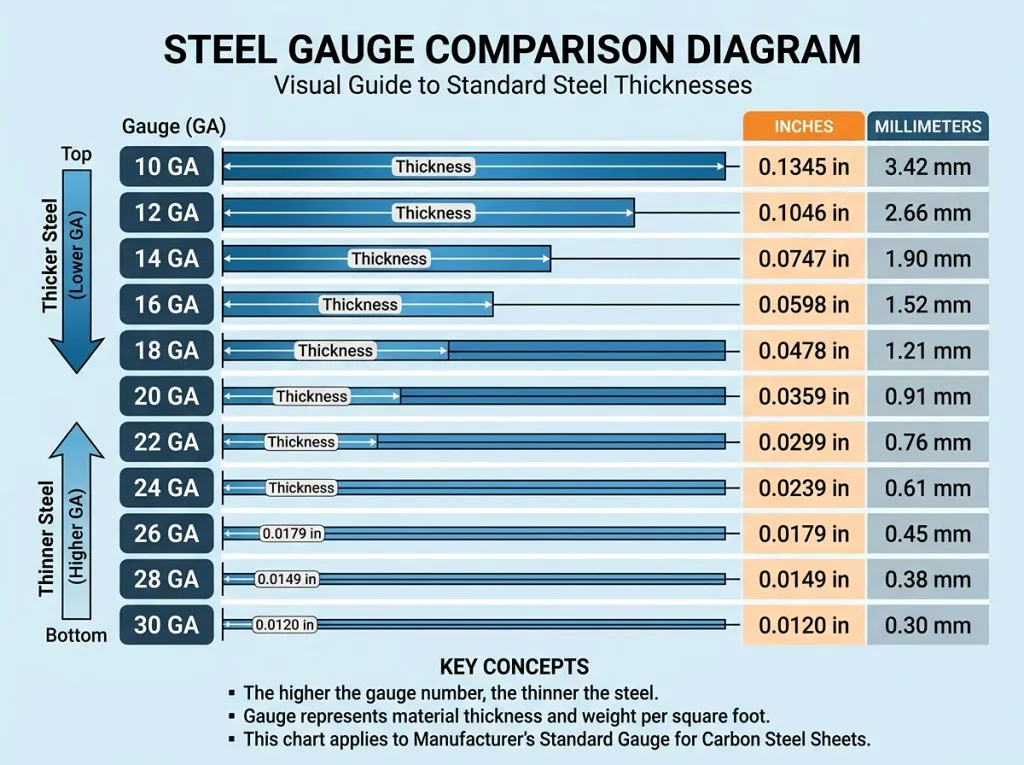
The gauge of the steel is the single most important factor in determining a security door’s strength. Here’s what you need to know:
What is steel gauge? Gauge refers to the thickness of the steel. Lower numbers mean thicker steel. So 12-gauge is thicker and stronger than 16-gauge.
What to look for:
- Door panel: 12- or 14-gauge steel for maximum strength. Thinner steel (16-gauge or higher) is more vulnerable to cutting and prying.
- Frame: 16-gauge or thicker. The frame is the backbone of the door—if it’s thin, the door won’t hold up.
- Reinforced corners: High-quality doors have welded or reinforced corners, not just bent metal.
Why it matters: A door made from thin steel can be cut through with a reciprocating saw or pried open with a crowbar. Thicker steel resists these attacks, giving you time to call for help or for the intruder to give up.
What to avoid: Doors with steel thinner than 16-gauge. If the spec sheet doesn’t list the gauge, ask. If they can’t tell you, walk away.
Feature #2: Locking Systems
Your locking system is the heart of your security door. Here’s what to look for:
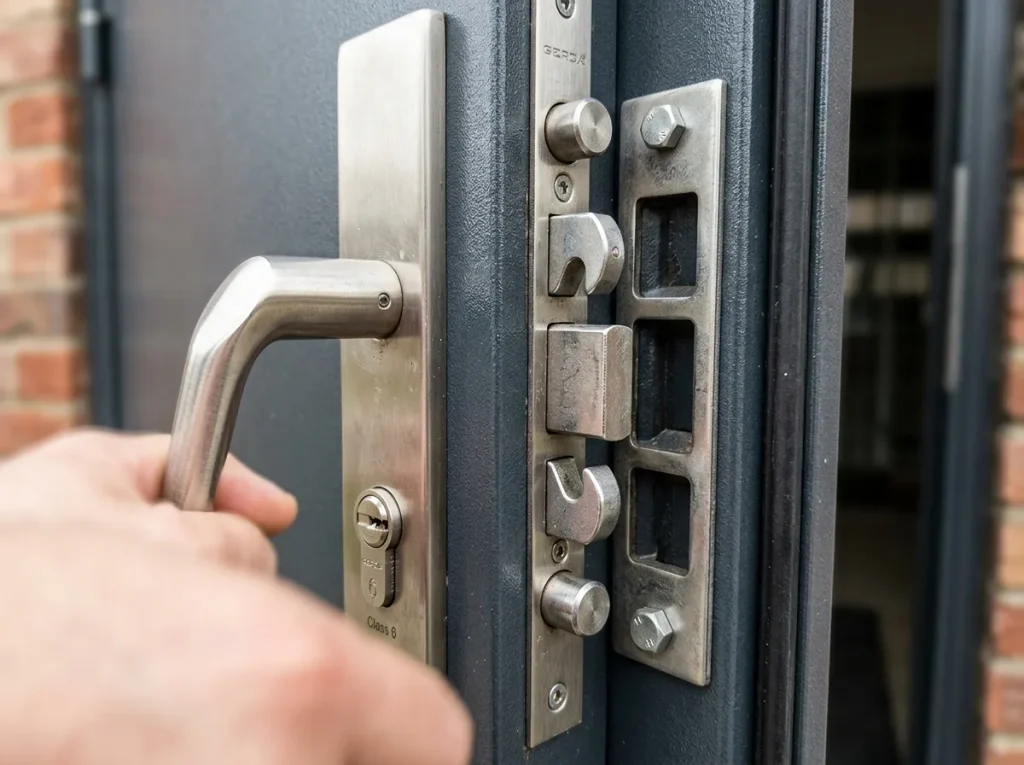
Multi-Point Locking Systems
What to look for: A multi-point locking system that secures the door at three or more points—typically top, middle, and bottom. When you lock the door, bolts extend into the frame at multiple locations.
Why it matters: A door with a single lock can be forced open at the corners or bottom. Multi-point systems make this nearly impossible. They’re standard on high-security doors and essential for maximum protection.
Deadbolts
What to look for:
- Grade 1 or Grade 2 deadbolt — the highest residential security ratings
- 1-inch throw — the bolt should extend at least 1 inch into the frame
- Solid steel construction — not hollow or pot metal
- Anti-pick and anti-bump technology — prevents common lock-picking techniques
Why it matters: A cheap deadbolt can be picked, bumped, or snapped in seconds. A quality deadbolt can withstand these attacks.
Smart Lock Integration
What to look for: Compatibility with smart locks that offer keypad, fingerprint, or phone access. Kwikset’s SmartKey Security technology protects against advanced break-in techniques and allows homeowners to re-key their locks in seconds.
Why it matters: Smart locks eliminate the vulnerability of hidden keys and let you control access remotely. They’re a valuable addition to any security door.
Feature #3: Frame Construction and Anchoring
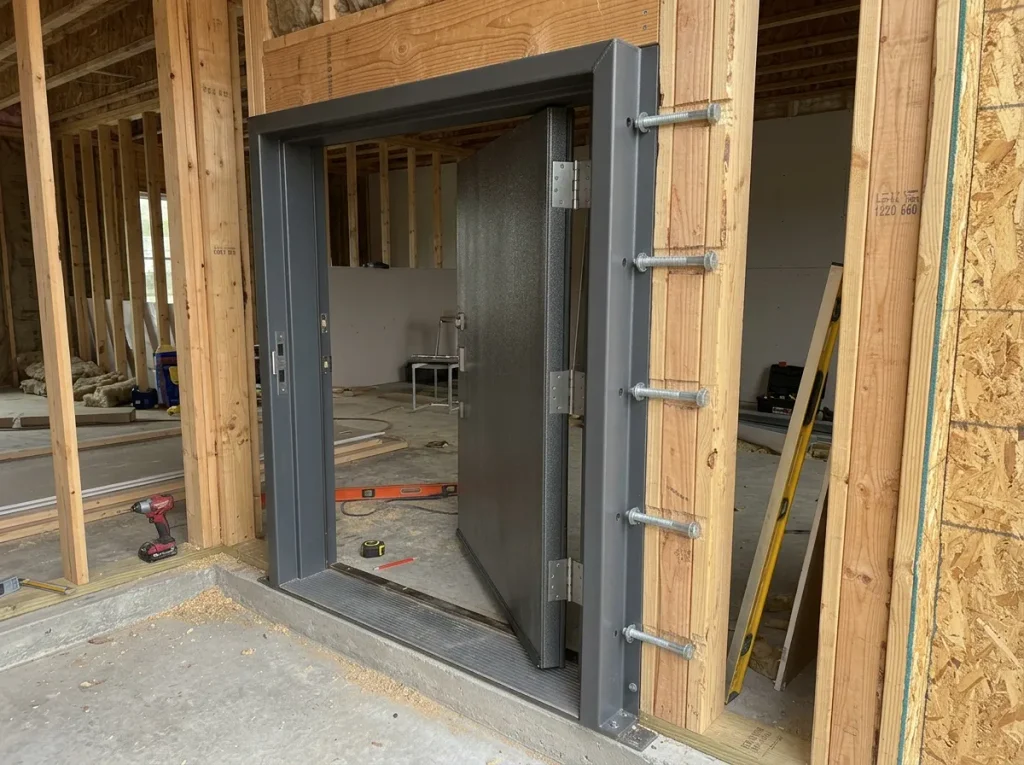
Here’s something most homeowners don’t realize: the frame is often the weakest point of a security door system. When someone kicks or pries a door, the force is concentrated on the frame—not the door itself.
Frame Strength
What to look for:
- Heavy-gauge steel frame — at least 16-gauge, preferably thicker
- Reinforced corners — welded or mechanically reinforced
- Solid construction — no hollow or thin sections
Why it matters: A weak frame will bend or break under force, even if the door panel itself is strong.
Anchoring
What to look for:
- Anchors that go into structural studs — not just stucco or drywall
- 3-inch or longer screws — long enough to reach the studs behind the wall
- Multiple anchor points — along the entire frame
Why it matters: If the door is only anchored into stucco, an intruder can rip it out of the wall. Anchoring into structural studs makes the door virtually impossible to remove by force.
Arizona tip: In Arizona’s stucco homes, proper anchoring requires cutting back the stucco to access the structural framing. This requires skill and experience—not all installers know how to do this correctly.
Feature #4: Hinges and Hardware
Don’t overlook the hinges. A door is only as secure as its weakest component.
Security Hinges
What to look for:
- Nylon or stainless steel hinges — resist wear and tampering
- Non-removable pins — prevent hinges from being popped out
- Security studs — interlock the door and frame when closed
Why it matters: Standard hinges can be removed from the outside, allowing an intruder to lift the door out of the frame. Security hinges prevent this.
Handles and Hardware
What to look for:
- Solid metal construction — not hollow or plastic
- Through-bolted handles — secured from both sides, not just screwed in from one side
- Reinforced strike plates — with 3-inch screws into the studs
Why it matters: Cheap handles can be broken or pried off. Through-bolted handles are much more secure.
Feature #5: Glass and Screen Options
If your security door includes glass or screen panels, here’s what to look for:
Glass
What to look for:
- Impact-resistant or laminated glass — much harder to break than standard glass
- Low-E glass — reflects infrared heat, essential in Arizona
- Decorative or frosted options — for privacy while letting in light
Why it matters: An intruder can break a glass panel and reach inside to unlock the door. Impact-resistant glass makes this much more difficult.
Screens
What to look for:
- Heavy-duty stainless steel mesh — not standard fiberglass screen
- Reinforced frame — prevents the screen from being easily removed
- Tight weave — keeps out insects and debris
Why it matters: A cheap screen can be cut or pushed in easily. Heavy-duty mesh provides real protection.
Feature #6: Finish and Weather Resistance
Arizona’s extreme sun and heat can destroy cheap finishes in a few years. Here’s what to look for:
Powder-Coated Finish
What to look for: Powder-coated finishes are the gold standard for steel security doors. The powder is electrostatically applied and baked on, creating a durable, uniform finish that resists rust, fading, and scratching.
Why it matters: Painted finishes chip, peel, and fade. Powder coating lasts for decades, even in Arizona’s harsh climate.
UV Resistance
What to look for: UV-resistant finishes that won’t fade or chalk in the sun.
Why it matters: Arizona’s intense UV exposure degrades cheap finishes quickly. A quality finish will maintain its appearance for years.
Rust Prevention
What to look for: Galvanized or zinc-coated steel underneath the powder coat for maximum rust resistance.
Why it matters: Even powder-coated steel can rust if moisture penetrates the finish. Galvanized steel provides an extra layer of protection.
Feature #7: Certifications and Warranties
Certifications
What to look for:
- ANSI/BHMA Grade 1 or 2 for locks and hardware
- AAMA certification for the door assembly
- Energy Star if the door has glass panels
Why it matters: Certifications mean the product has been independently tested and meets specific performance standards.
Warranties
What to look for:
- Lifetime warranty on the door frame and structure
- 5–10 year warranty on hardware and locks
- Finish warranty — at least 5 years
- Professional installation requirement — most manufacturers require it for warranty coverage
Why it matters: A strong warranty signals that the manufacturer stands behind their product.
Steel Security Door Features Comparison
| Feature | Low Quality | High Quality |
| Steel Gauge (Door) | 18–20 gauge | 12–14 gauge |
| Steel Gauge (Frame) | 20+ gauge | 16 gauge or thicker |
| Locking System | Single deadbolt | Multi-point (3+ points) |
| Deadbolt Grade | Grade 3 | Grade 1 or 2 |
| Frame Anchoring | Stucco only | Structural studs |
| Hinges | Standard, removable pins | Security hinges, non-removable pins |
| Finish | Painted | Powder-coated |
| Glass | Standard | Impact-resistant / laminated |
| Screen | Fiberglass | Stainless steel mesh |
| Warranty | 1–2 years | Lifetime (frame), 5–10 years (hardware) |
Real-World Conditions: The “If/Then” Guide
Here’s how to prioritize features based on your specific situation:
If you’re on a tight budget → Then prioritize steel gauge and locking system above all else. A 14-gauge door with a multi-point locking system and professional installation will protect you far better than a 18-gauge door with fancy finishes.
If you want maximum security → Then choose a 12-gauge door with a multi-point locking system, reinforced frame, security hinges, and impact-resistant glass. This is the highest level of protection available.
If you live in a high-crime area → Then prioritize steel gauge, locking system, and anchoring. These are the features that actually stop intruders. Don’t compromise on them.
If you have a stucco exterior → Then make sure your installer knows how to anchor into structural studs. This is critical—and not all installers know how to do it correctly.
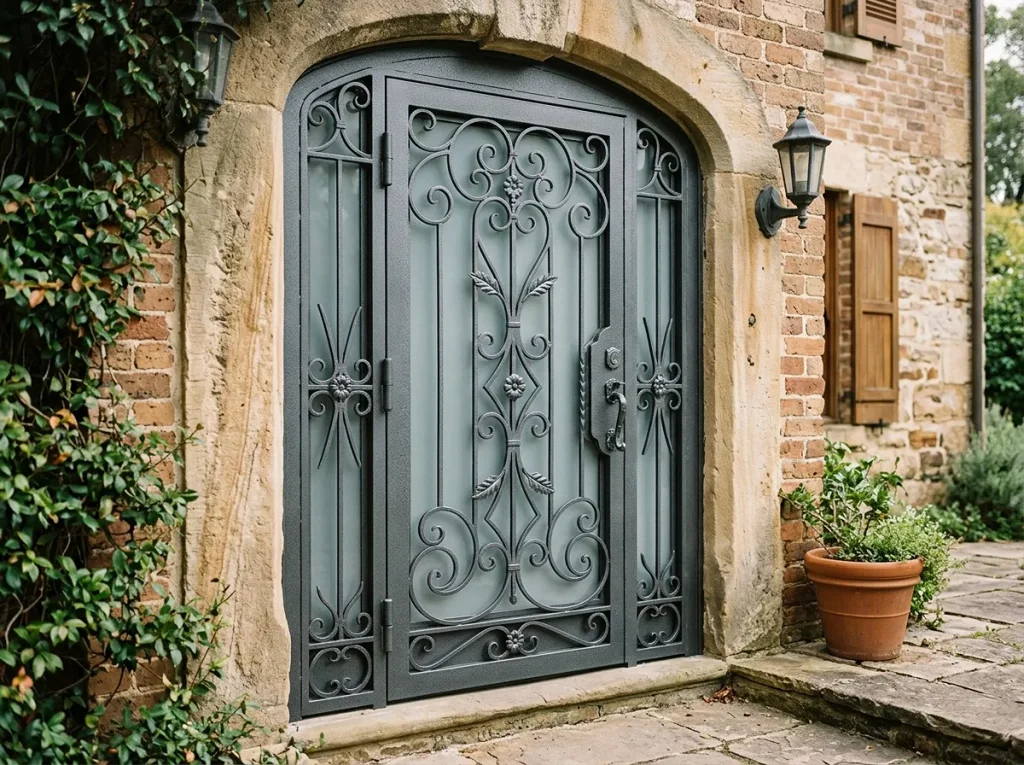
If you want a decorative design → Then choose a door with a powder-coated finish in the color and pattern you want. Don’t sacrifice security for aesthetics.
If you have glass panels → Then upgrade to impact-resistant or laminated glass. Standard glass breaks easily and compromises security.
If you’re concerned about energy efficiency → Then choose a door with insulated glass or a solid core. It adds an extra thermal barrier.
If you’re planning to sell your home → Then choose a timeless design with quality features that appeal to a broad range of buyers.
If you’re comparing security doors → Then learn the difference between security doors vs security screen doors to choose the right product for your needs.
If you’re ready to install → Then hire a professional. Even the best door can be compromised by poor installation. Look for an installer with experience in Arizona’s stucco construction.
The Regrets Homeowners Mention Most
After helping thousands of Arizona homeowners choose steel security doors, here are the most common regrets:
Mistake 1: Choosing price over quality
A $400 security door from a big-box store might seem like a bargain, but it often comes with thin steel, weak locks, and a frame that can be pried open. Investing in a quality door with professional installation is worth every penny.
Mistake 2: Not checking the steel gauge
Some homeowners assume all steel security doors are equally strong. They’re not. Gauge matters enormously. If the spec sheet doesn’t list the gauge, ask. If they can’t tell you, walk away.
Mistake 3: Settling for a single deadbolt
A single deadbolt is not enough for a security door. Multi-point locking systems are essential for maximum protection.
Mistake 4: Assuming the frame is included in the door price
Some cheap doors don’t include a reinforced frame—or the frame is thin and weak. The frame is just as important as the door itself.
Mistake 5: Hiring an unqualified installer
Proper anchoring into structural studs is critical. An installer who doesn’t understand Arizona’s stucco construction can leave your door vulnerable—and void your warranty.
Mistake 6: Skipping impact-resistant glass
Standard glass breaks easily. If your door has glass panels, upgrade to impact-resistant or laminated glass. It’s a small investment that makes a big difference.
Frequently Asked Questions
What steel gauge is best for a security door?
For maximum security, look for 12- or 14-gauge steel for the door panel and 16-gauge or thicker for the frame. Thinner steel (18-gauge or higher) is more vulnerable to cutting and prying.
What is a multi-point locking system?
A multi-point locking system secures the door at three or more points—typically top, middle, and bottom. When you lock the door, bolts extend into the frame at multiple locations, making forced entry extremely difficult.
How do I know if a steel security door is high quality?
Look for:
- 12- or 14-gauge steel door panel
- 16-gauge or thicker frame
- Multi-point locking system
- Grade 1 or 2 deadbolt
- Security hinges with non-removable pins
- Powder-coated finish
- Lifetime warranty on frame
What’s the difference between a security door and a security screen door?
A steel security door is a solid, heavy-duty door for maximum protection. A security screen door has a mesh screen for ventilation and visibility while adding a layer of security. Learn more in our guide on security door vs security screen door.
How much does a high-quality steel security door cost?
A high-quality steel security door typically costs $700–$2,000+ installed. Basic models start around $600, while premium custom designs can exceed $2,000.
Do I need impact-resistant glass in my security door?
Yes, if your door has glass panels. Standard glass breaks easily and compromises security. Impact-resistant or laminated glass is much harder to break.
What’s the best finish for a steel security door in Arizona?
Powder-coated finishes are the best choice for Arizona. They resist rust, fading, and scratching far better than paint, and they hold up to our extreme sun and heat.
How do I verify a security door’s quality before buying?
Ask for the steel gauge, locking system specifications, and frame construction details. Look for certifications like ANSI/BHMA Grade 1 or 2. And read reviews from other homeowners.
Can I install a steel security door myself?
We strongly recommend professional installation. Proper anchoring into structural studs is critical for security. Poor installation can leave gaps, weaken the door’s protection, and void warranties.
What should I look for in a security door warranty?
Look for a lifetime warranty on the frame and structure, a 5–10 year warranty on hardware and locks, and a finish warranty of at least 5 years. Most manufacturers require professional installation for warranty coverage.
Why Choose Windowz4Less Arizona?
Windowz4Less Arizona specializes in high-quality steel security doors and professional installation for homes across the Phoenix metro area. We understand what makes a security door truly protective—and we don’t cut corners.
- Local expertise — We know Arizona’s stucco homes and how to anchor security doors properly into structural studs
- Quality products — We offer steel security doors with 12- and 14-gauge steel, multi-point locking systems, and powder-coated finishes
- Professional installation — Our team is trained, insured, and follows industry best practices for maximum security
- Transparent pricing — No hidden fees, no surprises
- Free estimates — No-obligation quotes with honest, straightforward advice
- Serving Mesa, Phoenix, and surrounding areas — We’re your local experts
When you work with us, you get a steel security door that’s built to last, installed correctly, and backed by a warranty you can trust.
Your Next Step: Choose the Right Security Door for Your Home
Choosing a high-quality steel security door is about knowing what to look for—steel gauge, locking systems, frame construction, finishes, and more. With the right features, a security door protects your home for decades.
Contact Windowz4Less Arizona today for a free, no-obligation estimate. We’ll help you explore steel security door features, choose the right door for your home, and provide professional installation you can trust.