Your front door is one of the hardest-working surfaces on your home. It faces the sun, the heat, the monsoon rains, and daily use—all while needing to look good and keep your family safe. So when it’s time to replace it, choosing the right material isn’t just a design decision. It’s a decision that affects your energy bills, your maintenance schedule, and your home’s security for decades.
Here’s the honest truth: there’s no single “best” entry door material. Steel, fiberglass, and wood each have distinct advantages and trade-offs. The right choice depends on your budget, your priorities, and how much maintenance you’re willing to do.
In this guide, we’ll compare steel vs. fiberglass vs. wood entry doors side by side—cost, durability, energy efficiency, maintenance, security, and aesthetics—so you can make a confident decision for your Arizona home.
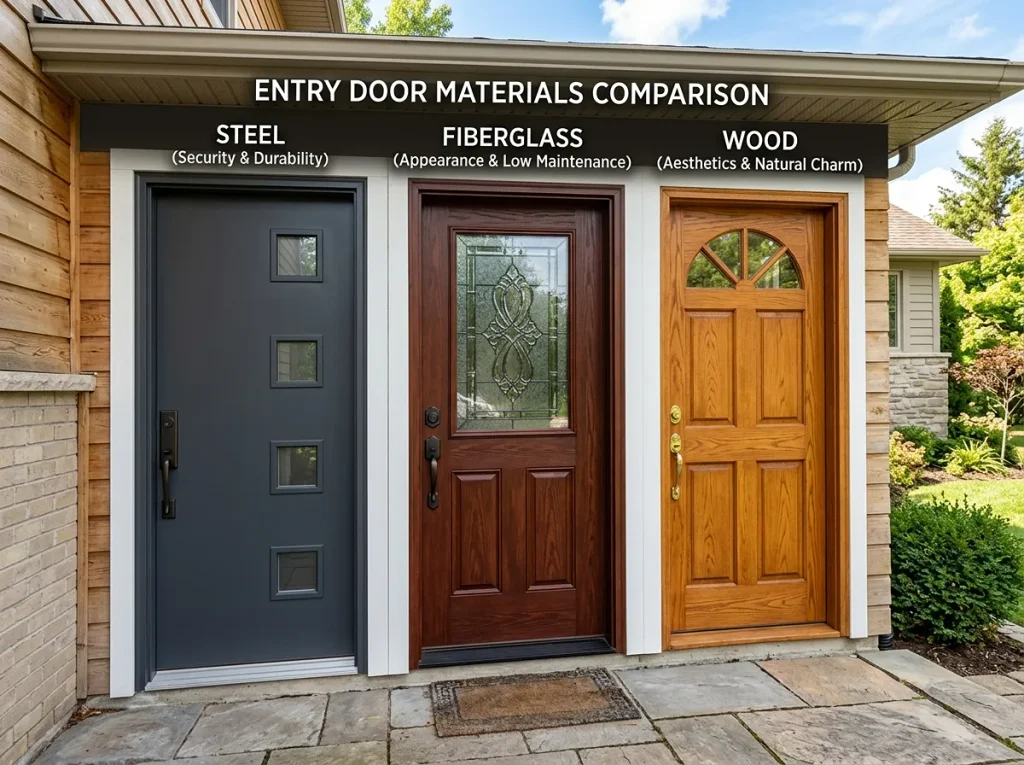
Table of Contents
Steel Entry Doors: Pros and Cons
Fiberglass Entry Doors: Pros and Cons
Wood Entry Doors: Pros and Cons
Steel vs. Fiberglass vs. Wood: Side-by-Side Comparison
Real-World Conditions: The “If/Then” Guide
The Regrets Homeowners Mention Most
Key Takeaways / Quick Summary
- Steel is the most affordable and secure at $500–$1,200 installed, but has a more utilitarian look
- Fiberglass offers the best overall balance at $700–$2,500+ installed—durable, energy-efficient, and low-maintenance
- Wood delivers unmatched beauty at $1,200–$5,000+ installed, but requires the most maintenance
- Fiberglass doors can last 50–70 years; steel lasts 25–40 years; wood lasts 15–25 years
- Fiberglass with a polyurethane foam core delivers R-5 to R-6 insulation—the best energy efficiency
- Steel offers the highest impact resistance and is the hardest to kick in
- Wood is the most vulnerable to Arizona’s heat and UV exposure without regular refinishing
- Front door replacement offers one of the highest ROIs of any home improvement project
Steel Entry Doors: Pros and Cons
Steel doors are the budget-friendly workhorses of the entry door world. They’re built around a steel skin over a rigid foam core, giving them excellent strength and insulation value.
Pros of Steel Doors
✅ Most affordable upfront
Steel is the least expensive option at $500–$1,200 installed. If budget is your primary concern, steel delivers the most door for your dollar.
✅ Highest security
Steel offers the highest impact resistance of any door material. A reinforced steel door with a 4-1/8″ lock stile is the hardest to kick in.
✅ Good energy efficiency
Steel doors with foam cores deliver R-3 to R-5 insulation, keeping your home cooler in summer and warmer in winter.
✅ Low maintenance
Steel doors don’t need refinishing or resealing. A quick wipe-down is all they need to stay looking good.
✅ Long lifespan
With proper care, steel doors last 25–40 years.
Cons of Steel Doors
❌ Can dent
Steel doors can dent if struck hard enough. A stray baseball or a heavy delivery box can leave a permanent mark.
❌ Prone to rust
If the finish is scratched or damaged, steel can rust over time. In Arizona’s dry climate, this is less of a concern than in coastal areas, but it’s still a risk.
❌ Limited wood-like appearance
Steel doors can mimic wood grain, but the effect isn’t as convincing as fiberglass. They have a more utilitarian look.
❌ Can feel hot to the touch
Steel conducts heat, so the exterior surface can get very hot in direct Arizona sun.
Best for: Budget-conscious homeowners, side and back doors, and anyone prioritizing security over aesthetics.
Fiberglass Entry Doors: Pros and Cons
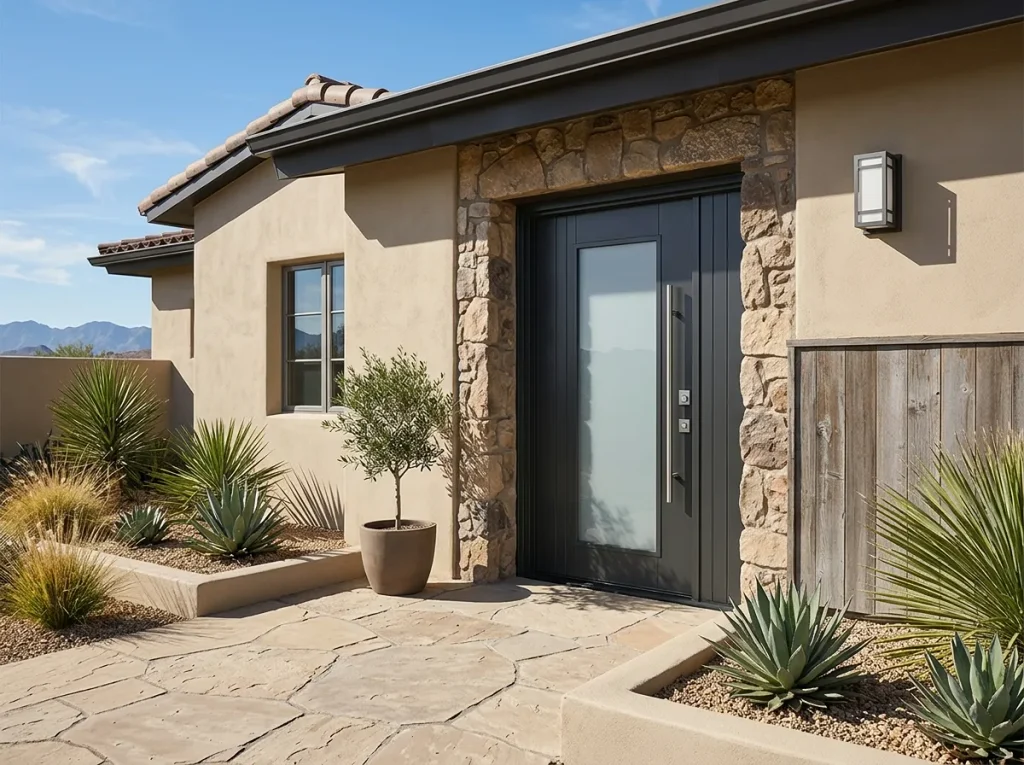
Fiberglass has become the go-to choice for homeowners who want the best of both worlds: the low maintenance of steel with the look of natural wood. Manufacturers have gotten remarkably good at replicating real wood grain texture—to the point where it’s hard to tell the difference up close.
Pros of Fiberglass Doors
✅ Excellent durability
Fiberglass resists dents, warping, and rust. It won’t crack or splinter like wood, and it handles temperature swings without warping.
✅ Authentic wood-grain texture
Modern fiberglass doors can replicate real wood grain convincingly. You get the beauty of wood without the maintenance.
✅ Best energy efficiency
Fiberglass doors with polyurethane foam cores deliver R-5 to R-6 insulation—the highest of any entry door material. This translates to lower cooling costs in Arizona’s brutal summers.
✅ Low maintenance
Unlike wood, fiberglass doesn’t need regular refinishing. An occasional cleaning is all it takes to keep it looking new.
✅ Longest lifespan
With proper care, fiberglass doors can last 50 to 70 years—significantly longer than steel or wood.
✅ Won’t warp in extreme heat
Fiberglass handles Arizona’s temperature swings without warping or cracking, making it an excellent choice for our climate.
Cons of Fiberglass Doors
❌ Higher upfront cost
Fiberglass costs more than steel—typically $700–$2,500+ installed.
❌ Refinishing requires upkeep
If you choose a stained fiberglass door, it will need occasional refinishing to maintain its appearance.
❌ Not as impact-resistant as steel
While fiberglass is durable, steel still offers superior impact resistance for maximum security.
Best for: Front entry doors where curb appeal matters and homeowners want a wood look without the maintenance burden. Also excellent for Arizona’s extreme heat.
Wood Entry Doors: Pros and Cons
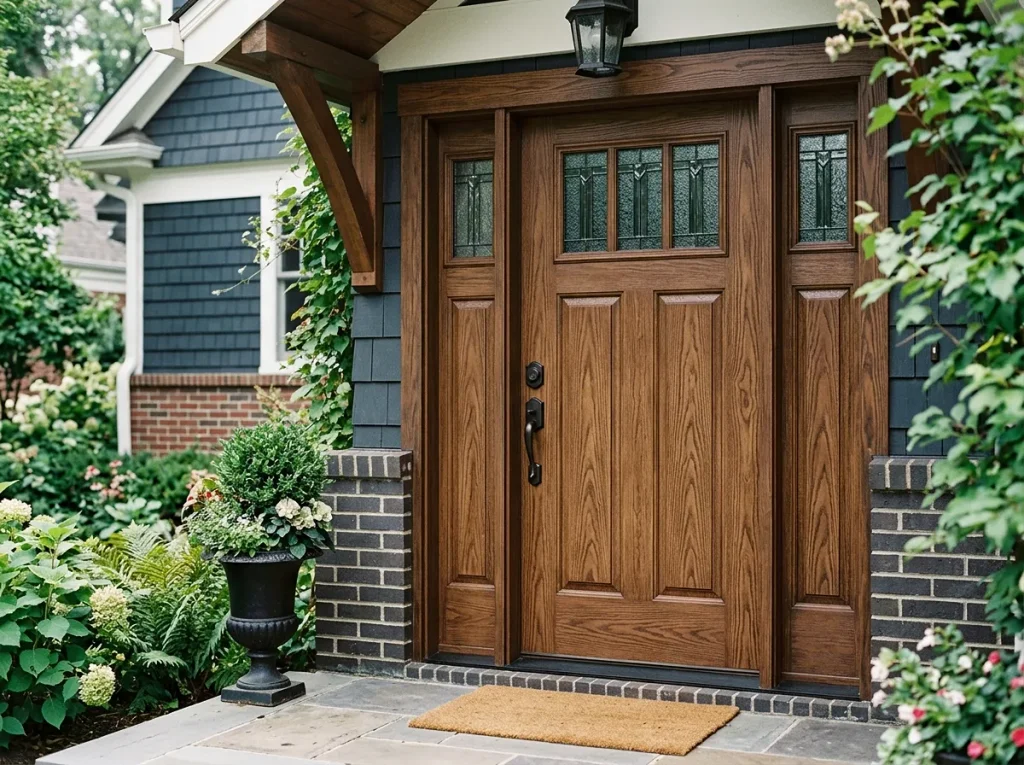
Wood doors offer a classic, timeless look that steel and fiberglass can only approximate. For homeowners prioritizing authenticity and craftsmanship, nothing fully replaces real wood.
Pros of Wood Doors
✅ Unmatched natural beauty
Nothing matches the warmth and authenticity of real wood. Wood doors add a level of craftsmanship that other materials can’t replicate.
✅ Customization
Wood doors can be customized in ways other materials can’t—custom carving, unique stains, and one-of-a-kind designs.
✅ Can be refinished and repaired
Unlike steel or fiberglass, wood doors can be sanded, refinished, and repaired rather than replaced. A scratched wood door can be restored to look like new.
✅ Best for historic homes
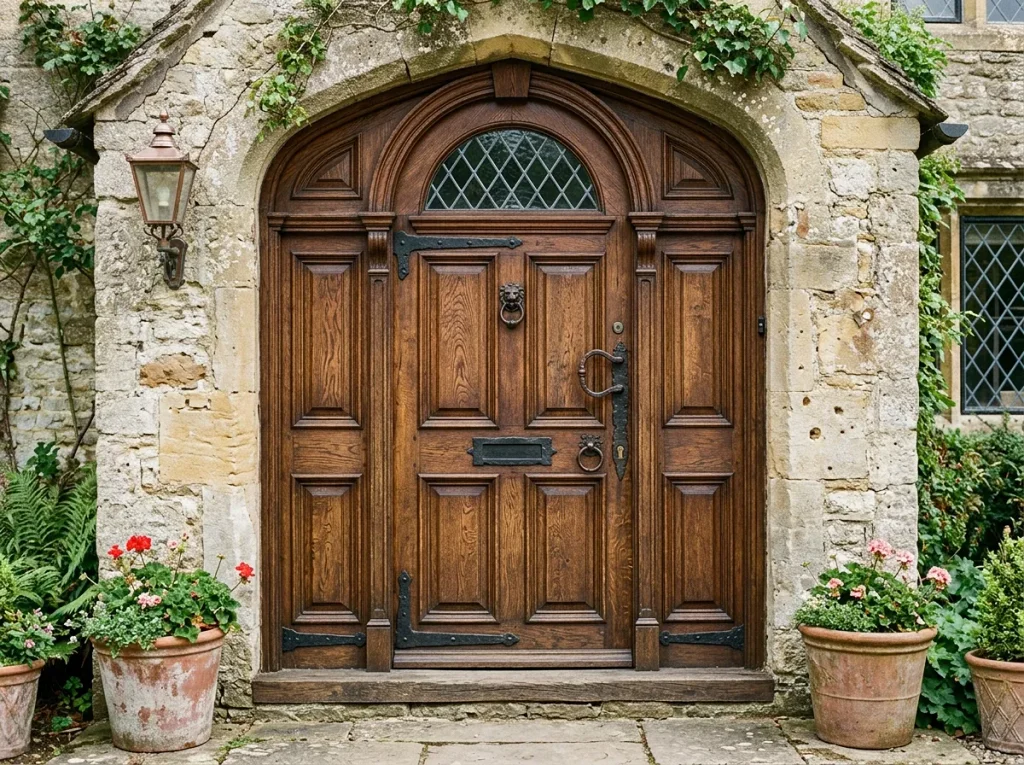
Wood is often the most appropriate choice for historic homes and specific architectural styles where authenticity matters.
Cons of Wood Doors
❌ Highest maintenance
Wood doors need regular refinishing—typically every 1–3 years in Arizona’s extreme climate—to prevent warping, cracking, and water damage.
❌ Most expensive
Wood is the most expensive option, especially for solid wood. Expect to pay $1,200–$5,000+ installed.
❌ Vulnerable to Arizona’s climate
Arizona’s intense sun and dry heat can cause wood to crack, warp, and fade. Without regular maintenance, wood doors deteriorate quickly.
❌ Lower energy efficiency
Wood doors have lower insulation values than fiberglass or steel with foam cores. They rely on natural density rather than engineered insulation.
❌ More vulnerable to forced entry
While solid wood is strong, it’s still more vulnerable to forced entry than steel or fiberglass.
Best for: Historic homes, luxury properties, and homeowners who value authentic craftsmanship and are willing to invest in maintenance.
Steel vs. Fiberglass vs. Wood: Side-by-Side Comparison
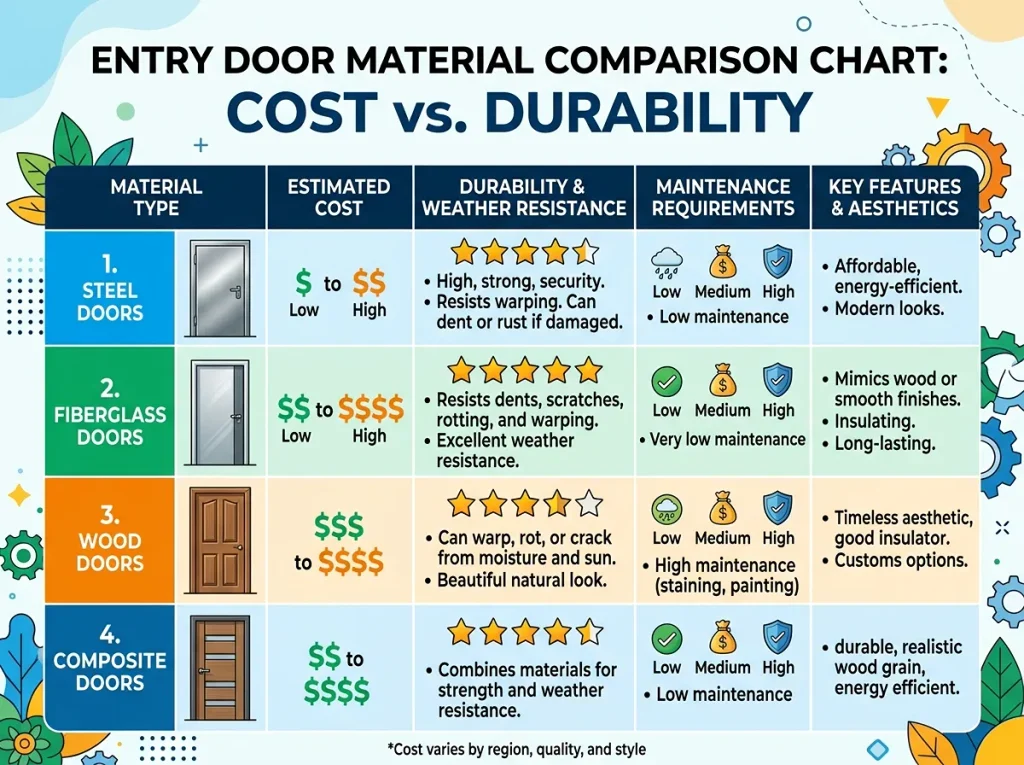
| Feature | Steel | Fiberglass | Wood |
| Installed Cost | $500 – $1,200 | $700 – $2,500+ | $1,200 – $5,000+ |
| Lifespan | 25 – 40 years | 50 – 70 years | 15 – 25 years |
| Energy Efficiency | R-3 to R-5 | R-5 to R-6 | Lowest |
| Maintenance | Low | Low | High |
| Security | Highest | High | Moderate |
| Aesthetics | Utilitarian | Wood-like | Authentic |
| Arizona Suitability | Good | Excellent | Fair (requires upkeep) |
| Best For | Budget, security | Overall value | Historic, luxury |
Real-World Conditions: The “If/Then” Guide
Here’s how to choose based on your specific situation:
If you’re on a tight budget → Then choose steel. It’s the most affordable option at $500–$1,200 installed and still delivers excellent security and good energy efficiency.
If you want the best overall value → Then choose fiberglass. It costs more upfront but lasts 50–70 years with minimal maintenance, making it the best long-term investment.
If energy efficiency is your top priority → Then choose fiberglass with a polyurethane foam core. It delivers R-5 to R-6 insulation—the best available—which means lower cooling costs in Arizona’s heat.
If you have a historic or traditional home → Then choose wood. Nothing matches the authentic beauty and craftsmanship of real wood. Just be prepared for regular maintenance.
If you want minimal maintenance → Then choose fiberglass or steel. Both require very little upkeep compared to wood.
If security is your primary concern → Then choose steel with a multi-point locking system and reinforced frame. Steel is the hardest to kick in.
If you’re in Arizona’s extreme heat → Then choose fiberglass. It won’t warp in temperature swings, delivers the best energy efficiency, and handles UV exposure better than wood.
If you’re planning to sell your home → Then choose fiberglass. It offers the best ROI and is the most attractive to potential buyers.
If you want to make a design statement → Then choose wood or a wood-grain fiberglass door. Both offer beautiful aesthetics—one authentic, one low-maintenance.
The Regrets Homeowners Mention Most
After helping thousands of Arizona homeowners choose entry doors, here are the most common regrets:
Mistake 1: Choosing a wood door in Arizona without understanding the maintenance
Wood doors are beautiful—but in Arizona’s extreme heat and UV exposure, they need refinishing every 1–3 years. Homeowners who don’t want that maintenance often regret choosing wood.
Mistake 2: Choosing the cheapest steel door
A budget steel door with thin construction and a poor finish can dent, rust, and fail prematurely. Investing in a quality steel door with a good finish is worth the extra cost.
Mistake 3: Assuming all fiberglass doors are the same
Not all fiberglass doors are created equal. The quality of the wood-grain texture, the insulation value, and the finish all vary significantly. Look for doors with polyurethane foam cores and UV-resistant finishes.
Mistake 4: Ignoring energy efficiency in Arizona’s heat
Many homeowners focus on looks and forget about insulation. In Arizona’s extreme heat, a poorly insulated door can drive up your cooling costs significantly. Fiberglass with a polyurethane foam core is your best bet.
Mistake 5: Not factoring in long-term costs
A cheaper door that needs frequent maintenance or replacement isn’t actually cheaper. Fiberglass costs more upfront but lasts significantly longer, making it the better long-term investment.
Frequently Asked Questions
Which is better: steel, fiberglass, or wood entry doors?
It depends on your priorities. Steel is best for budget and security. Fiberglass is best for overall value, energy efficiency, and low maintenance. Wood is best for authentic beauty and historic homes.
What’s the most affordable entry door material?
Steel is the most affordable at $500–$1,200 installed. It offers good security and energy efficiency at the lowest upfront cost.
What’s the most energy-efficient entry door material?
Fiberglass with a polyurethane foam core is the most energy-efficient, delivering R-5 to R-6 insulation. Steel with a foam core is a close second at R-3 to R-5.
How long do entry doors last?
Fiberglass doors last 50–70 years. Steel doors last 25–40 years. Wood doors last 15–25 years without regular maintenance.
Which entry door material is the most secure?
Steel offers the highest security and impact resistance. A reinforced steel door with a 4-1/8″ lock stile is the hardest to kick in.
Which entry door material is best for Arizona’s heat?
Fiberglass is the best choice for Arizona. It won’t warp in temperature swings, delivers the best energy efficiency, and handles UV exposure better than wood.
Do wood doors require a lot of maintenance in Arizona?
Yes. Wood doors need refinishing every 1–3 years in Arizona’s extreme climate to prevent warping, cracking, and fading.
Which entry door material adds the most value to my home?
Fiberglass offers the best ROI. Front door replacement consistently ranks among the top home improvement projects for return on investment.
What is the best entry door material for a historic home?
Wood is often the most appropriate choice for historic homes. It maintains authenticity and can be customized to match the home’s original style.
How much does each material cost installed?
Steel: $500–$1,200. Fiberglass: $700–$2,500+. Wood: $1,200–$5,000+.
Why Choose Windowz4Less Arizona?
Choosing the right entry door materials is about more than just cost. It’s about matching your lifestyle, your priorities, and your home’s architectural style. And when you’re ready to install, Windowz4Less Arizona is here to help you make the right choice and provide professional installation you can trust.
- Local expertise — We know Arizona’s climate and recommend doors that perform in extreme heat
- Quality products — We offer steel, fiberglass, and wood entry doors from leading manufacturers
- Professional installation — Our team is trained, insured, and follows industry best practices
- Transparent pricing — No hidden fees, no surprises
- Free estimates — No-obligation quotes with honest, straightforward advice
- Serving Mesa, Phoenix, and surrounding areas — We’re your local experts
Whether you’re comparing steel vs. fiberglass vs. wood or exploring choosing entry door material, we’re here to help you find the perfect door for your Arizona home.
Your Next Step: Choose the Right Door for Your Home
The best entry door material depends on your priorities—budget, security, energy efficiency, maintenance, or aesthetics. There’s no wrong answer, but there is a right answer for you.
Contact Windowz4Less Arizona today for a free, no-obligation estimate. We’ll help you compare steel vs. fiberglass vs. wood, understand the pros and cons of each, and choose the perfect entry door for your home and budget.