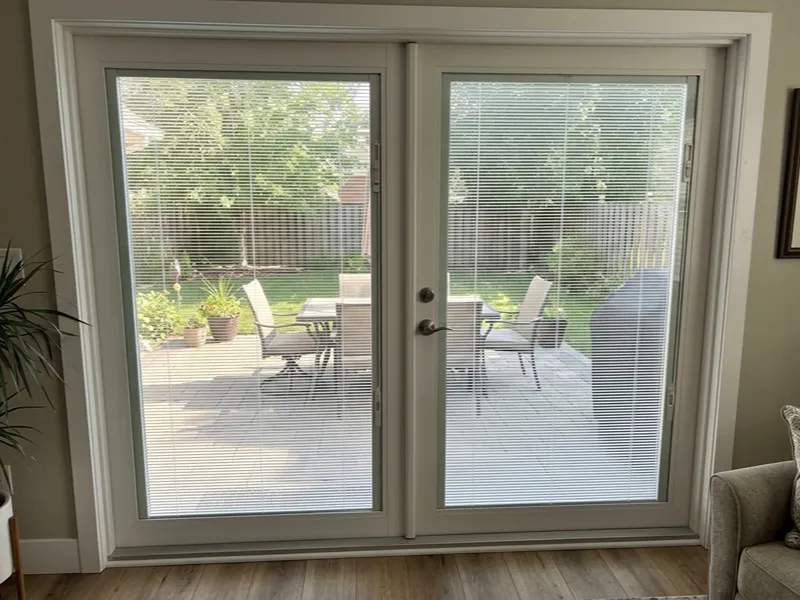
You’ve seen integrated mini blinds—those sleek blinds sealed between the glass of a patio door. No dusting. No tangled cords. No bent slats. You want them. But before you commit, you need to know: what’s this actually going to cost?
Here’s the honest answer. In Arizona, integrated mini blinds cost $200 to $800+ per door as a standalone upgrade. But here’s what most homeowners don’t realize—if you’re already replacing the patio door, the incremental cost is often much lower, typically $150 to $500 added to the door price. For a full patio door replacement with integrated blinds included, expect to pay $1,500 to $4,500+ installed.
The wide range comes down to door size, glass package, brand, and whether the blinds are part of a new door or a retrofit. In this guide, we’ll break down exactly what drives integrated mini blinds cost, how to budget for your project, and whether they’re worth the investment for your Arizona home.
Table of Contents
What Do Integrated Mini Blinds Cost?
Factors That Affect Integrated Mini Blinds Cost
Real-World Conditions: The “If/Then” Guide to Integrated Mini Blinds Cost
Are Integrated Mini Blinds Worth the Cost?
The Regrets Homeowners Mention Most
Key Takeaways / Quick Summary
- Integrated mini blinds cost 200–800+ per door as a standalone upgrade
- As an add-on to a new patio door, the incremental cost is typically 150–500
- Full patio door replacement with integrated blinds runs 1,500–4,500+ installed
- Glass package is the biggest cost driver—Low-E and argon fill add 100–400 but are essential in Arizona
- Sliding doors are usually cheaper to upgrade than French doors due to size and mechanism differences
- Retrofitting existing doors is often impossible—integrated blinds are typically ordered with a new door
- Windows account for 25–30% of residential heating and cooling energy use, so the insulation value matters
- Homeowners report 5–15% cooling cost reductions after upgrading in hot climates
- Cordless design eliminates a documented strangulation hazard, per the U.S. Consumer Product Safety Commission
What Do Integrated Mini Blinds Cost?
Let’s get straight to the numbers. Here’s what you’ll actually pay for integrated mini blinds in the Phoenix metro area:
| Purchase Scenario | Price Range |
| Standalone integrated blind upgrade (per door) | $200 – $800+ |
| Add-on to a new sliding patio door | $150 – $500 |
| Add-on to a new French door (pair) | $300 – $900 |
| Full patio door replacement with integrated blinds | $1,500 – $4,500+ |
| Premium door with high-end glass and blinds | $4,500 – $8,000+ |
Prices include the integrated blind unit. Installation is typically bundled into the door installation cost.
Arizona-specific context: In the Phoenix metro area, most homeowners replacing a sliding patio door with integrated blinds land in the $2,000 to $3,500 range for a complete installed project. That includes the door, the blinds, the glass package, and professional installation.
What’s Included in the Price?
When you get a quote for integrated mini blinds cost, make sure you understand what’s included. Here’s what a complete quote should cover:
- The integrated blind unit — blinds sealed inside an insulated glass unit (IGU)
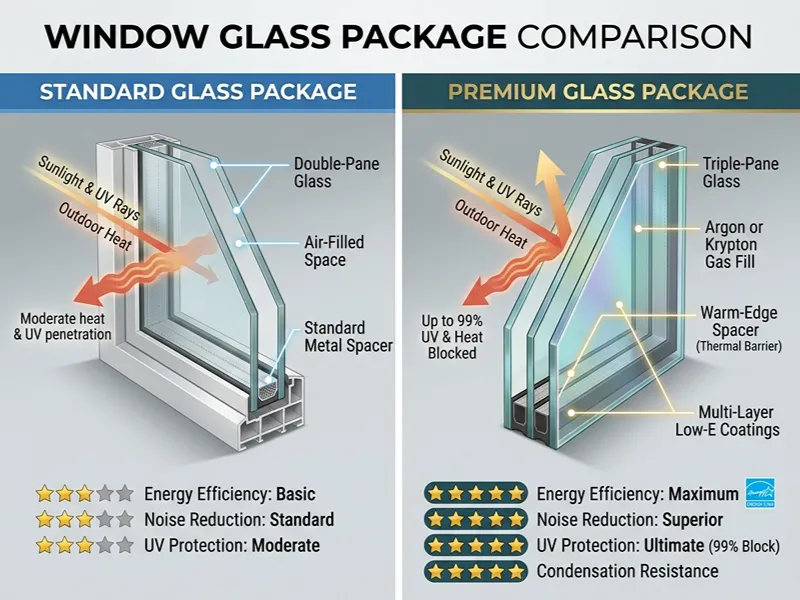
- The glass package — number of panes, Low-E coating, gas fill
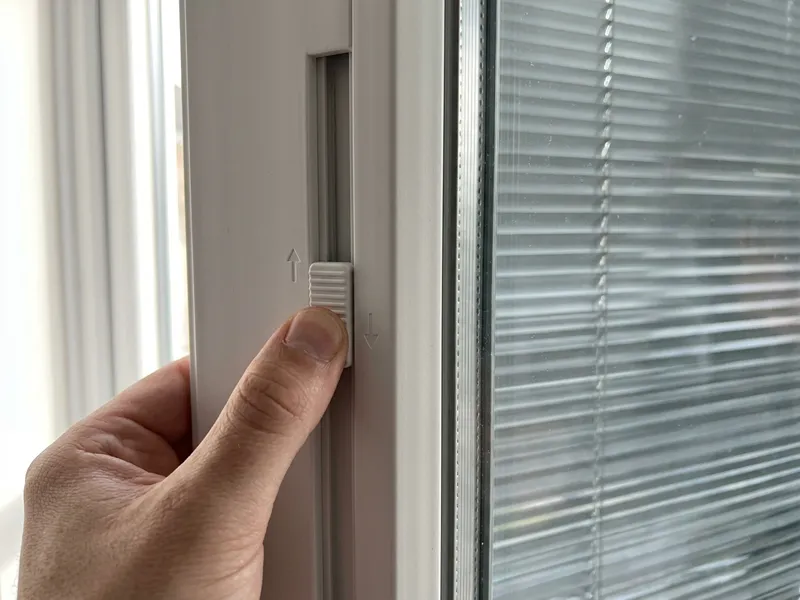
- The operating mechanism — slider, magnetic control, or cordless system
- The door frame (if part of a new door) — material, thermal break, weatherstripping
- Professional installation — leveling, flashing, sealing, and anchoring
- Warranty coverage — seal warranty is the critical one
- Cleanup and disposal — removal of the old door and debris
Watch out for this: Some quotes list the blinds separately from the door but don’t specify the glass package. In Arizona, the glass matters more than the blinds for energy performance. Always ask what Low-E coating and solar heat gain coefficient you’re getting.
Factors That Affect Integrated Mini Blinds Cost
Several variables influence your final price. Here’s what to consider.
1. Door Size
Larger doors need larger glass units, and integrated blind units are priced by size.
- Standard sliding patio door (6’8″ x 6′): base price
- Oversized slider (8′ tall): adds 20–40%
- French door pair: adds 30–60% over a single slider
- Custom or non-standard sizes: adds 50–100%
2. Glass Package
This is the single biggest cost driver—and the most important one in Arizona.
- Double-pane with argon fill: standard, included in base price
- Low-E coating: adds 100–300, essential in Arizona’s heat
- Triple-pane: adds 300–600, premium performance
- Impact-resistant glass: adds 200–500, for security and durability
- Low solar heat gain coefficient (SHGC) glass: adds 100–250, critical for west- and south-facing doors
Arizona tip: Don’t skip Low-E. According to the U.S. Department of Energy, heat gain and loss through windows accounts for 25–30% of residential heating and cooling energy use. In our climate, the glass package does more for your energy bill than the blinds do.
3. Blind Type and Mechanism
- Standard slider control: base price
- Magnetic control: adds 50–150
- Cordless raise/lower mechanism: adds 100–250
- Custom slat colors or finishes: adds 50–200
4. Frame Material
If you’re buying a full door with integrated blinds, the frame material matters.
- Vinyl: 500–1,500 (door only)
- Fiberglass: 1,000–3,000
- Aluminum with thermal break: 1,200–3,500
- Wood or aluminum-clad: 2,000–5,000+
5. Installation Complexity
- Standard like-for-like replacement: base labor rate
- Stucco exterior: adds 100–300 (common in Arizona)
- Brick or stone exterior: adds 150–400
- Second-story or difficult access: adds 200–500
- Frame repair or modification: adds 200–500
6. Brand and Warranty
Premium brands cost more but typically offer better seal warranties. Since seal failure means replacing the entire glass unit, the warranty is a real financial consideration—not just marketing.
Real-World Conditions: The “If/Then” Guide to Integrated Mini Blinds Cost
Here’s how your specific situation affects what you’ll pay:
If you’re already replacing the patio door → Then add integrated blinds to the order. The incremental cost is usually 150–500, far less than buying a standalone treatment later.
If your existing door is in good condition → Then check whether it can be retrofitted. Most cannot, and you may need to weigh a full door replacement against continuing with traditional blinds.
If you’re on a tight budget → Then prioritize the glass package over the blind mechanism. Low-E glass delivers more long-term value than a fancy slider control.
If your patio door faces west or south → Then invest in low-SHGC glass plus integrated blinds. That combination handles Arizona’s afternoon sun best and reduces heat gain most effectively.
If you have a French door pair → Then expect to pay 30–60% more than a single slider, because you’re buying two integrated glass units and two mechanisms.
If you have a stucco home → Then budget 100–300 extra for installation. Stucco requires cutting back to access structural framing—a technique not every installer handles well.
If you have young children or pets → Then the cordless safety benefit is part of the value. Corded window coverings have caused hundreds of child deaths from strangulation, according to the U.S. Consumer Product Safety Commission.
If you’re planning to sell your home → Then integrated blinds are a visible, marketable upgrade. Buyers understand “low maintenance” and “no cords.”
If you’re comparing against traditional blinds → Then run the 20-year math. Traditional blinds on a sunny patio door often need replacing every 5–10 years, which can erase the upfront savings.
If you want maximum energy performance → Then pair integrated blinds with Low-E, argon-filled, double- or triple-pane glass and a thermal-break frame. The blinds are a supplement, not a substitute for a good glass package.
Are Integrated Mini Blinds Worth the Cost?
Let’s do the honest math.
The upfront case against: Traditional blinds for a patio door cost 50–300. Integrated blinds cost 200–800+. On day one, traditional blinds are cheaper.
The long-term case for: Traditional blinds on a sun-facing patio door typically need replacing every 5–10 years due to fading, bent slats, and broken cords. Over 20 years, that’s two to four replacements—potentially $200 to $1,200 or more—plus hours of dusting every year.
Integrated blinds, sealed inside glass, commonly last 20–30 years with no dusting and no slat damage.
The energy case: Integrated blinds add an insulating layer to the glass unit. Homeowners in hot climates commonly report 5–15% reductions in cooling costs. In Arizona, where summer bills can exceed $300 per month, that’s meaningful—though the glass package matters more than the blinds themselves.
The safety case: This one doesn’t have a dollar figure. Corded blinds are a documented strangulation hazard to children. Cordless integrated blinds eliminate that risk entirely.
The verdict: If you’re already replacing the patio door, integrated blinds are usually worth it. If your door is fine and you’re only shopping for window treatments, traditional blinds are the cheaper immediate choice—but factor in replacement cycles, cleaning time, and safety.
The Regrets Homeowners Mention Most
Here’s what homeowners tell us they wish they’d known before buying:
Regret 1: Assuming the blinds could be retrofitted
Most integrated blind units are built into a sealed glass assembly during manufacturing. Homeowners often budget for a retrofit and then discover it isn’t possible on their existing door.
Regret 2: Skipping the Low-E glass to save money
Some buyers focus on the blinds and downgrade the glass to stay on budget. In Arizona, that’s backwards. Low-E coating and low solar heat gain coefficient do more for your energy bill than the blinds do.
Regret 3: Not checking the seal warranty
If the seal fails, the glass fogs and the entire unit needs replacement. The seal warranty is the single most important spec on the quote—and it’s often buried in the fine print.
Regret 4: Choosing a cheap off-brand unit
Budget integrated blinds are more prone to seal failures and mechanism problems. The savings evaporate when you’re replacing a fogged unit in five years.
Regret 5: Forgetting to plan for the door removal
If you’re replacing the door, factor in disposal and any stucco repair. These line items sometimes appear as surprise add-ons after the quote is signed.
Common Questions We Get Asked
How much do integrated mini blinds for patio doors cost?
Expect 200–800+ per door as a standalone upgrade. As an add-on to a new patio door, the incremental cost is typically 150–500.
Is it cheaper to buy integrated blinds with a new door?
Yes, usually significantly. When ordered together with a new door, the blinds are part of the same glass unit, so there’s no separate manufacturing or installation cost.
Can integrated blinds be retrofitted to my existing patio door?
Usually not. They’re built into a sealed insulated glass unit during manufacturing. Retrofitting is limited to specific door systems—check with a professional before budgeting for it.
What’s included in the integrated mini blinds cost?
The blind unit, the glass package (panes, Low-E, gas fill), the operating mechanism, installation, and warranty. If it’s part of a new door, the door frame and flashing are included too.
Do integrated blinds save money on energy bills?
They add an insulating layer, and homeowners commonly report 5–15% cooling cost reductions. But the glass package—Low-E coating and low SHGC—matters more in Arizona.
Why do integrated blinds cost more than traditional blinds?
You’re paying for a sealed, factory-built glass unit with an integrated mechanism. Traditional blinds are a simple surface-mounted product. The integrated unit also lasts far longer and requires no dusting.
How long do integrated blinds last?
With a quality unit and an intact seal, 20–30 years. If the seal fails, the glass unit must be replaced.
Does the seal warranty matter?
Enormously. A failed seal means a full glass unit replacement. Look for a manufacturer with a strong, clearly written seal warranty and keep the documentation.
Are integrated blinds worth the extra cost?
For most Arizona homeowners with patio doors—especially those with children, pets, or allergies—yes. The combination of low maintenance, cordless safety, insulation, and longevity usually justifies the premium.
How do I get an accurate quote?
Ask for an itemized quote that separates the door, the glass package, the blinds, and installation. Confirm the seal warranty terms in writing before you sign.
Why Talk to Windowz4Less Arizona
Every patio door and every home is different. The only way to know exactly what integrated mini blinds will cost for your door is to get a professional assessment—one that accounts for your door size, sun exposure, glass package, and installation complexity.
Windowz4Less Arizona works with homeowners across Mesa, Phoenix, Scottsdale, Gilbert, Chandler, and the surrounding Valley communities. We’ll walk you through the options, explain which glass packages make sense in our climate, and give you a straight answer about what integrated mini blinds will actually cost for your home—no pressure, no hidden fees.
Your Next Step
If you’re considering integrated mini blinds for your patio door, get a real number before you decide. A free in-home estimate takes about an hour and tells you exactly what your project will cost, including the glass package and installation.
Contact Windowz4Less Arizona today for a free, no-obligation estimate. We’ll help you weigh the upfront cost against the long-term savings—and choose the option that’s actually right for your Arizona home.