Your air conditioner is running constantly. Your energy bills keep climbing. And no matter how low you set the thermostat, your entryway always feels warm.
If this sounds familiar, your exterior door might be the problem.
Here’s the thing: your front door is one of the largest openings in your home’s thermal envelope. According to the U.S. Department of Energy, heat gain and loss through doors and windows account for 25–30% of residential heating and cooling energy use. In Arizona, where summer temperatures regularly top 110°F, that percentage hits harder than almost anywhere else.
The good news? Energy-efficient exterior doors can dramatically reduce heat transfer, lower your cooling costs, and make your home more comfortable year-round. But here’s what most homeowners don’t realize: the door itself is only half the equation. Proper installation is just as important maybe more so.
In this guide, we’ll walk you through everything you need to know about energy efficiency and your exterior door installation. You’ll learn how doors lose energy, what features to look for, and why professional installation is critical for maximum performance.
Key Takeaways / Quick Summary
- Energy-efficient exterior doors can reduce cooling costs by 10–15% in Arizona’s extreme heat
- Fiberglass doors with polyurethane foam cores deliver R-5 to R-6 insulation the best available
- Low-E glass reduces solar heat gain by up to 70% while letting in natural light
- Proper installation is critical even the best door performs poorly if installed incorrectly
- Air leaks around doors can increase energy bills by 25% or more
- Federal tax credits cover 30% of qualifying door costs, up to $500 per door
- ENERGY STAR-certified doors lower household energy bills by an average of 12%
- Professional installation ensures proper sealing, insulation, and flashing
How Exterior Doors Lose Energy
Before we dive into solutions, let’s understand the problem. Your exterior door loses energy in three main ways:
1. Conduction
Heat transfers directly through the door material. A solid wood door, for example, conducts heat far more readily than an insulated fiberglass door with a foam core. Metal doors without thermal breaks are even worse they can become hot to the touch in Arizona’s sun.
What to look for: Insulated cores (polyurethane foam), thermal breaks in metal doors, and multi-pane glass.
2. Air Leakage
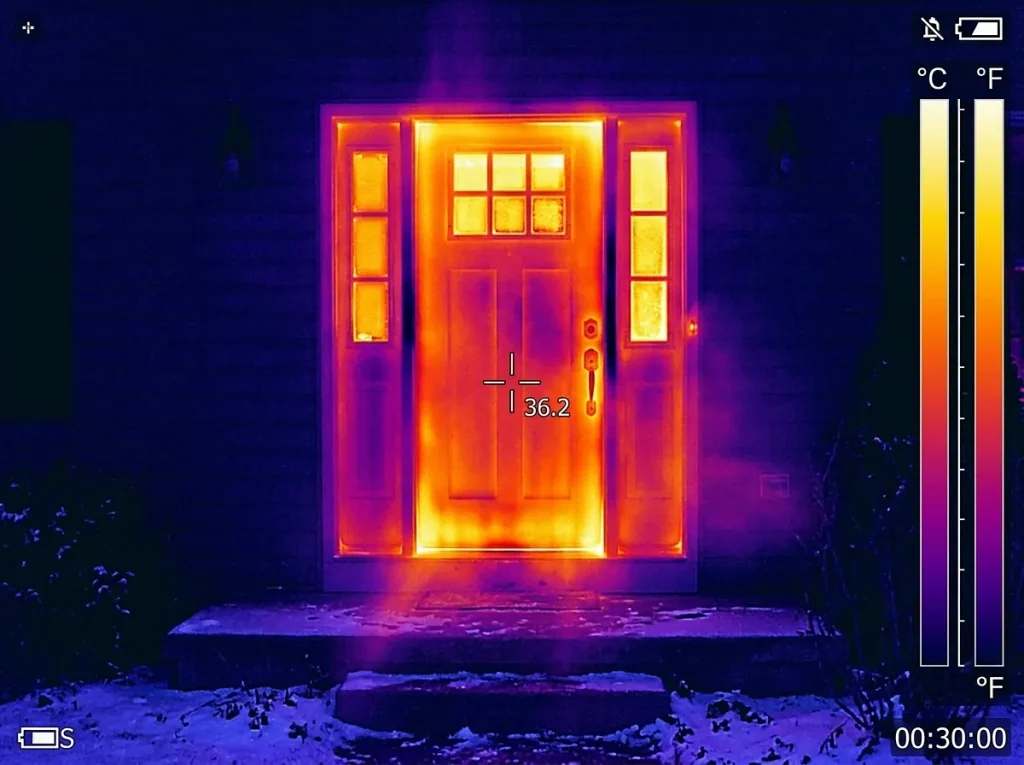
Air leaks around the door frame, through the weatherstripping, and under the door. If you can feel a draft on a windy day, you’re losing energy. According to the U.S. Department of Energy, air leaks around doors and windows can increase energy bills by 25% or more.
What to look for: Quality weatherstripping, a tight-fitting frame, and proper installation that seals all gaps.
3. Radiation
Heat radiates through the glass in your door (if it has glass panels or sidelights). Standard clear glass lets in solar heat like a greenhouse. In Arizona, this is a major source of unwanted heat gain.
What to look for: Low-E glass, which reflects infrared heat while letting visible light through.
What Makes an Exterior Door Energy Efficient?
Energy-efficient exterior doors share several key features. Here’s what to look for:
Insulated Core
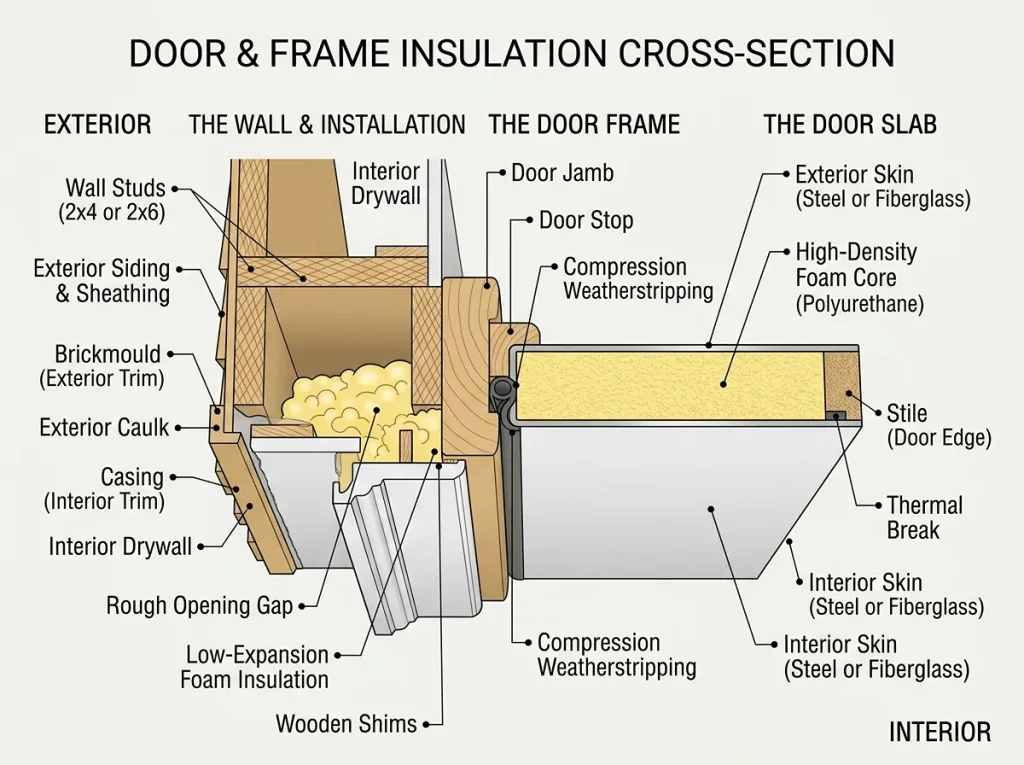
What it is: The center of the door is filled with insulating material typically polyurethane foam rather than being hollow or solid wood.
Why it matters: The insulated core provides a thermal barrier that slows heat transfer. Fiberglass doors with polyurethane foam cores deliver R-5 to R-6 insulation the highest available. Steel doors with foam cores deliver R-3 to R-5. Wood doors rely on natural density and have the lowest insulation values.
Low-E Glass
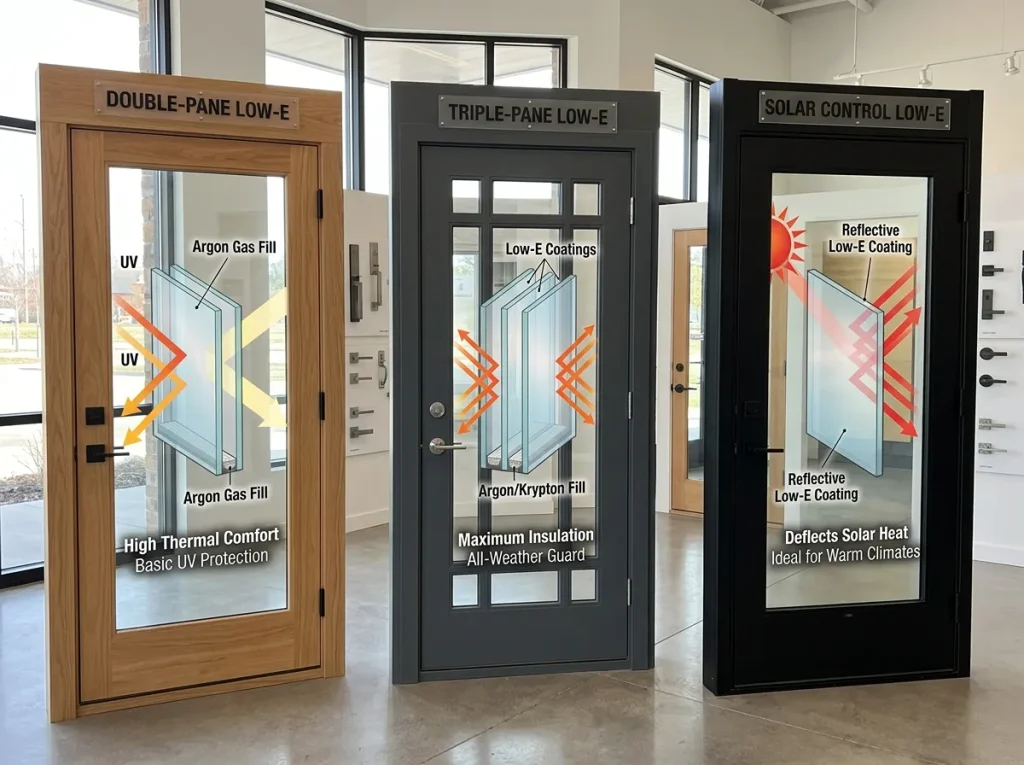
What it is: Low-E (low-emissivity) glass has a microscopic coating that reflects infrared heat while letting visible light through.
Why it matters in Arizona: Low-E glass can reduce solar heat gain by up to 70% . It’s essential for any exterior door with glass panels or sidelights. Without it, your entry becomes a greenhouse.
Quality Weatherstripping
What it is: The material that seals the gap between the door and the frame.
Why it matters: Weatherstripping prevents air leakage. Worn or cheap weatherstripping lets hot air in and cool air out. Look for high-quality, durable weatherstripping that compresses tightly when the door is closed.
Thermal Breaks
What it is: A barrier between the interior and exterior portions of a metal door frame that prevents heat transfer.
Why it matters: Metal conducts heat. Without a thermal break, an aluminum door frame can become hot to the touch and transfer heat directly into your home. Thermal breaks are essential for metal doors in Arizona.
Proper Installation
What it is: Professional installation that ensures the door is level, square, properly flashed, and sealed.
Why it matters: Even the most energy-efficient door will underperform if it’s installed poorly. Gaps, misalignment, and poor sealing negate the door’s energy-saving features. Installation is just as important as the door itself.
Energy Efficiency Comparison: Door Materials
Here’s how the most common door materials compare on energy efficiency:
| Material | Insulation Value (R-Value) | Energy Efficiency | Best For |
| Fiberglass with Polyurethane Core | R-5 to R-6 | Highest | Arizona’s extreme heat |
| Steel with Foam Core | R-3 to R-5 | Good | Budget-conscious homeowners |
| Wood | R-1 to R-2 | Lowest | Historic homes (requires maintenance) |
| Aluminum-Clad | R-3 to R-5 | Good | Premium aesthetics with durability |
| Vinyl | R-2 to R-4 | Moderate | Affordable, low-maintenance |
Arizona tip: For maximum energy efficiency in our climate, fiberglass with a polyurethane foam core and Low-E glass is the best choice. It delivers the highest R-value, resists warping, and handles UV exposure better than wood or vinyl.
How Much Can You Save with an Energy-Efficient Door?
Let’s talk numbers. How much can an energy-efficient exterior door actually save you?
According to the U.S. Department of Energy:
- Heat gain and loss through doors and windows account for 25–30% of residential heating and cooling energy use
- Upgrading to energy-efficient doors can reduce cooling costs by 10–15% in hot climates like Arizona
- ENERGY STAR-certified doors lower household energy bills by an average of 12%
For a typical Arizona home:
- Average summer cooling bill: 200–400 per month
- Potential savings with an energy-efficient door: 20–60 per month
- Annual savings: 240–720
- Over 10 years: 2,400–7,200
Plus federal tax credits:
Under the Inflation Reduction Act, you can claim 30% of the cost of qualifying energy-efficient doors, up to **$500 per door** (with a total annual limit of $1,200 for doors and windows).
Real-World Conditions: The “If/Then” Guide to Energy-Efficient Exterior Doors
Here’s how to choose the right energy-efficient door for your specific situation:
If you’re on a tight budget → Then choose a steel door with a foam core. It’s the most affordable option at 500–1,200 installed and still delivers good insulation (R-3 to R-5).
If you want maximum energy savings → Then choose fiberglass with a polyurethane foam core and Low-E glass. It delivers R-5 to R-6 insulation and can reduce cooling costs by 10–15%.
If you have glass panels or sidelights → Then Low-E glass is non-negotiable. It reduces solar heat gain by up to 70%. Standard glass will turn your entry into a greenhouse.
If you live in Arizona’s extreme heat → Then prioritize insulated cores and Low-E glass. Fiberglass is the best material for our climate it resists warping and handles UV exposure.
If you have a historic home → Then choose a wood door with storm door for added insulation. Wood is beautiful but has lower R-values; a storm door can add an insulating air space.
If you’re planning to sell your home → Then energy-efficient doors are a selling point. Buyers appreciate lower utility costs and modern features.
If you’re replacing an older door → Then the energy savings will be dramatic. Older doors often have poor insulation and worn weatherstripping. Upgrading can reduce energy bills by 10–15%.
If you’re concerned about installation quality → Then hire a professional. Proper installation is critical for energy efficiency gaps and misalignment negate the door’s energy-saving features.
If you want to maximize incentives → Then choose ENERGY STAR-certified doors to qualify for the full 30% federal tax credit (up to $500 per door).
Why Installation Matters for Energy Efficiency
Here’s something most homeowners don’t realize: the best energy-efficient door in the world won’t perform if it’s installed poorly.
What can go wrong with bad installation:
- Air leaks gaps around the frame let hot air in and cool air out
- Poor sealing weatherstripping doesn’t compress properly
- Misalignment the door doesn’t close tightly, leaving gaps
- Improper flashing water infiltration leads to rot and mold
- Insufficient insulation gaps aren’t filled with low-expansion foam
What professional installation ensures:
- Proper leveling and squaring for a tight seal
- Correct flashing and waterproofing
- Low-expansion foam insulation in all gaps
- Quality weatherstripping that compresses properly
- Secure anchoring into structural studs
- Warranty protection
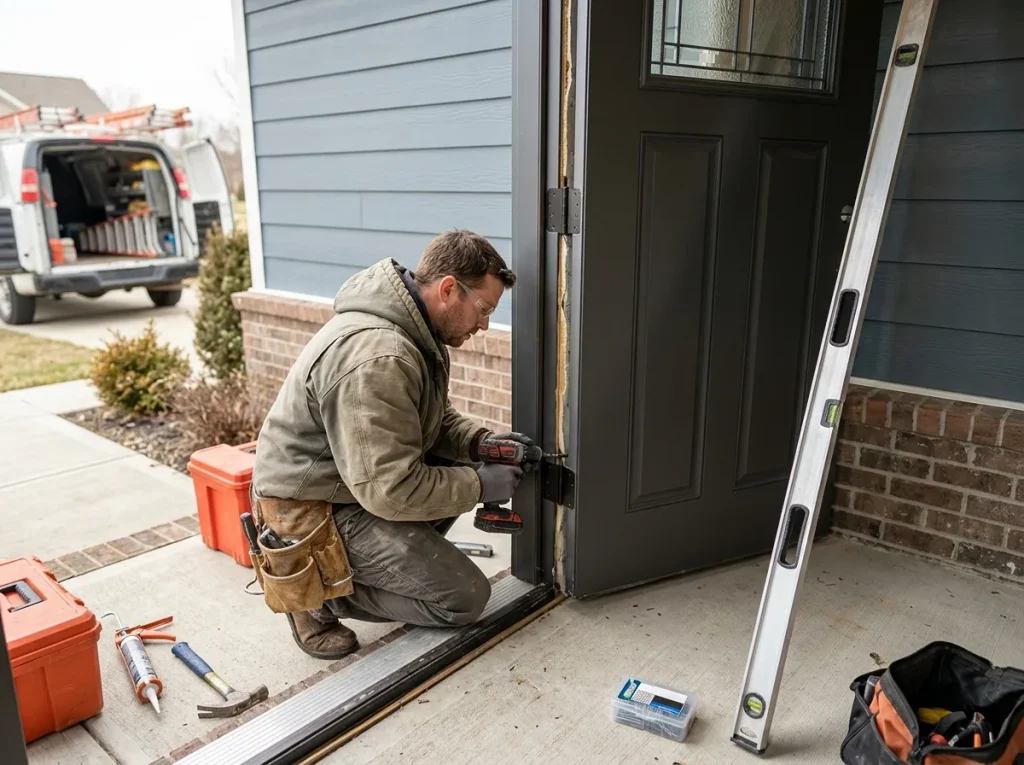
The bottom line: Professional installation is an investment in your door’s performance. It ensures you get the full energy savings your door is designed to deliver.
The Regrets Homeowners Mention Most
After helping thousands of Arizona homeowners with exterior door installation, here are the most common regrets:
Mistake 1: Choosing the door but not prioritizing installation
Some homeowners spend hours researching door materials and glass options, then hire the cheapest installer they can find. The result? A great door that performs poorly because it wasn’t installed correctly.
Mistake 2: Skipping Low-E glass
Standard glass lets in too much heat. In Arizona, Low-E glass is essential. Without it, your entry becomes a greenhouse and your cooling costs climb.
Mistake 3: Choosing a wood door for energy efficiency
Wood doors are beautiful but have the lowest insulation values. In Arizona’s extreme heat, they also require constant maintenance. Fiberglass or steel with foam cores are far better choices for energy efficiency.
Mistake 4: Not checking the R-value
Some homeowners assume all doors are equally insulated. They’re not. R-values vary widely. Check the label and compare.
Mistake 5: Forgetting about weatherstripping
Even a great door needs quality weatherstripping to seal properly. Cheap or worn weatherstripping lets air leak around the door.
Mistake 6: Not factoring in tax credits and rebates
The federal tax credit covers 30% of qualifying door costs, up to $500 per door. Many homeowners miss out on these savings because they don’t know they exist.
Frequently Asked Questions
What makes an exterior door energy efficient?
Key features include an insulated core (polyurethane foam), Low-E glass (if the door has glass), quality weatherstripping, thermal breaks (for metal doors), and professional installation.
How much can I save with an energy-efficient exterior door?
Arizona homeowners can save 240–720 annually with an energy-efficient door, depending on home size and energy costs. Over 10 years, that’s 2,400–7,200.
What’s the best material for energy efficiency in Arizona?
Fiberglass with a polyurethane foam core is the best choice for Arizona. It delivers R-5 to R-6 insulation, resists warping, and handles UV exposure better than wood or vinyl.
Do I need Low-E glass in my exterior door?
Yes, if your door has glass panels or sidelights. Low-E glass reduces solar heat gain by up to 70%, keeping your home cooler and your energy bills lower.
What is an R-value, and what should I look for?
R-value measures insulation effectiveness. Higher is better. For Arizona, look for R-5 or higher for maximum energy efficiency. Fiberglass doors with polyurethane foam cores deliver R-5 to R-6.
Does installation affect energy efficiency?
Absolutely. Poor installation leads to air leaks, gaps, and misalignment all of which negate the door’s energy-saving features. Professional installation ensures a tight seal and maximum performance.
Are energy-efficient doors worth the investment?
Yes. The energy savings, combined with federal tax credits and increased home value, make energy-efficient doors a smart investment. They pay for themselves over time.
Do energy-efficient doors qualify for tax credits?
Yes. Under the Inflation Reduction Act, you can claim 30% of the cost of qualifying energy-efficient doors, up to **$500 per door** (with a total annual limit of $1,200 for doors and windows).
How do I know if my door is energy efficient?
Look for the ENERGY STAR label and check the R-value. ENERGY STAR-certified doors meet strict efficiency standards and lower household energy bills by an average of 12%.
What’s the best way to maximize energy efficiency?
Choose a fiberglass door with a polyurethane foam core and Low-E glass, and hire a professional for installation. Proper installation ensures the door performs as designed.
Why Choose Windowz4Less Arizona?
Windowz4Less Arizona specializes in energy-efficient exterior door installation for homes across the Phoenix metro area. We understand Arizona’s unique climate and know how to install doors that deliver maximum energy savings.
- Local expertise We know Arizona’s heat and recommend doors that perform in extreme conditions
- Energy-efficient products We offer fiberglass, steel, and wood doors with insulated cores and Low-E glass
- Professional installation Our team is trained, insured, and follows industry best practices for energy efficiency
- Transparent pricing No hidden fees, no surprises
- Free estimates No-obligation quotes with honest, straightforward advice
- Serving Mesa, Phoenix, and surrounding areas We’re your local experts
When you work with us, you get energy-efficient exterior doors that are installed correctly, sealed properly, and built to save you money for years to come.
Your Next Step: Start Saving Energy Today
Your exterior door is one of the largest openings in your home’s thermal envelope. An energy-efficient door properly installed can reduce your cooling costs by 10–15% and make your home more comfortable year-round.
Contact Windowz4Less Arizona today for a free, no-obligation estimate. We’ll help you choose the right energy-efficient exterior door for your home and provide professional installation you can trust.