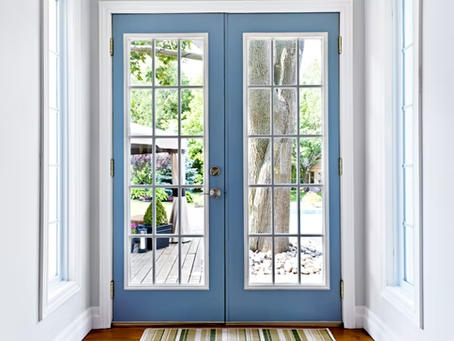
You’ve decided to add hinged French doors to your home. You’ve imagined the light pouring in, the seamless connection to your patio, the elegant look they’ll bring to your space. But now you’re wondering: What does the installation process actually look like?
Here’s the honest truth: hinged French door installation is not a simple project. These doors are heavy, they require precise alignment, and they need proper waterproofing to protect your home from Arizona’s monsoon rains and extreme heat. Unlike hanging a standard interior door, installing exterior French doors involves structural considerations, flashing, and sealing that must be done right the first time.
That’s why professional hinged French door installation is almost always the right choice. But even if you hire a pro, knowing what to expect helps you prepare, ask the right questions, and ensure the job is done correctly.
In this guide, we’ll walk you through the entire installation process—from preparation and removal to hanging, sealing, and final inspection. You’ll know exactly what’s involved, how long it takes, and what to watch for.
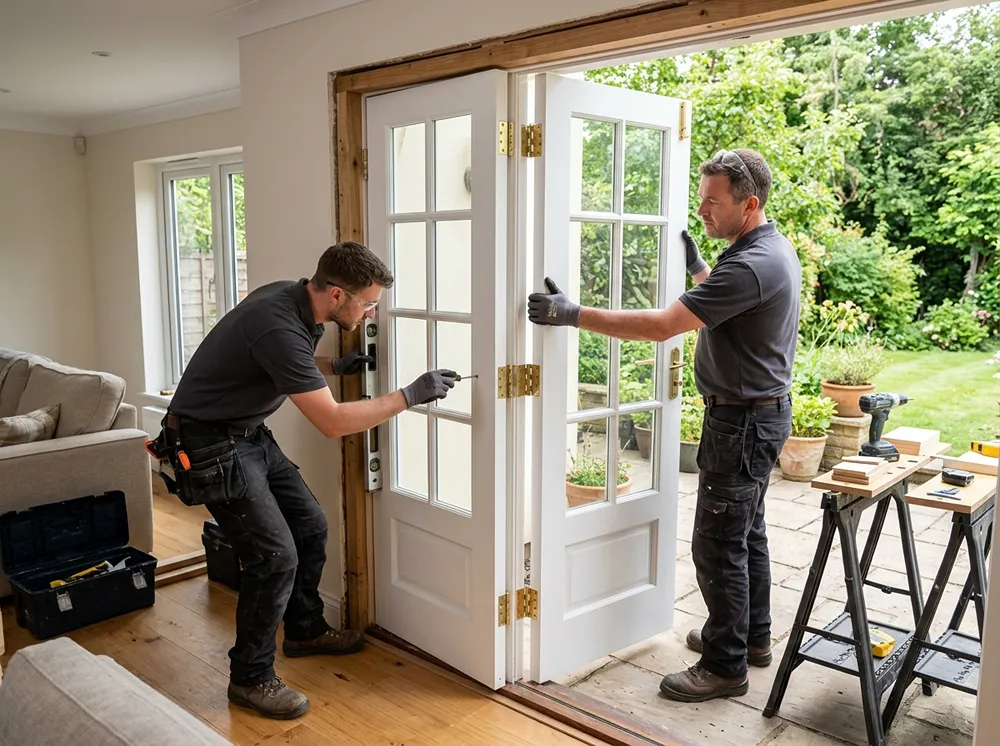
Table of Contents
Why Professional Installation Matters for French Doors
The Hinged French Door Installation Process: Step by Step
How Long Does Hinged French Door Installation Take?
How Much Does Hinged French Door Installation Cost?
Common Hinged French Door Installation Mistakes
Real-World Conditions: The “If/Then” Guide
The Regrets Homeowners Mention Most
Key Takeaways / Quick Summary
- Professional hinged French door installation costs 300–800+ in labor, with total installed costs ranging from 1,200–3,500+
- Installation typically takes 3–6 hours for a pair of exterior French doors
- French doors can weigh 200+ pounds—proper handling requires two or more installers
- Waterproofing is the most critical step—improper flashing leads to rot, mold, and water damage
- Doors must be perfectly level and square for smooth operation and proper sealing
- Arizona’s extreme heat requires Low-E glass and UV-resistant materials for exterior French doors
- Professional installation protects your warranty—most manufacturers require it
- Common mistakes include poor flashing, insufficient anchoring, and misaligned hinges
Why Professional Installation Matters for French Doors
Let’s be direct: hinged French doors are not a DIY project for most homeowners. Here’s why:
They’re heavy. A pair of exterior French doors can weigh 200 pounds or more. Handling them safely requires at least two people, and one wrong move can damage the doors—or injure you.
They require precise alignment. French doors must be perfectly level and square to open and close smoothly. If they’re even slightly off, they’ll bind, stick, and leak air.
They need proper waterproofing. Exterior French doors are a common source of water infiltration if not properly flashed and sealed. In Arizona’s monsoon season, one bad installation can lead to thousands in water damage.
They require structural considerations. The rough opening must be properly framed and reinforced to support the weight of the doors.
Most manufacturer warranties require professional installation. DIY or unqualified installation can void your warranty, leaving you unprotected if something goes wrong.
The bottom line: Professional installation isn’t a luxury—it’s an investment in the performance, longevity, and warranty protection of your French doors.
The Hinged French Door Installation Process: Step by Step
Here’s what professional hinged French door installation looks like from start to finish.
Step 1: Assessment and Measurement
Before any work begins, the installer assesses the opening and takes precise measurements.
What they do:
- Measure the rough opening width, height, and depth
- Check the squareness of the opening (diagonal measurements)
- Inspect the existing frame and wall structure for damage
- Determine the swing direction (inward or outward)
- Check for structural issues that might need repair
Why it matters: French doors are unforgiving. If the measurements are off by even a quarter inch, the doors won’t fit or operate properly.
What you should do: Clear the area inside and outside the door. Remove furniture, decorations, and anything that might obstruct the work.
Step 2: Removing the Old Door
If you’re replacing an existing door, the installer removes it carefully.
What they do:
- Score paint and caulk lines to prevent damage to surrounding walls
- Remove the old door, frame, and hardware
- Inspect the rough opening for rot, water damage, or structural issues
- Repair any damage before proceeding
Why it matters: Hidden rot or water damage can compromise the new door’s performance. It’s better to find and fix these issues before installation.
Time: 30–60 minutes
Step 3: Preparing and Waterproofing the Opening
This is the most critical step in the entire installation. Water infiltration is the #1 cause of door failure.
What they do:
- Clean the rough opening
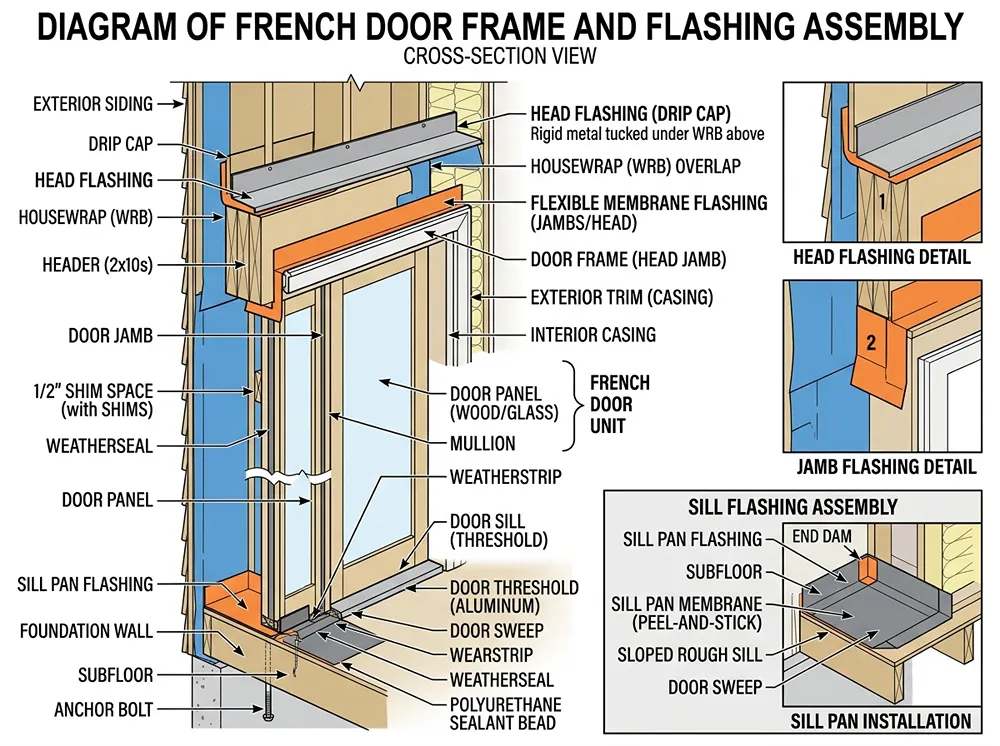
- Apply self-adhering waterproof membrane around the opening—under the sill, along the sides, and across the top
- Install a sill pan or sloped sill to direct water away from the wall
- Apply flashing tape in shingle-style layers (sill first, then sides, then top)
Why it matters: Improper flashing leads to water damage, rot, and mold. According to industry experts, rot around doors is one of the biggest problems in even relatively new houses.
Time: 30–60 minutes
Step 4: Setting the Frame
The French door frame is set into the opening.
What they do:
- Apply a bead of caulk around the perimeter of the opening
- Lift the door unit into place (requires two or more installers)
- Center the frame in the opening
- Use shims to level and square the frame
- Check level and plumb on all sides
Why it matters: If the frame isn’t perfectly level and square, the doors won’t operate properly. They’ll bind, stick, and fail to seal.
Time: 45–90 minutes
Step 5: Hanging the Doors
With the frame secure, the installer hangs the French doors.
What they do:
- Set the doors into the frame
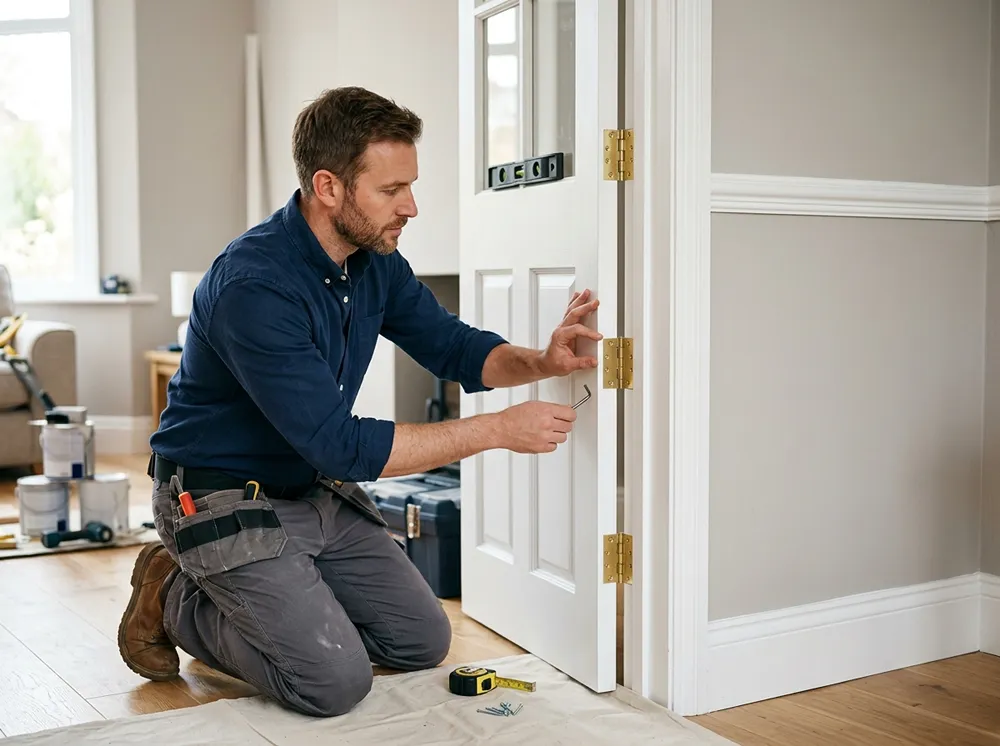
- Adjust hinges for proper alignment
- Check that both doors open and close smoothly
- Ensure the doors meet properly in the center
- Verify that the locks and hardware align
Why it matters: French doors must meet perfectly in the middle. If they don’t, you’ll have gaps, drafts, and security issues.
Time: 60–120 minutes
Step 6: Anchoring and Securing
Once the doors are aligned, the frame is anchored into place.
What they do:
- Anchor the frame into structural studs (not just stucco or drywall)
- Use 3-inch or longer screws for maximum holding power
- Check that the frame remains level and square after anchoring
- Adjust shims as needed
Why it matters: Proper anchoring ensures the door stays secure and doesn’t shift over time.
Time: 30–45 minutes
Step 7: Insulating and Sealing
The gaps between the frame and the rough opening are filled and sealed.
What they do:
- Fill gaps with low-expansion spray foam specifically designed for doors and windows
- Apply exterior caulk around the perimeter
- Install weatherstripping if not already attached
- Check for air leaks
Why it matters: Proper insulation and sealing prevent air leaks, water infiltration, and energy loss. In Arizona, this is critical for keeping your home cool.
Time: 30–45 minutes
Step 8: Hardware Installation and Final Adjustments
The final step is installing hardware and making adjustments.
What they do:
- Install handles, locks, and any additional hardware
- Adjust hinges for smooth operation
- Check that locks engage properly
- Test the doors through multiple open-close cycles
- Apply any final caulk or trim
Why it matters: Hardware must align perfectly for the doors to lock securely. Any misalignment compromises security and operation.
Time: 30–60 minutes
Step 9: Cleanup and Final Inspection
The installer cleans up and walks you through the finished installation.
What they do:
- Remove all debris and packaging
- Clean the doors and surrounding area
- Walk through the operation with you
- Answer any questions
- Provide warranty information
Time: 15–30 minutes
How Long Does Hinged French Door Installation Take?
Per pair of doors: Professional installation typically takes 3–6 hours for exterior French doors. Interior French doors may take 2–4 hours.
Factors that affect timeline:
- Door size and weight — larger, heavier doors take longer
- Wall type — stucco and brick are more challenging than wood frame
- Existing damage — rot or water damage adds repair time
- Accessibility — second-story or difficult-to-access locations add time
- Hardware complexity — multi-point locking systems take longer to install
What you should plan for: Expect the installation to take most of a day. Clear your schedule and be available for questions and the final walkthrough.
How Much Does Hinged French Door Installation Cost?
Here’s what you can expect to pay for professional hinged French door installation in Arizona:
| Cost Component | Price Range |
| Interior French Doors (Single) | $500 – $1,500 installed |
| Interior French Doors (Pair) | $800 – $2,500 installed |
| Exterior French Doors (Pair) | $1,200 – $3,500+ installed |
| French Doors with Sidelights | $2,000 – $5,000+ installed |
| Labor Only (per pair) | $300 – $800+ |
Factors that affect cost:
- Door material — wood costs more than vinyl; fiberglass and aluminum-clad are premium
- Glass options — Low-E, impact-resistant, and decorative glass add cost
- Size — custom sizes cost 30–60% more than standard
- Hardware — quality hinges, handles, and locking systems add cost
- Installation complexity — stucco, brick, and second-story installations cost more
Common Hinged French Door Installation Mistakes
After years of fixing bad installations, here are the most common mistakes we see:
Mistake 1: Improper Flashing
Improper or incomplete flashing is the #1 source of leaks. Flashing must be installed in shingle-style layers—sill first, then sides, then top. Skipping this step or doing it wrong leads to water damage.
The right way: Use self-adhering waterproof membrane and flashing tape. Create a continuous watertight seal around the entire opening.
Mistake 2: Insufficient Anchoring
French doors are heavy and need to be anchored into structural studs—not just stucco or drywall.
The right way: Use 3-inch or longer screws that reach the studs. Anchor at multiple points along the frame.
Mistake 3: Poor Alignment
If the frame isn’t perfectly level and square, the doors won’t operate properly.
The right way: Use shims to level and square the frame. Check with a level on all sides. Test the doors through multiple open-close cycles before finalizing.
Mistake 4: Skipping the Sill Pan
A sill pan directs water away from the wall. Without it, water can pool at the base of the door and cause rot.
The right way: Install a sloped sill pan or apply flashing tape in a way that creates positive drainage.
Mistake 5: Using the Wrong Foam
Standard expanding foam can bow the door frame and lock the doors in place.
The right way: Use low-expansion foam specifically designed for doors and windows.
Mistake 6: Not Sealing Properly
Gaps around the frame let in air, water, and insects.
The right way: Apply exterior caulk around the entire perimeter. Check for air leaks and seal as needed.
Real-World Conditions: The “If/Then” Guide
Here’s how hinged French door installation varies based on your specific situation:
If you have a stucco exterior → Then your installer needs to cut back the stucco to access the structural framing. This requires skill and experience—not all installers know how to do this correctly.
If you have a brick exterior → Then the installer will need to anchor into the brick and the framing behind it. Brick can be more challenging to work with, but it also provides a solid surface for anchoring.
If you have a wood-frame home → Then installation is more straightforward. The installer can anchor directly into the studs through the exterior siding.
If you’re replacing an existing door → Then the installer will remove the old door and frame, inspect for damage, and install the new doors. This may reveal hidden rot or structural issues.
If your opening is not square → Then the installer may need to modify the framing or use additional shims to level and square the doors.
If you have a second-story installation → Then expect additional labor costs and safety considerations. Scaffolding or ladders may be required.
If you want maximum energy efficiency → Then choose French doors with Low-E glass and insulated frames. This is essential in Arizona’s extreme heat.
If you’re also replacing windows → Then coordinate the projects. Installing doors and windows together ensures a seamless look and optimal performance. For more information, see our guide on exterior entry door installation.
If you’re comparing French doors to other options → Then read our guide on French doors vs sliding patio doors to make the right choice.
If you’re ready to install → Then hire a professional. Even the best doors can be compromised by poor installation.
The Regrets Homeowners Mention Most
After helping thousands of Arizona homeowners with French door installation, here are the most common regrets:
Mistake 1: Hiring the cheapest installer
The lowest bid often cuts corners on the most critical steps—flashing, anchoring, and sealing. Saving $200 on installation can cost you thousands in water damage repairs.
Mistake 2: Assuming all installers know how to work with stucco
Arizona’s stucco homes require special techniques. Installers who aren’t experienced with stucco may damage the wall or fail to anchor the door properly.
Mistake 3: Not checking the warranty
Some manufacturers require professional installation for warranty coverage. DIY or unqualified installation can void your warranty.
Mistake 4: Skipping the final inspection
Some homeowners don’t test the doors thoroughly after installation. If the doors don’t lock properly or have gaps, you need to know before the installer leaves.
Mistake 5: Forgetting about maintenance
French doors need hinge lubrication, weatherstripping checks, and (for wood doors) regular refinishing. Neglecting maintenance shortens their lifespan.
Frequently Asked Questions
How much does hinged French door installation cost?
Professional installation labor typically costs 300–800+ per pair. Total installed costs range from 1,200–3,500+ depending on door material, glass, and size.
How long does hinged French door installation take?
A professional crew can install a pair of exterior French doors in 3–6 hours. Interior French doors may take 2–4 hours.
Can I install hinged French doors myself?
We strongly recommend professional installation. French doors are heavy, require precise alignment, and need proper waterproofing. Poor installation leads to leaks, sticking, and premature failure—and voids most warranties.
What’s the most important step in French door installation?
Waterproofing. Improper flashing is the #1 source of leaks. Proper flashing and sealing prevent water damage, rot, and mold.
How do I prepare my home for French door installation?
Clear the area inside and outside the door. Remove furniture, decorations, and anything that might obstruct the work. Keep pets and children away from the work area.
Do I need a permit for French door installation in Arizona?
It depends on the scope of the project. Replacing an existing door often doesn’t require a permit, but adding a new door opening may. Check with your local building department.
What’s the difference between interior and exterior French door installation?
Exterior French doors require waterproofing, flashing, and weather-resistant materials. Interior French doors are simpler to install and don’t need weatherproofing.
How do I know if my French doors were installed correctly?
Check that:
- The doors open and close smoothly
- They meet properly in the center
- Locks engage securely
- There are no gaps or drafts
- The frame is level and square
What’s the difference between French door installation and exterior entry door installation?
French door installation refers specifically to hinged French doors, which are typically used for patios and interior spaces. Exterior entry door installation refers to installing a primary entry door. For more information, see our guide on exterior entry door installation.
How do I maintain my French doors after installation?
Lubricate hinges annually, check and replace weatherstripping as needed, clean glass regularly, and refinish wood doors every 2–3 years (more often in Arizona).
Why Choose Windowz4Less Arizona?
Windowz4Less Arizona specializes in hinged French door installation for homes across the Phoenix metro area. We understand Arizona’s unique construction methods—including stucco exteriors—and we know how to install French doors that perform beautifully for decades.
- Local expertise — We know Arizona’s stucco homes and how to properly flash and anchor French doors
- Quality products — We offer wood, fiberglass, and aluminum-clad French doors from leading manufacturers
- Professional installation — Our team is trained, insured, and follows industry best practices
- Transparent pricing — No hidden fees, no surprises
- Free estimates — No-obligation quotes with honest, straightforward advice
- Serving Mesa, Phoenix, and surrounding areas — We’re your local experts
When you work with us, you get hinged French door installation that’s done right—properly flashed, perfectly aligned, and built to last.
Your Next Step: Get Professional French Door Installation
Hinged French doors are a beautiful addition to any home—but only when installed correctly. Don’t trust your investment to just anyone.
Contact Windowz4Less Arizona today for a free, no-obligation estimate. We’ll assess your opening, recommend the right French doors, and provide professional installation you can trust.