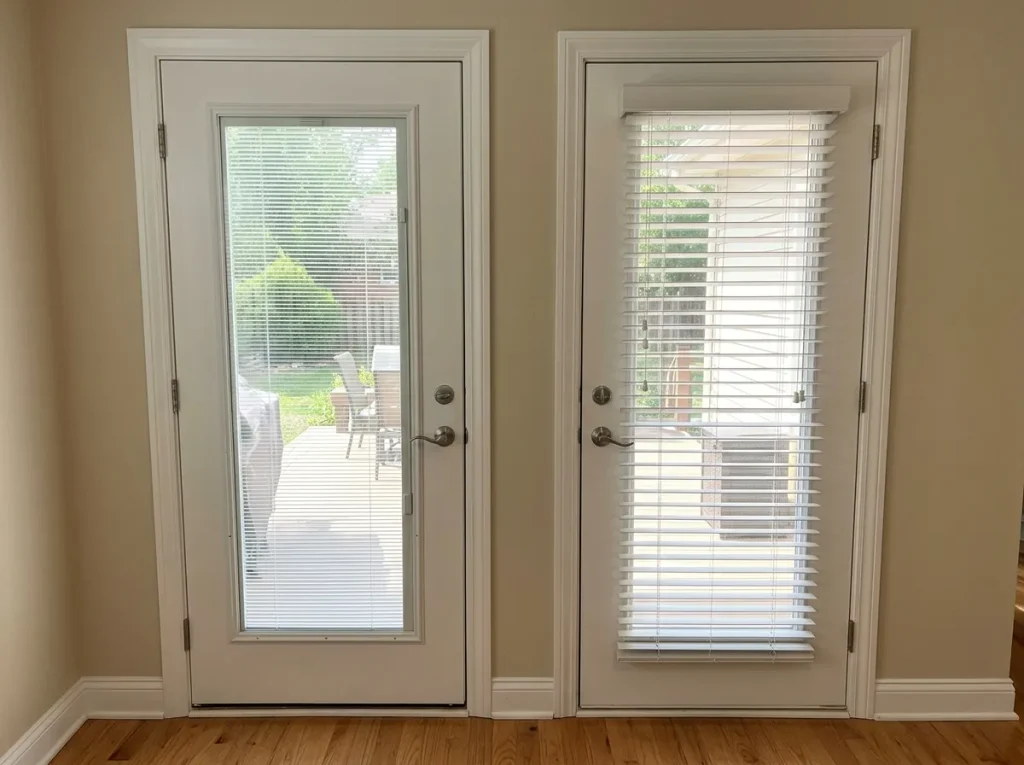
You’re standing in front of your patio door, staring at a set of blinds that have seen better days. The slats are bent. The cords are tangled. And when you run a finger along a slat, it comes away grey with dust.
You’ve heard about the alternative—blinds sealed inside the glass—and now you’re weighing your options. Are integrated blinds actually better? Or is it just hype?
Here’s the honest answer: for most Arizona homeowners with patio doors, integrated blinds win on maintenance, safety, and energy efficiency. But traditional blinds still win on upfront cost and flexibility. So the “better” choice depends on what you value most.
In this guide, we’ll put integrated blinds vs traditional blinds head to head across cost, cleaning, safety, durability, energy performance, and aesthetics—so you can decide with confidence rather than guesswork.
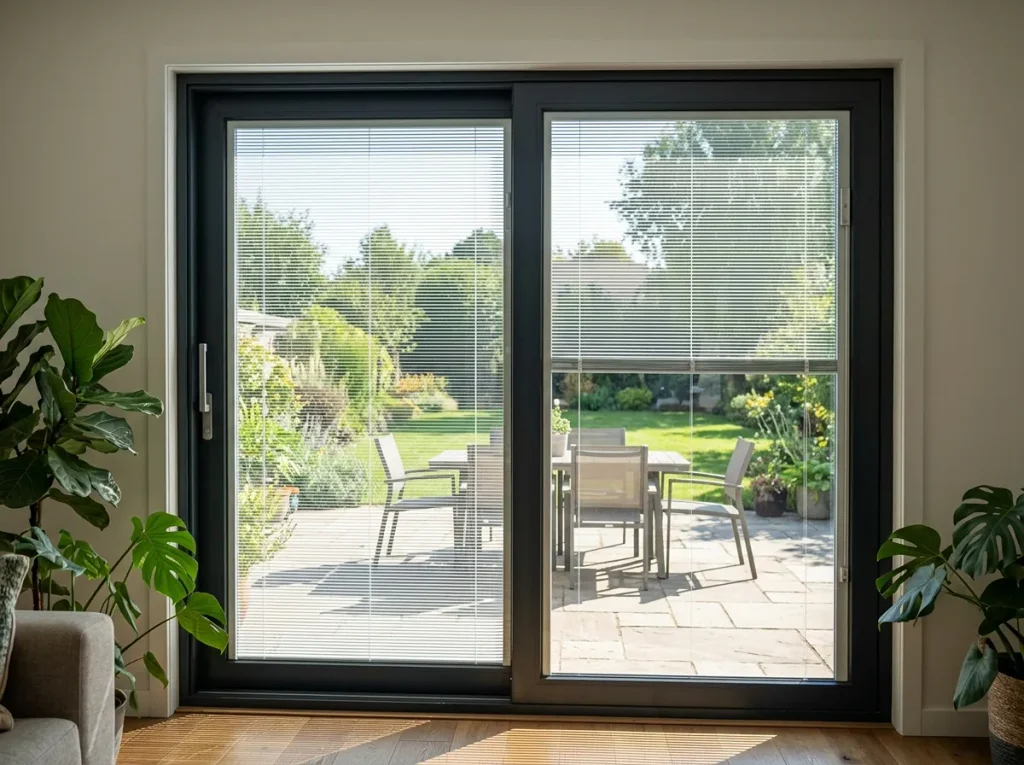
Table of Contents
Integrated Mini Blinds vs Traditional Blinds: Side-by-Side Comparison
Cost: Traditional Blinds Win Upfront
Cleaning: Integrated Blinds Win by a Mile
Safety: Integrated Blinds Win Decisively
Energy Efficiency: Integrated Blinds Win on Insulation
Aesthetics and Style Flexibility
Real-World Conditions: The “If/Then” Guide
Key Takeaways / Quick Summary
- Integrated blinds are sealed between glass panes; traditional blinds hang on the interior surface
- Traditional blinds cost 50–300 per door; integrated blinds run 200–800+, often built into a new door
- Integrated blinds require zero dusting—you only clean the glass
- Corded blinds remain a documented strangulation hazard; integrated blinds are cordless by design
- Windows account for 25–30% of residential heating and cooling energy use, and integrated blinds add an insulating layer
- Homeowners report 5–15% cooling cost reductions with integrated blinds in hot climates
- Traditional blinds offer more style variety and can be swapped out anytime
- Integrated blind units can’t be repaired if the seal fails—the glass unit must be replaced
What Are Traditional Blinds?
Traditional blinds are the window treatments most of us grew up with. They mount on the interior side of the glass and hang from a headrail. You tilt the slats with a wand or cord, and raise or lower them with cords or a cordless mechanism.
Common types: horizontal mini blinds, vertical blinds (popular for sliders), faux wood blinds, and cellular shades.
Strengths: cheap, widely available, easy to replace, huge selection of colors and materials.
Weaknesses: dust magnets, cords pose a safety risk, slats bend, and they offer little insulation value.
What Are Integrated Blinds?
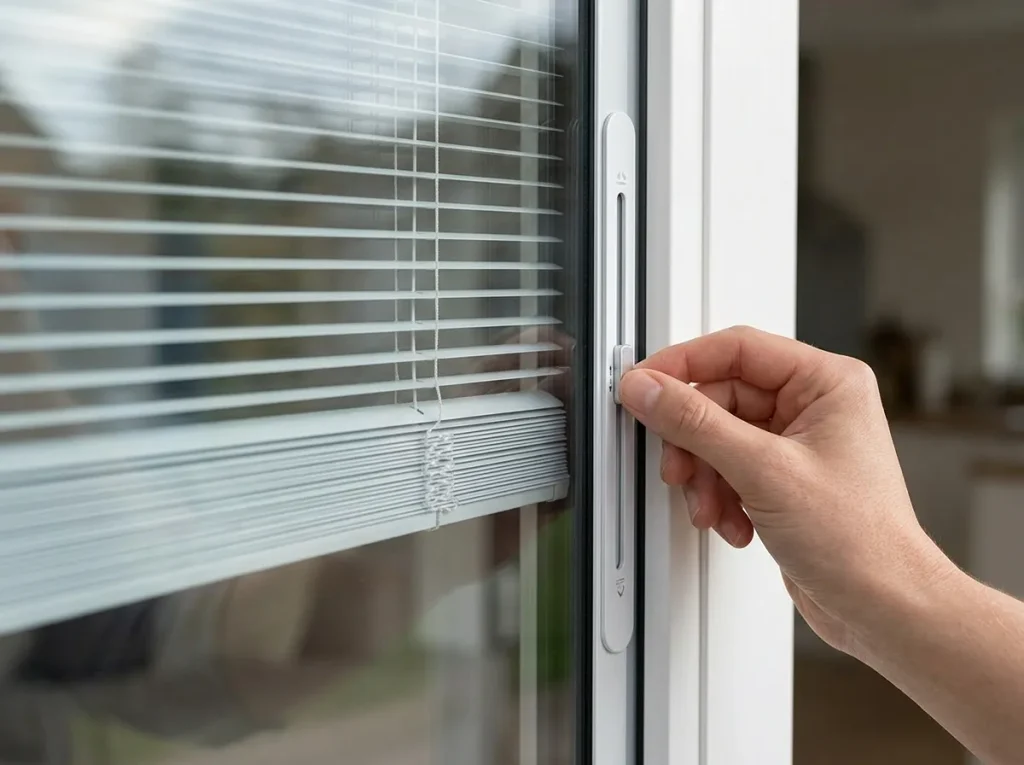
Integrated blinds—also called blinds between glass—are mini blinds permanently sealed inside an insulated glass unit (IGU). You operate them with a slider or magnetic control mounted on the door frame.
Because the blinds sit inside the sealed cavity, dust, moisture, and fingers can’t reach them. They’re most common in patio doors, sliding glass doors, and French doors.
Strengths: dust-free, cordless, low maintenance, adds an insulating layer, protected from damage.
Weaknesses: higher upfront cost, limited style options, and if the seal fails the whole glass unit needs replacement.
Integrated Mini Blinds vs Traditional Blinds: Side-by-Side Comparison
Here’s the direct comparison that matters most when you’re deciding between integrated mini blinds vs traditional blinds for a patio door.
| Feature | Integrated Blinds | Traditional Blinds |
| Location | Sealed between glass panes | Mounted on interior surface |
| Cost (per door) | $200 – $800+ | $50 – $300 |
| Cleaning | Wipe glass only | Dust every slat, vacuum, or wash |
| Dust & Allergens | Cannot accumulate | Collect dust and pollen |
| Cord Safety | Cordless by design | Cords on many models—strangulation risk |
| Energy Performance | Adds insulating air space | Minimal insulation value |
| Durability | Protected from bending and damage | Slats bend, cords fray |
| Style Variety | Limited to manufacturer options | Extensive |
| Repairability | Seal failure = replace glass unit | Slats and cords can be replaced individually |
| Best For | Patio doors, low-maintenance homes, families with kids | Rentals, budget projects, frequent style changes |
The short version: integrated blinds trade upfront cost and style variety for lower maintenance, better safety, and better energy performance.
Cost: Traditional Blinds Win Upfront
Let’s not sugarcoat this one. Traditional blinds are cheaper—often dramatically so.
A decent set of traditional blinds for a standard sliding patio door runs $50 to $300, depending on material and size. Vertical blinds, which are common on sliders, typically land in the $80 to $250 range.
Integrated blinds are a different purchase entirely. Expect $200 to $800+ per door, and they’re usually bought as part of a new patio door rather than retrofitted onto an existing one.
But here’s the catch most people miss: that price gap narrows over time. Traditional blinds on a patio door typically need replacing every 5 to 10 years because of sun damage, bent slats, and broken cords. Integrated blinds, protected inside the glass, commonly last 20 to 30 years.
If your budget is the hard constraint → Then traditional blinds are the practical choice today.
If you’re replacing the patio door anyway → Then the incremental cost of adding integrated blinds is often far smaller than buying them separately.
Cleaning: Integrated Blinds Win by a Mile
Let’s be honest about traditional blinds. Cleaning them is the worst chore in the house.
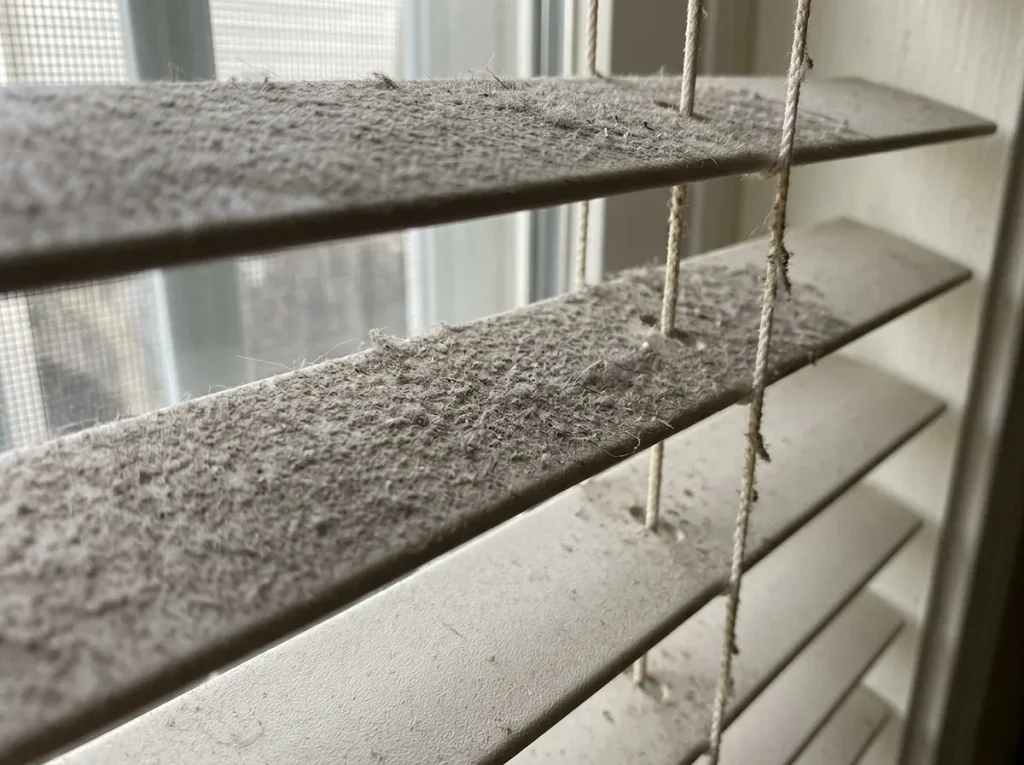
You dust each slat individually. You vacuum with a brush attachment. You take them down and wash them in the tub. And within a month, they’re dusty again—especially in Arizona, where dust is a fact of life.
Integrated blinds eliminate the chore entirely. Dust physically cannot reach the slats. Cleaning means wiping the interior and exterior glass with a soft cloth and a non-ammonia glass cleaner. That’s it.
If you have allergies or asthma → Then this matters more than cost. Fewer dust reservoirs in the home means cleaner air.
If you live in a dusty part of the Valley → Then integrated blinds save you hours of work every single year.
Safety: Integrated Blinds Win Decisively
This isn’t a matter of preference—it’s a matter of documented risk.
According to the U.S. Consumer Product Safety Commission, cords from window coverings have caused hundreds of child deaths and thousands of injuries from strangulation. That’s why the window covering industry adopted updated safety standards requiring stock window coverings to be cordless or have short, inaccessible cords.
Traditional corded blinds still exist on the market—and plenty of homes still have them installed. Every one is a potential hazard if there’s a toddler or a curious pet in the house.
Integrated blinds have no cords at all. Operation is a slider or magnetic control. There’s nothing to loop, nothing to pull, nothing to tangle.
If you have young children or pets → Then this is close to a dealbreaker for traditional corded blinds.
If you’re shopping for a rental property → Then cordless options reduce your liability exposure considerably.
Energy Efficiency: Integrated Blinds Win on Insulation
Arizona’s heat is unforgiving, and every layer between your cool living room and the 110°F air outside matters.
According to the U.S. Department of Energy, heat gain and loss through windows accounts for 25–30% of residential heating and cooling energy use. That’s a huge slice of your bill.
Traditional blinds sit on the room side of the glass. They block some radiant heat and light, but they don’t insulate the glass itself. In fact, a poorly fitted traditional blind can trap hot air between the blind and the glass, which is why some experts caution against closing interior blinds tight against single-pane glass on sunny days.
Integrated blinds sit inside a sealed, gas-filled cavity between two panes. That cavity—plus the blinds themselves—adds a genuine insulating layer. Homeowners in hot climates commonly report 5–15% reductions in cooling costs after upgrading.
If you want the biggest energy impact → Then pair integrated blinds with Low-E glass and a proper thermal-break frame. The blinds are a supplement, not a substitute.
Durability and Longevity
Traditional blinds live a hard life. Sun exposure yellows them. Slats get bent by a passing shoulder or a vacuum wand. Cords fray and snap. On a patio door—the highest-traffic window in most homes—that wear happens fast.
Integrated blinds are shielded from all of it. They’re sealed inside glass. Kids can’t grab them, pets can’t chew them, and the sun hits the glass before it hits the slats.
The trade-off is repairability. A bent slat on a traditional blind is a $15 fix. If the seal on an integrated unit fails—you’ll know because the glass fogs—the entire insulated glass unit typically needs replacement.
If you want maximum lifespan → Then integrated blinds, assuming you buy a quality unit with a solid seal warranty.
If you want the cheapest repair path → Then traditional blinds are more forgiving.
Aesthetics and Style Flexibility
Traditional blinds win here, clearly.
You can choose from hundreds of colors, slat widths, materials, and textures. You can swap them out when you redecorate. You can change your mind in five years without replacing a door.
Integrated blinds come in whatever the manufacturer offers—typically a handful of colors and slat options. You’re choosing once, and living with it.
That said, integrated blinds offer something traditional blinds can’t: a built-in, architectural look. There’s no headrail clutter, no dangling cords, no visible hardware. It reads as part of the door, not an accessory bolted onto it.
If you redecorate often → Then traditional blinds give you flexibility.
If you want a clean, permanent, built-in look → Then integrated blinds deliver it.
Real-World Conditions: The “If/Then” Guide
Here’s how to decide based on your actual situation:
If you have young children or pets → Then choose integrated blinds. Cordless operation removes a documented strangulation hazard entirely.
If you’re on a tight budget and the door is fine → Then choose traditional blinds. Spend 50–250 now, plan the upgrade for when the door itself needs replacing.
If you’re replacing the patio door anyway → Then add integrated blinds to the order. The incremental cost is usually far lower than buying a standalone treatment later.
If anyone in the home has allergies → Then choose integrated blinds. No dust reservoir on the slats means cleaner indoor air.
If your patio door faces west or south → Then choose integrated blinds and insist on Low-E glass. That combination handles Arizona’s afternoon sun best.
If you live in a rental or plan to move soon → Then choose traditional blinds. They’re portable and cheap.
If you redecorate frequently → Then choose traditional blinds for the style flexibility.
If you have a French door with a crank or swing → Then check clearance. Traditional blinds can interfere with door swing and hardware; integrated blinds avoid that entirely.
If you’re selling your home → Then integrated blinds are a marketable, visible upgrade. Buyers understand “low maintenance.”
If you want the lowest lifetime cost → Then run the math over 20 years. Traditional blinds replaced three or four times often cost more than one integrated unit.
The Regrets Homeowners Mention Most
Here’s what homeowners tell us they wish they’d known before choosing:
Regret 1: Buying cheap traditional blinds for a sunny patio door
They fade, warp, and break within a few years—especially on west-facing sliders in Arizona. The “savings” evaporate on the second or third replacement.
Regret 2: Assuming integrated blinds can be repaired
They usually can’t. If the seal fails and the glass fogs, the insulated glass unit gets replaced. Buy from a manufacturer with a strong seal warranty, and keep the paperwork.
Regret 3: Not checking whether the door can be retrofitted
Integrated blinds are typically ordered with a new door. Retrofitting an existing door is limited and sometimes impossible. Homeowners often discover this after they’ve already budgeted for it.
Regret 4: Ignoring the glass package
Some buyers focus on the blinds and forget the glass. In Arizona, Low-E coating and a low solar heat gain coefficient matter far more to your energy bill than the blinds do. Get both.
Regret 5: Buying corded blinds in a home with toddlers
This one is genuinely serious. If there’s any chance a child or pet could reach the cords, choose cordless—integrated or otherwise. There’s no aesthetic or budget justification worth that risk.
Common Questions We Get Asked
Are integrated blinds better than traditional blinds?
For patio doors, usually yes—on maintenance, safety, and energy efficiency. Traditional blinds are better on upfront cost and style variety. It depends which of those you weight most.
How much do integrated blinds cost compared to traditional blinds?
Traditional blinds run 50–300 per patio door. Integrated blinds run 200–800+ and are typically purchased with a new door.
Can integrated blinds be added to my existing patio door?
Usually not. They’re built into a sealed insulated glass unit during manufacturing. Retrofitting is limited to specific door systems.
Are integrated blinds really dust-free?
Yes. The blinds are sealed inside the glass cavity, so dust and allergens can’t reach the slats. You clean only the glass surfaces.
Do integrated blinds actually save energy?
They add an insulating layer between the panes, and homeowners commonly report 5–15% cooling cost reductions. The bigger energy wins come from the glass package itself—Low-E coatings and low solar heat gain coefficient.
Are traditional blinds dangerous for children?
Corded blinds have caused hundreds of child deaths from strangulation, according to the CPSC. If you choose traditional blinds, choose cordless or short-cord models.
How long do integrated blinds last?
With a quality unit and an intact seal, commonly 20–30 years. If the seal fails, the glass unit needs replacement.
What happens if the seal on integrated blinds fails?
The glass fogs and the unit must be replaced. That’s why the manufacturer’s seal warranty matters more than almost any other spec.
Can I clean integrated blinds with regular glass cleaner?
Use a non-ammonia glass cleaner and a soft cloth. Avoid abrasive pads and harsh chemicals that can damage low-E coatings.
Which is better for a sliding patio door?
Integrated blinds are generally the better fit—vertical traditional blinds on sliders tend to swing, rattle, and collect dust along the track. Integrated blinds stay put and stay clean.
The Bottom Line
If you’re weighing integrated blinds vs traditional blinds purely on price, traditional blinds win. There’s no way around that.
But price isn’t the whole cost. Traditional blinds cost you cleaning time every month, replacement every 5–10 years, lost insulation, and—if they have cords—a real safety risk in a home with kids or pets.
Integrated blinds cost more on day one and then largely disappear from your to-do list. No dusting. No tangles. No cords. An extra layer of insulation against Arizona’s heat. And a clean, built-in look that lasts decades.
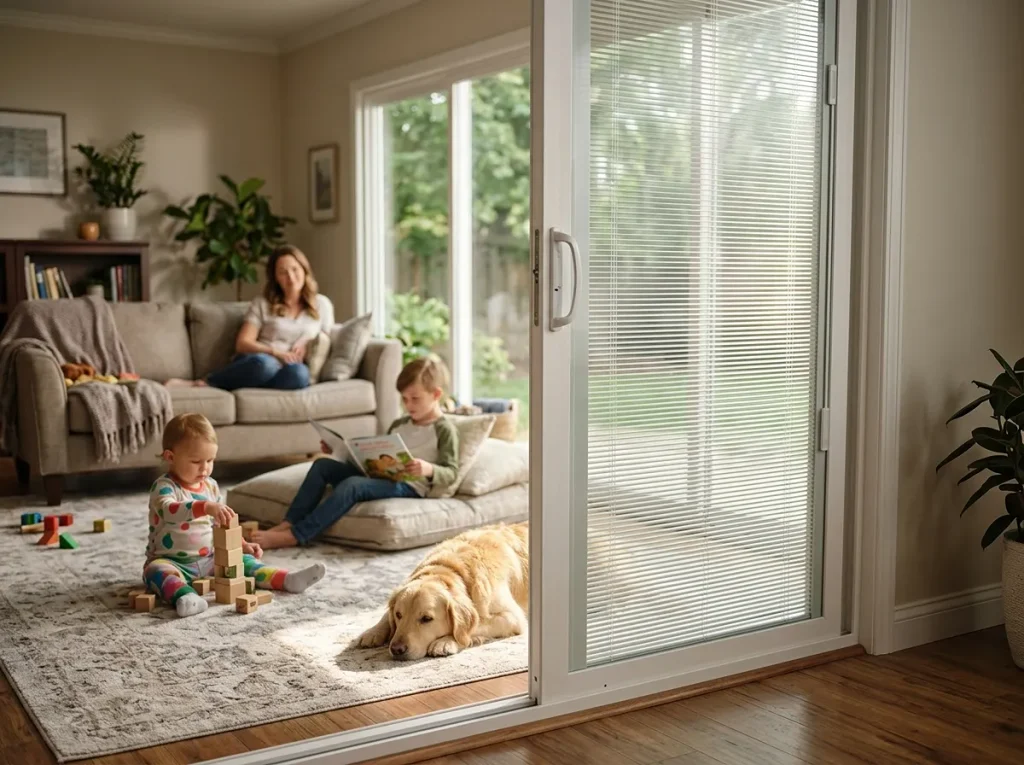
For a patio door in an Arizona home—especially one with children, pets, or allergy sufferers—integrated blinds are usually the better long-term buy.
Your Next Step
If you’re replacing a patio door and want to compare integrated and traditional options side by side, get a professional assessment before you commit. The right answer depends on your door type, your sun exposure, and how the unit will be installed.
Contact Windowz4Less Arizona today for a free, no-obligation estimate. We’ll walk you through the options, explain the glass packages that matter in our climate, and help you choose the treatment that fits your home and budget.