One of the biggest reasons homeowners choose integrated mini blinds is the promise of “no maintenance.” And compared to traditional blinds—which need dusting every few weeks and replacing every few years—that promise largely holds up.
But “low maintenance” isn’t the same as “no maintenance.”
Here’s what most people don’t realize: the blinds themselves are sealed away and essentially self-maintaining, but the glass, seals, and operating mechanism still need occasional attention. And in Arizona’s dust, heat, and intense UV, a little preventive care goes a long way toward protecting the investment you made in integrated mini blinds for patio doors.
The good news? A proper maintenance routine takes about 15 minutes, twice a year. That’s it.
In this guide, we’ll walk you through exactly how to clean and maintain integrated mini blinds—what to do, what to avoid, and what to check so small issues don’t become expensive ones.
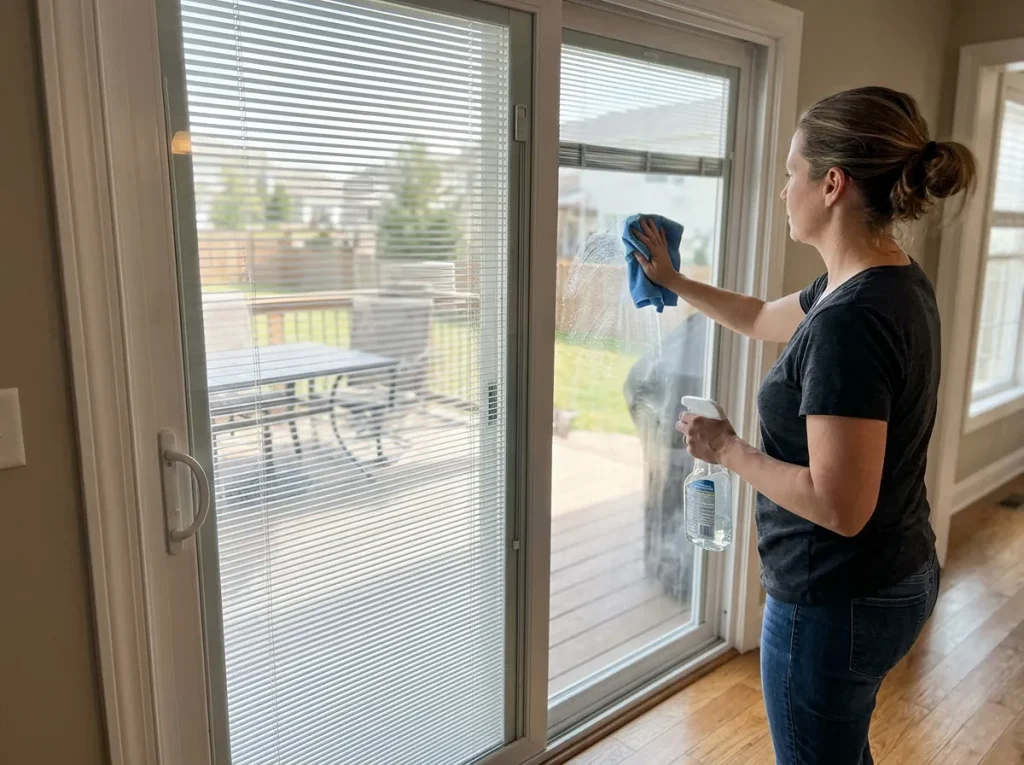
Table of Contents
What Actually Needs Cleaning (And What Doesn’t)
Routine Cleaning: Every 2–3 Months
Annual Maintenance: Once a Year
Integrated Mini Blinds Maintenance Schedule
Real-World Conditions: The “If/Then” Guide
The Regrets Homeowners Mention Most
Key Takeaways / Quick Summary
- Clean the glass every 2–3 months with a non-ammonia glass cleaner and soft cloth
- Never use abrasive pads or harsh chemicals—they can damage Low-E coatings
- Inspect the seal twice a year for fogging, which signals seal failure
- Lubricate the slider or magnetic control annually with silicone spray
- Clean the door tracks and threshold to prevent debris buildup
- Check the frame and weatherstripping for gaps that let in dust and heat
- Seal failure cannot be repaired—the glass unit must be replaced, so warranty documentation matters
- Arizona’s dust and UV make twice-yearly inspection worthwhile
What Actually Needs Cleaning (And What Doesn’t)
Let’s clear up the most common confusion first.
The blinds themselves: They’re sealed inside the glass cavity. Dust, moisture, and fingers can’t reach them. You do not dust, vacuum, or wash the slats. Ever.
The glass: Both interior and exterior surfaces need regular cleaning, just like any window.
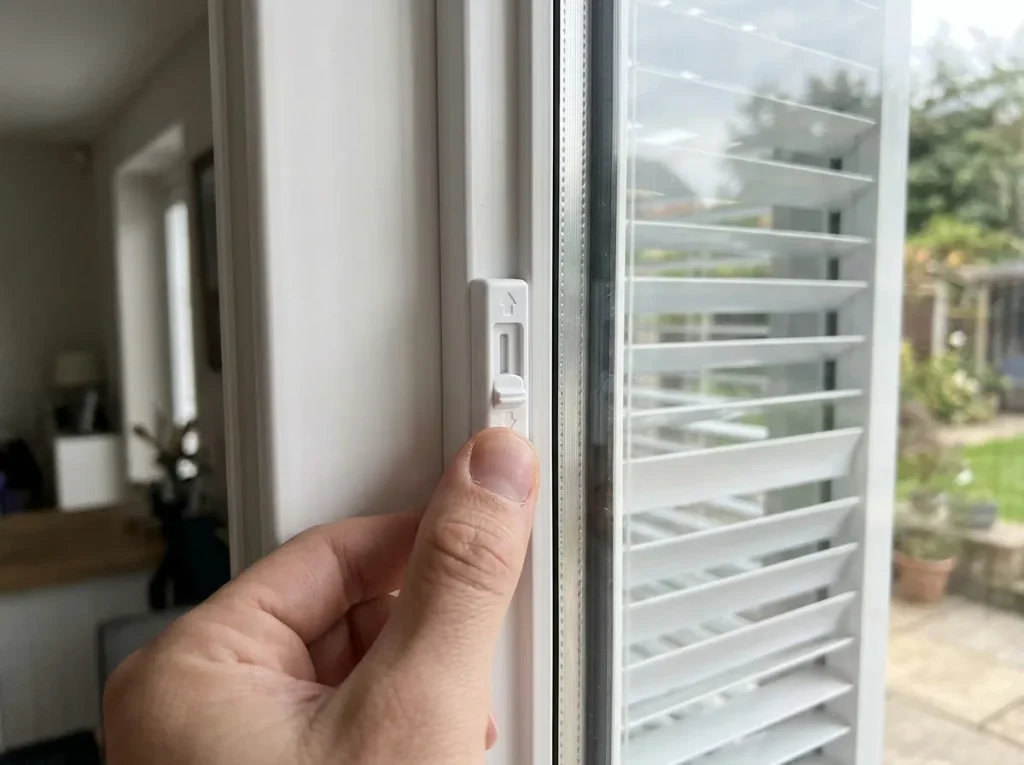
The operating mechanism: The slider or magnetic control on the door frame needs occasional lubrication and a debris check.
The door frame, tracks, and threshold: These collect dust, pollen, and debris—especially in Arizona—and need periodic cleaning.
That’s the whole list. Four things, not forty.
Routine Cleaning: Every 2–3 Months
This is the simple part. Here’s the step-by-step.
Step 1: Clean the Interior Glass
Use a non-ammonia glass cleaner and a soft microfiber cloth or paper towel. Spray the cloth, not the glass, to avoid drips running into the frame. Wipe in a circular motion, then buff with a dry cloth for a streak-free finish.
Why non-ammonia? Ammonia can degrade Low-E coatings over time. Since most quality patio doors in Arizona have Low-E glass, this matters. Avoid abrasive pads and scouring powders entirely.
Pro tip: Clean glass on a cloudy day or when the door is in shade. Cleaners evaporate too fast in direct sun, leaving streaks.
Step 2: Clean the Exterior Glass
Same process, exterior side. In Arizona, dust and pollen accumulate quickly on exterior glass, so this may need more frequent attention during windy seasons.
Safety note: For second-story patio doors, don’t lean out. Use an extension pole with a glass-cleaning attachment, or hire a professional.
Step 3: Wipe Down the Frame and Mechanism
Dampen a cloth with mild soapy water and wipe the door frame, the slider control, and the surrounding trim. Pay attention to the track where the slider moves—dust collects there and can make the mechanism stiff.
Don’t spray cleaner directly into the mechanism. Wipe around it, not into it.
Step 4: Clean the Tracks and Threshold
Vacuum or sweep the bottom track and threshold. Use a vacuum with a crevice tool or a small brush to get into corners. Debris in the track prevents the door from sealing properly and traps moisture against the frame.
Annual Maintenance: Once a Year
These tasks take a bit longer but protect the long-term performance of your door and blinds.
Lubricate the Operating Mechanism
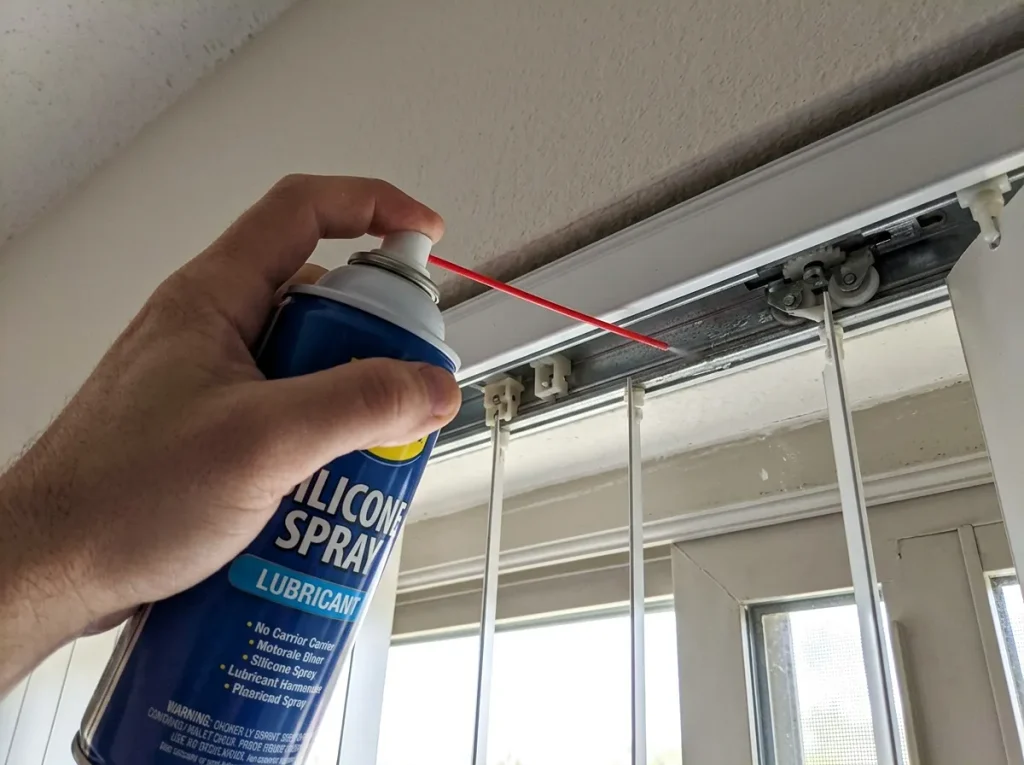
Apply a small amount of silicone-based lubricant or dry PTFE spray to the slider track or magnetic control mechanism. Move the control up and down several times to distribute it.
Never use oil or grease. They attract dust, which gums up the mechanism—especially in Arizona’s dusty environment.
Pro tip: If you live in a dusty area or near construction, lubricate every 6 months instead of annually.
Inspect the Glass Seal
This is the most important annual check. Look closely at the edges of the glass unit for:
- Fogging or condensation between the panes — the clearest sign of seal failure
- Cloudiness or a white haze at the edges
- Visible gaps in the sealant around the perimeter
If you see fogging, the seal has failed. The insulating gas has escaped, and the unit has lost most of its energy efficiency. This cannot be repaired—the insulated glass unit (IGU) must be replaced.
Why this matters: Seal failure is the one maintenance issue that turns a low-cost routine into a significant expense. That’s why the manufacturer’s seal warranty is the most important spec on your original purchase. Keep the documentation.
Check Weatherstripping and Frame Seals
Inspect the weatherstripping around the door perimeter. Look for cracks, gaps, or worn areas. Do the candle test: on a breezy day, hold a candle or lighter near the edges of the closed door. If the flame flickers, you have an air leak.
Replace worn weatherstripping as needed—it’s inexpensive and prevents dust, heat, and moisture from getting in.
Check the Frame and Anchoring
Look for:
- Cracks or gaps in the caulking around the frame
- Soft or spongy wood near the threshold (a sign of water damage)
- Loose screws or hardware
Address small issues before they become structural ones.
What to Avoid
Some cleaning habits do more harm than good. Here’s what to skip:
❌ Ammonia-based glass cleaners — can degrade Low-E coatings over time
❌ Abrasive pads or scouring powders — scratch glass and frames
❌ Pressure washers — force water into seals and frames, causing damage
❌ Oil or grease lubricants — attract dust and gum up mechanisms
❌ Spraying cleaner directly into the mechanism — traps moisture and debris
❌ Harsh chemicals or solvents — can damage frame finishes and sealants
❌ Scraping or prying at the seal — you’ll compromise the seal and void the warranty
Integrated Mini Blinds Maintenance Schedule
| Task | Frequency | Time Required |
| Clean interior glass | Every 2–3 months | 5 minutes |
| Clean exterior glass | Every 2–3 months | 5 minutes |
| Wipe frame and mechanism | Every 2–3 months | 3 minutes |
| Clean tracks and threshold | Every 2–3 months | 5 minutes |
| Lubricate operating mechanism | Annually (or every 6 months in dusty areas) | 5 minutes |
| Inspect glass seal for fogging | Twice a year | 5 minutes |
| Check weatherstripping | Twice a year | 5 minutes |
| Inspect frame and caulking | Annually | 10 minutes |
Total time per year: Roughly one hour. That’s the entire maintenance burden for a product that replaces years of dusting and replacement cycles.
Real-World Conditions: The “If/Then” Guide
Here’s how to adjust your maintenance routine for your specific situation:
If you live in a dusty area or near construction → Then clean the glass and tracks more frequently—every 4–6 weeks instead of every 2–3 months—and lubricate the mechanism every 6 months.
If your patio door faces west or south → Then inspect the seal and weatherstripping more often. These exposures get the most intense sun and UV, which degrade seals and finishes faster.
If you have children or pets → Then check the glass regularly for sticky fingerprints and smudges. The cordless design eliminates the strangulation hazard, but glass still needs cleaning.
If you notice fogging between the panes → Then contact your installer immediately. Seal failure cannot be repaired, but if the unit is under warranty, replacement may be covered. Document everything with photos.
If the slider control feels stiff → Then lubricate it with silicone spray. If it’s still stiff after lubrication, have a professional inspect the mechanism—forcing it can cause damage.
If you see water pooling in the track → Then check the drainage holes. In Arizona, monsoon rains can overwhelm blocked drains. Clear them with a small wire or pipe cleaner.
If your door is over 15 years old → Then inspect the seal more frequently. Seal failure becomes more common as units age, and catching it early helps you plan for replacement rather than being surprised by it.
If you’re preparing to sell your home → Then clean the glass thoroughly before showings and have your seal warranty documentation ready. Buyers appreciate low-maintenance features, and the warranty is a selling point.
If you’re comparing maintenance needs to traditional blinds → Then remember the biggest difference: you’ll never dust a slat. Traditional blinds on a sunny patio door need dusting every few weeks and replacing every 5–10 years. This is a fundamentally different maintenance profile.

The Regrets Homeowners Mention Most
Here’s what homeowners tell us they wish they’d known about maintaining integrated mini blinds:
Regret 1: Assuming “no maintenance” meant “never check anything”
The blinds are self-maintaining, but the seal isn’t. Homeowners who never inspect the seal often discover fogging years after it started—sometimes after the warranty period has lapsed.
Regret 2: Using ammonia-based cleaner on Low-E glass
It’s a common mistake, and it can degrade the Low-E coating over time. Read the label on your glass cleaner before you spray.
Regret 3: Losing the warranty paperwork
Seal failure means replacing the entire glass unit, which is expensive. The seal warranty is the single most valuable document you have for this product. File it somewhere you’ll find it.
Regret 4: Spraying cleaner directly into the mechanism
It seems harmless, but it traps moisture and debris in the slider track. Wipe around the mechanism, never spray into it.
Regret 5: Ignoring water in the track after monsoon season
Pooled water against the frame leads to rot and water damage. Clear the drainage holes after every heavy rain.
Regret 6: Skipping lubrication in dusty areas
Arizona’s dust accelerates wear on the slider mechanism. Annual lubrication isn’t enough in dusty areas—do it every 6 months.
Common Questions We Get Asked
How often should I clean integrated mini blinds?
Clean the glass every 2–3 months and inspect the seal twice a year. You never need to clean the blind slats themselves—they’re sealed inside the glass.
Do I need to dust integrated mini blinds?
No. The blinds are sealed between two panes of glass, so dust can’t reach them. This is the biggest maintenance advantage over traditional blinds.
What’s the best cleaner for integrated mini blinds?
A non-ammonia glass cleaner and a soft microfiber cloth. Avoid abrasive pads, scouring powders, and harsh chemicals that can damage Low-E coatings.
How do I clean the outside of a second-story patio door?
Use an extension pole with a glass-cleaning attachment, or hire a professional window cleaner. Never lean out from a second-story opening.
How do I know if the seal has failed?
Look for fogging or condensation between the glass panes. A white haze at the edges is also a sign. If you see either, the seal has failed and the glass unit needs replacement.
Can foggy integrated blinds be repaired?
No. Once the seal fails and the insulating gas escapes, the insulated glass unit must be replaced. This is why the seal warranty matters so much.
What lubricant should I use on the mechanism?
Silicone-based lubricant or dry PTFE spray. Never use oil or grease—they attract dust and gum up the mechanism.
How long do integrated mini blinds last?
With proper care and an intact seal, 20–30 years. Seal failure is the main factor that shortens lifespan.
Do I need to maintain the blinds themselves?
No. The slats are protected inside the glass and don’t require dusting, vacuuming, or repair. Maintenance focuses on the glass, seal, mechanism, and frame.
What should I do if the slider control gets stiff?
Lubricate it with silicone spray first. If it’s still stiff after lubrication, have a professional inspect the mechanism—forcing it can cause damage.
Does Arizona’s climate affect maintenance needs?
Yes. Dust, heat, and UV accelerate wear on seals, frames, and mechanisms. Clean more frequently and inspect the seal twice a year rather than annually.
Why Talk to Windowz4Less Arizona
Integrated mini blinds are a low-maintenance product, but they’re not a zero-maintenance product. The glass needs cleaning, the seal needs checking, and the mechanism needs occasional lubrication—and in Arizona’s dust and heat, those small habits make the difference between a unit that lasts 30 years and one that fails early.
If you’re noticing fogging, stiffness, or any other issue with the integrated mini blinds on your patio doors, it’s worth having a professional take a look—especially if the unit is still under warranty. Catching problems early is almost always cheaper than fixing them late.
Windowz4Less Arizona works with homeowners across Mesa, Phoenix, Scottsdale, Gilbert, Chandler, and the surrounding Valley communities. We install patio doors with integrated mini blinds and can help you understand your maintenance options, warranty coverage, and replacement paths if something goes wrong.
Your Next Step
Whether you’re maintaining an existing unit or considering an upgrade, the best next step is a professional assessment. A quick inspection can tell you whether your seals are holding, your mechanism is sound, and your warranty is still in play.
Contact Windowz4Less Arizona today for a free, no-obligation estimate or maintenance consultation. We’ll help you protect your investment—and keep your patio doors looking and working like new.