You want to open your front door and let the breeze in. But you also don’t want to leave your home wide open to anyone who walks up. That’s the exact problem a security screen door is built to solve.
Here’s the direct answer: a security screen door is a reinforced mesh door that adds a physical barrier to your entry while still allowing airflow and visibility. It’s not the same as a solid steel security door it’s lighter, more open, and designed for a different job. Whether you need one depends on what you’re trying to protect against and how much you value ventilation.
This guide explains what a security screen door is, how it works, what it does and doesn’t protect against, what it costs, and how to decide if it’s right for your Arizona home. And if you want local help sorting through options, Windowz4Less Arizona works with homeowners across the Phoenix metro area.
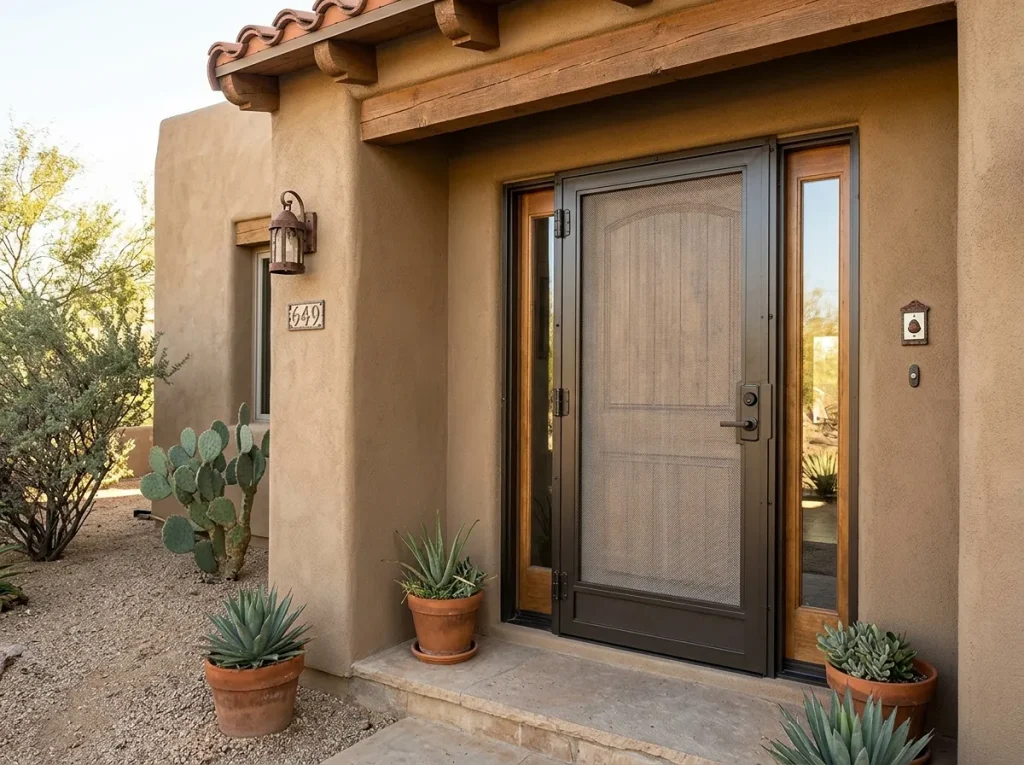
Key Takeaways / Quick Summary
- A security screen door is a reinforced mesh door not a solid steel barrier
- It provides moderate protection while allowing airflow and visibility
- Heavy-duty stainless steel mesh resists cutting far better than standard fiberglass insect screen
- Security screen doors typically cost 200–800+ installed
- They’re ideal for front entries, patios, and anywhere you want ventilation with a barrier
- They are not a substitute for a solid security door on a high-risk rear or side entry
- Professional installation and anchoring into structural framing determine how well either door performs
What Is a Security Screen Door?
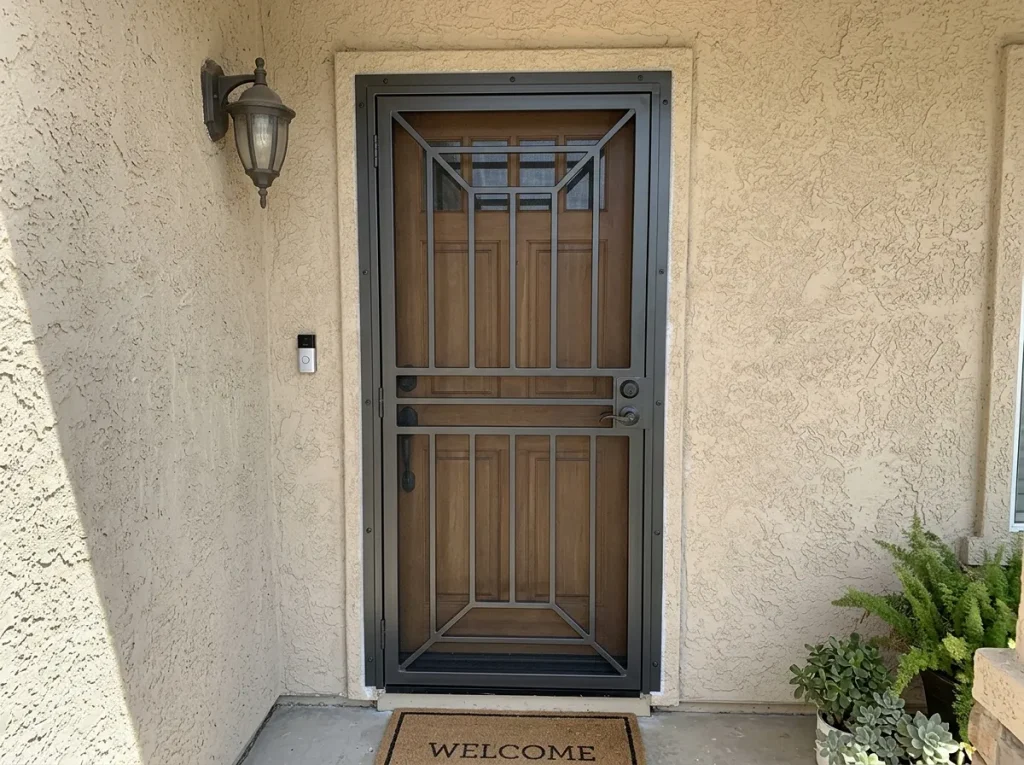
A security screen door is a door frame fitted with heavy-duty mesh usually stainless steel that provides a physical barrier while letting air pass through. It’s installed outside your primary entry door, so you can open the main door for ventilation or conversation while the screen door stays locked.
It looks similar to a traditional screen door, but the materials are substantially stronger. The frame is typically steel or aluminum, and the mesh is designed to resist cutting and pushing. The locking hardware is also heavier than a standard screen door latch.
What it is: a ventilated barrier that adds a layer of protection and a visible deterrent.
What it isn’t: a solid steel door designed to withstand sustained forced entry.
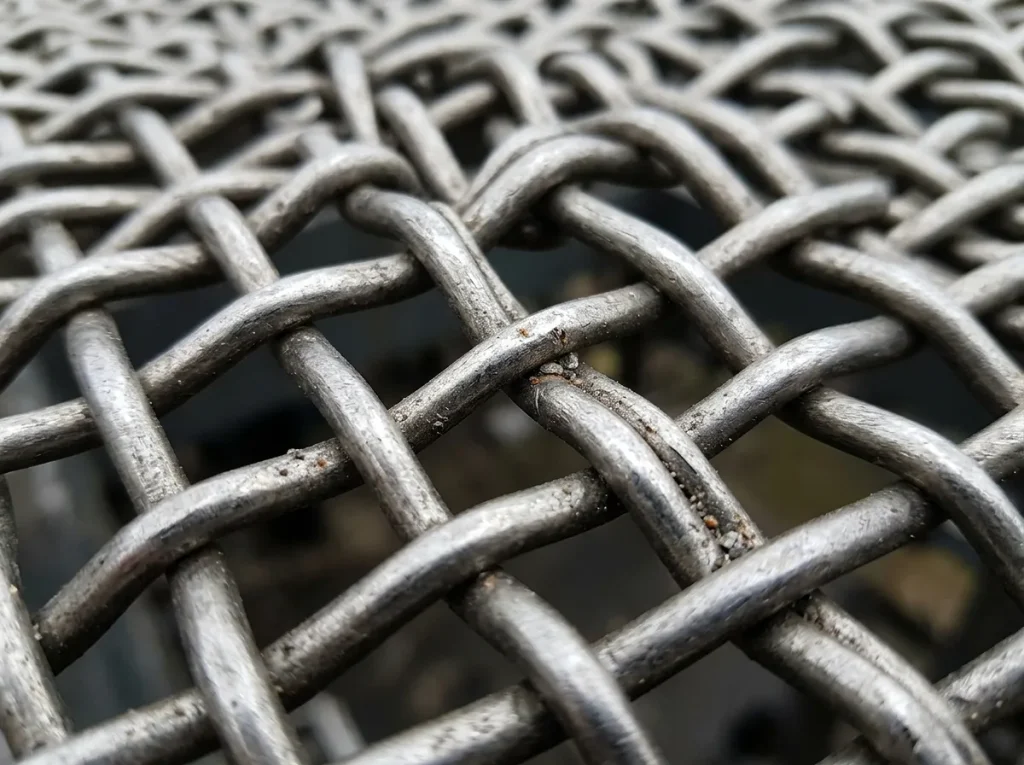
How Does a Security Screen Door Work?
The concept is straightforward. The door frame is anchored into your entryway, and the mesh panel provides a physical barrier across the opening. A lock or latch secures the screen door to the frame.
Because the mesh is open, you get three things a solid door can’t provide at the same time:
- Airflow you can leave the primary door open and still have a locked barrier
- Visibility you can see who’s at the door without opening anything
- A visible deterrent the reinforced frame and mesh are obvious from outside
The protection comes from the combination of the mesh strength, the frame rigidity, and the anchoring. A security screen door with weak mesh or a frame anchored only into stucco provides far less protection than the product name suggests.
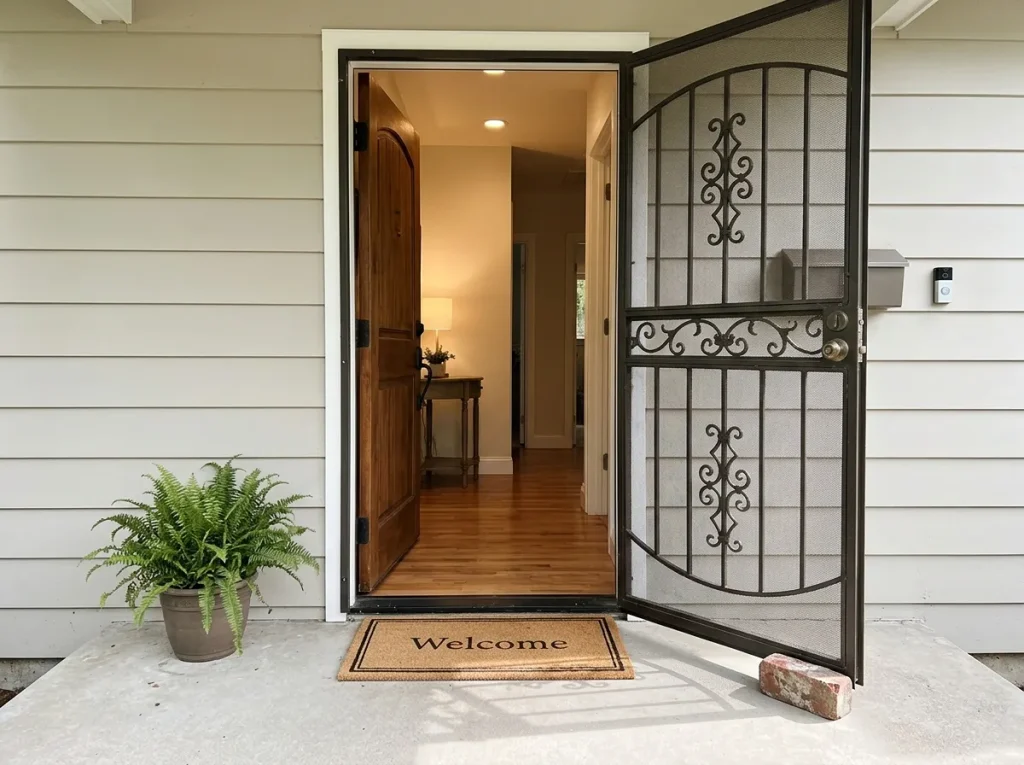
What a Security Screen Door Actually Protects Against
It helps to be precise here, because expectations matter.
It helps with:
- Opportunistic intruders who are looking for an unlocked or easy entry
- Keeping the door secured while ventilating you don’t have to choose between airflow and a locked entry
- Visibility and conversation you can speak to a stranger without opening the main door
- Pets and children a secondary barrier at the entry
- Insects and debris the mesh keeps out bugs while allowing air
It does not replace:
- A solid security door on a high-risk rear or side entry
- Impact-resistant glass on a door that already has glass panels
- A multi-point locking system on a primary entry door
In short: a security screen door is a meaningful layer, not a complete security solution.
Benefits of a Security Screen Door
Ventilation Without Leaving the Door Open
This is the headline benefit, especially in Arizona. You can open your primary door, let the cooler morning air in, and still have a locked barrier at the entry. A solid security door can’t do that.
Visibility
You can see who’s at the door before you open anything. That’s a practical safety benefit and a convenience.
A Visible Deterrent
A reinforced screen door signals that the entry is secured. Most residential burglaries are opportunistic visible barriers change the calculation.
Lower Cost Than a Solid Security Door
Security screen doors typically run 200–800+ installed, compared with 400–2,000+ for a solid security door. If you want a barrier and ventilation on a budget, this is the more accessible option.
Light and Curb Appeal
A well-chosen screen door adds architectural character and lets light into the entry without sacrificing the ability to lock up.
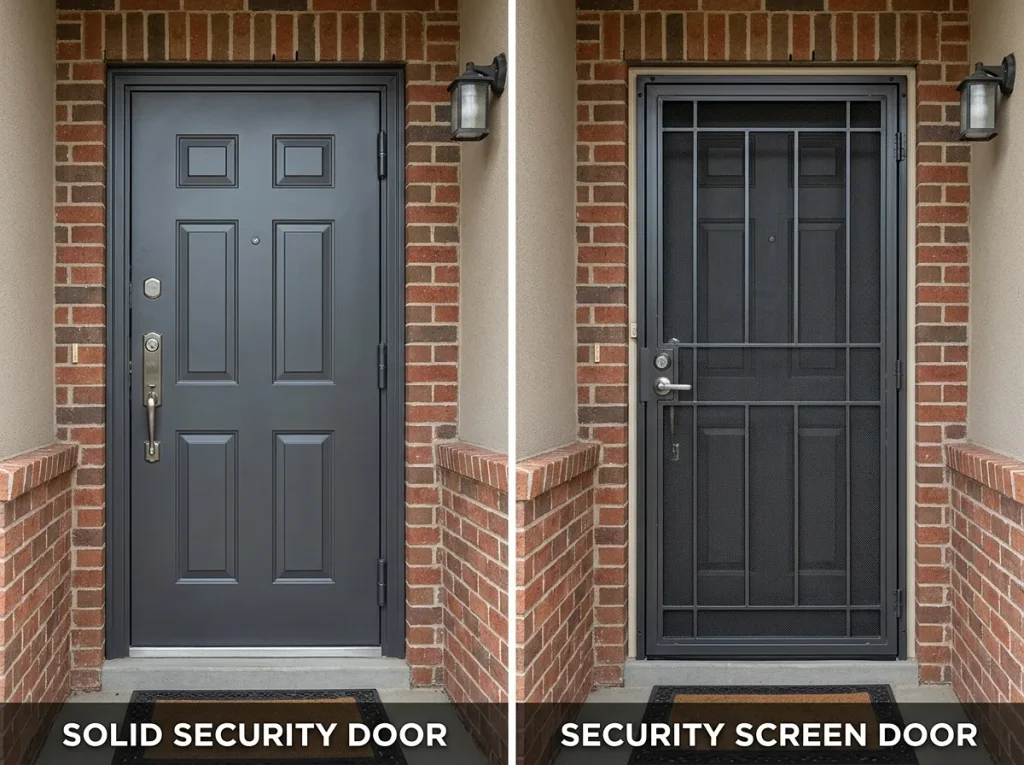
Security Door vs. Security Screen Door
Here’s the comparison that matters most. If you’re still weighing the two, our guide to security door vs screen door breaks down the differences in detail.
| Feature | Security Screen Door | Solid Security Door |
| Barrier type | Reinforced mesh | Solid steel panel |
| Protection level | Moderate | Highest |
| Ventilation | Excellent | None (unless glass panel) |
| Visibility | High | Low |
| Typical installed cost | $200 – $800+ | $400 – $2,000+ |
| Best for | Front entries, patios, airflow | Rear and side entries, maximum protection |
| Locking | Keyed latch or deadbolt | Multi-point systems common |
The short version: a security screen door prioritizes airflow and visibility; a solid security door prioritizes physical resistance. Many homeowners use both a screen door on the front entry and a solid door on the rear or side.
Do You Need a Security Screen Door? The “If/Then” Guide
If you want to open your door for airflow but still keep it locked → Then yes, a security screen door solves that problem directly.
If you have a front entry where visibility and light matter → Then a security screen door is a good fit. It adds a barrier without blocking the view or darkening the entry.
If you have a rear or side entry that’s less visible from the street → Then a solid security door is the stronger choice. Save the screen door for the front.
If you’re on a tight budget → Then a security screen door provides a meaningful layer of protection at a lower cost than a solid door.
If you have young children or pets → Then a screen door adds a secondary barrier at the entry, but choose hardware that can’t be easily manipulated from outside.
If you live in a high-crime area → Then prioritize a solid security door for the primary entry, and treat a screen door as a secondary layer.
If your entry has glass panels → Then focus on laminated or impact-resistant glass first glass is often the weakest point, and a screen door doesn’t change that.
If you have a stucco home → Then confirm that your installer will anchor into structural framing, not just the stucco surface. This applies to both door types.
If you’re preparing to sell your home → Then a well-installed screen door is a visible, marketable feature that reads as care and quality.
What Does a Security Screen Door Cost?
| Cost Component | Price Range |
| Basic security screen door (installed) | $200 – $450 |
| Mid-range stainless steel mesh door (installed) | $400 – $650 |
| Premium decorative or custom size (installed) | $600 – $800+ |
| Labor only (per door) | $100 – $300 |
What drives cost up:
- Stainless steel mesh instead of standard screen material
- Custom sizes or decorative designs
- Heavier locking hardware
- Stucco or masonry exteriors
- Removal and disposal of an old door
What keeps cost down:
- Standard sizes
- Basic mesh and frame options
- Wood-frame or siding construction
The Regrets Homeowners Mention Most
Regret 1: Expecting solid-door protection from a screen door
They serve different purposes. A screen door adds a layer; it doesn’t replace a solid steel barrier.
Regret 2: Choosing standard insect mesh
Fiberglass insect screen provides almost no security. Look for heavy-duty stainless steel mesh.
Regret 3: Anchoring into stucco only
A strong door in a weak frame can be pried out as a unit. Anchoring into structural framing is what makes the barrier work.
Regret 4: Skipping professional installation
Poor alignment and anchoring undermine both security and operation and can void the warranty.
Regret 5: Not considering ventilation needs before buying a solid door
Homeowners who choose a solid security door for a front entry sometimes regret losing the ability to open the door for airflow.
Regret 6: Mismatching the lock to the door
A light latch on a heavy screen door is a weak point. Match the hardware to the door’s strength.
Common Questions We Get Asked
What is a security screen door?
A security screen door is a reinforced mesh door that adds a physical barrier to an entry while allowing airflow and visibility. It’s typically installed outside the primary door.
How is it different from a regular screen door?
The frame and mesh are substantially stronger. Heavy-duty stainless steel mesh resists cutting far better than standard fiberglass insect screen, and the locking hardware is heavier.
Is a security screen door as secure as a solid security door?
No. A solid steel security door offers the highest level of forced-entry resistance. A screen door provides moderate protection with ventilation.
How much does a security screen door cost?
Typically 200–800+ installed, depending on size, mesh, frame, and hardware.
Do I need a security screen door?
If you want to open your door for airflow while keeping it locked, yes. If you need maximum protection on a high-risk entry, a solid security door is the better choice.
Can I install a security screen door myself?
We strongly recommend professional installation. Proper anchoring and alignment matter and most manufacturer warranties require professional installation.
What type of mesh is best?
Heavy-duty stainless steel mesh is the standard for security. It resists cutting and pushing far better than fiberglass insect screen.
Do security screen doors work in Arizona’s heat?
Yes. They’re especially useful in Arizona because they allow ventilation while keeping the entry secured.
Do I need a permit for a security screen door in Arizona?
In most cases, no permit is required for installation on an existing home. Check with your local building department to be sure.
What’s the difference between a security screen door and a security door?
A security screen door is a reinforced mesh door for ventilation and visibility. A security door is a solid, heavy-gauge barrier for maximum protection. Our guide to security door vs screen door covers the full comparison.
Why Talk to Windowz4Less Arizona
Choosing between a security screen door and a solid security door comes down to what you need at that entry: airflow and visibility, maximum protection, or both across different doors. Getting the anchoring and installation right is what makes either barrier actually work.
Windowz4Less Arizona works with homeowners across Mesa, Phoenix, Scottsdale, Gilbert, Chandler, and the surrounding Valley communities. We install security screen doors and know Arizona’s stucco construction including how to anchor into structural framing without damaging the wall. We’ll give you a straight answer about what your entry needs and what it will cost.
Your Next Step
If you’re considering a security screen door for your home, start with a professional assessment. A free in-home estimate tells you what your entry requires and what the project will cost.
Contact Windowz4Less Arizona today for a free, no-obligation estimate. We’ll help you choose the right barrier for your home, your budget, and your safety needs.