You’ve finally decided on casement windows. You’ve picked the style, the color, the glass package. Now comes the moment of truth: installation.
Here’s the honest truth: casement windows are different from sliding or double-hung windows. They have hinges, cranks, and complex hardware that require precision. A poorly installed casement window won’t just look bad—it won’t seal properly, it’ll let in dust and heat, and it could fail entirely within a few years.
In this guide, we’ll walk you through everything Arizona homeowners need to know about casement window installation—from the step-by-step process to climate-specific considerations, costs, and the mistakes that doom even the best windows.
- Key Takeaways / Quick Summary
- Casement Window Installation: The Step-by-Step Process
- Step 1: Measure the Opening
- Step 2: Choose Between Pocket and Full-Frame Replacement
- Step 3: Prepare the Opening
- Step 4: Position the New Window
- Step 5: Secure the Window
- Step 6: Insulate and Seal
- Step 7: Test and Finish
- Why Casement Window Installation Is Different in Arizona
- What Casement Window Installation Costs in Arizona
- Common Casement Window Installation Mistakes to Avoid
- The Regrets Arizona Homeowners Mention Most
- Frequently Asked Questions
- Why Choose Windowz4Less Arizona?
- Your Next Step: Get Professional Casement Window Installation
Key Takeaways / Quick Summary
- Casement windows are hinged at the side and open outward with a crank—installation requires precise leveling and squaring
- Professional installation costs $400–$1,200 per window in Arizona, with most homeowners paying around $680 for a standard vinyl casement
- Full-frame replacement ($600–$900+) removes the entire old frame; pocket/insert replacement ($400–$600) leaves the existing frame intact
- Low-expansion spray foam is essential—standard expanding foam can bow vinyl frames and ruin the crank mechanism
- Arizona’s extreme heat requires UV-stabilized materials—standard vinyl can soften and warp above 140°F on west-facing walls
- Installation typically takes 30–60 minutes per window; a full home (10–15 windows) takes 1–2 days
- Smart Phoenix homeowners plan installations for fall or winter to avoid peak heat
- Casement windows generally have lower air leakage rates than sliding windows because the sash closes by pressing against the frame
Casement Window Installation: The Step-by-Step Process
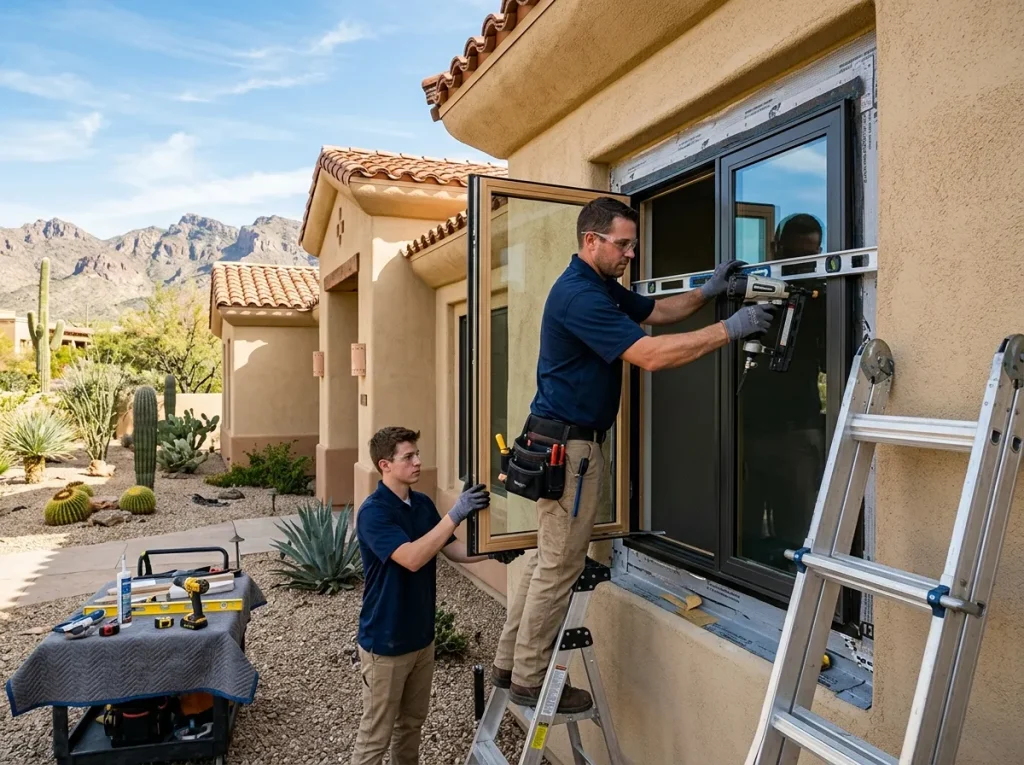
Whether you’re replacing old windows or installing new ones, the process follows a clear sequence. Here’s what professional installation looks like:
Step 1: Measure the Opening
Accurate measurements are the foundation of any successful casement window installation. Professional installers measure the width and height of the rough opening at three different points—top, middle, and bottom—and record the smallest dimensions.
The replacement window should be about ¼ inch smaller than the opening to allow for adjustments, shimming, and insulation. Installers also check for squareness by measuring diagonally from corner to corner. If the two diagonal measurements are within ¼ inch of each other, the frame can easily be shimmed square.
Step 2: Choose Between Pocket and Full-Frame Replacement
One of the first decisions is whether to do a pocket (insert) replacement or a full-frame replacement.
| Feature | Pocket (Insert) Replacement | Full-Frame Replacement |
| Existing Frame | Kept in place | Completely removed |
| Glass Area | Slightly reduced | Maximized |
| Labor & Cost | Lower ($400–$600 per unit) | Higher ($600–$900+ per unit) |
| Best For | Sound frames with good original trim | Rotted frames, style changes, deep upgrades |
Pocket replacement is faster and less disruptive, but full-frame replacement allows you to inspect the framing and build a brand-new weatherproofing seal. In older Arizona homes, full-frame replacement is often the better long-term choice because it addresses hidden rot or damage.
Step 3: Prepare the Opening
Before the new window goes in, the opening must be properly prepared. Installers:
- Remove the old window (if applicable) and clean the area
- Check for rot, mold, or water damage and repair it before proceeding
- Score paint and caulk lines along the interior trim casing to prevent drywall damage
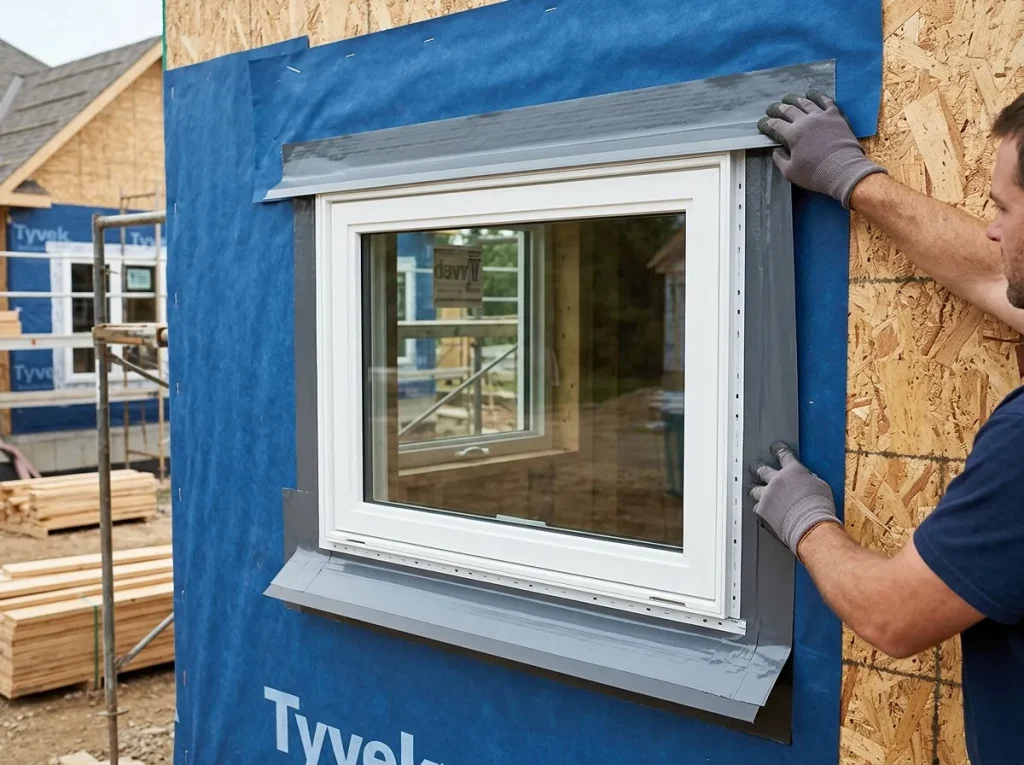
- Apply flashing tape along the sill to create a waterproof barrier
Step 4: Position the New Window
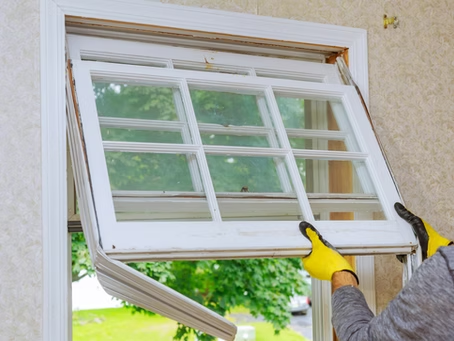
The new casement window is set into the opening from the exterior. Installers use waterproof composite shims (not wood shims, which absorb moisture and rot) to center and level it.
This is where precision matters most. Installers check both horizontal and vertical alignment using a level. A casement that’s even slightly out of alignment won’t compress its weatherstripping properly, leading to drafts and energy loss.
Step 5: Secure the Window
Once the window is level and plumb, it’s fastened according to the manufacturer’s instructions. This typically involves driving screws through pre-drilled holes in the window frame.
Critical warning: Avoid over-tightening. Overtightening is a common cause of casement window failure—it can warp the frame, pull the sash away from the frame, and create gaps where air and moisture can enter.
Step 6: Insulate and Seal
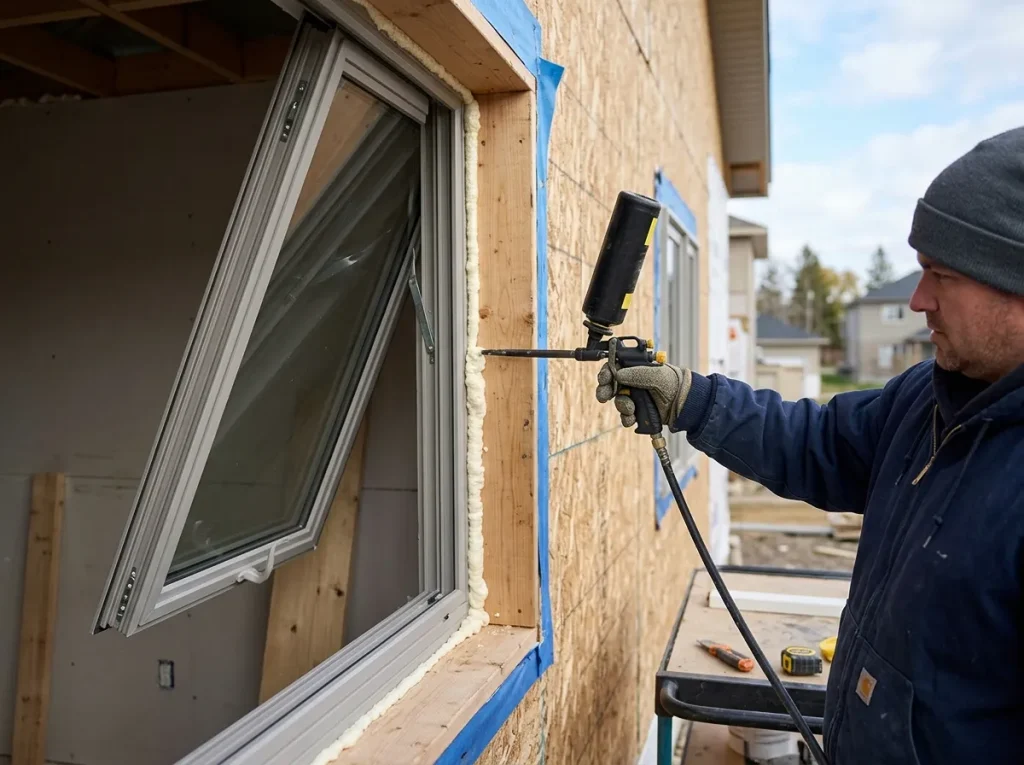
This step is where many installations go wrong. Installers fill gaps between the window and framing with low-expansion polyurethane spray foam specifically formulated for windows and doors.
Why this matters: High-expansion foams will expand with enough force to bow vinyl frame jambs inward, causing the sash to bind and ruining the crank mechanism.
After foaming, installers apply exterior caulk around the perimeter to prevent air or water leaks.
Step 7: Test and Finish
The final step is testing the casement window to ensure it opens and closes smoothly. Installers adjust hardware if needed.
Then they add interior trim or molding for a clean, finished appearance.
Why Casement Window Installation Is Different in Arizona
Arizona’s climate isn’t just uncomfortable—it’s hard on windows. Here’s what makes installation different here:
Extreme Heat
Phoenix walls can reach 140°F or higher on west-facing exposures in July. Standard vinyl compounds can soften and warp at these temperatures. That’s why professional installers in Arizona recommend desert-rated vinyl with UV stabilizers or fiberglass windows, which handle extreme temperatures and intense sun exposure better.
Monsoon Season and Dust Storms
A casement window’s tight seal is a lifesaver during Arizona’s monsoon season. When closed and locked, the sash presses tight against the entire frame, keeping cool air inside and dust out when haboobs roll in.
But—and this is important—do not leave a casement cranked wide open when a haboob is rolling in off the desert. The wind can catch the open sash and damage the hinges or crank mechanism.
UV Exposure
Arizona’s intense UV exposure degrades window materials faster than almost anywhere else. Professional installers recommend windows with Low-E coatings designed for desert climates and frames that can handle constant UV exposure.
Timing Matters
Smart Phoenix homeowners plan window replacements for fall and winter installations. You’ll avoid the peak heat while ensuring your new windows are ready for the next brutal summer. Summer installations are possible but require early-morning scheduling and careful planning.
What Casement Window Installation Costs in Arizona
Here’s a realistic breakdown of what Valley homeowners are paying in 2026. These are full installed costs, not just material prices:
| Window Type | Installed Cost (2026) | Best For |
| Budget vinyl casement | $400 – $600 | Rental properties, quick replacements |
| Mid-range vinyl casement | $550 – $850 | Most Phoenix suburban homes |
| Premium desert-rated vinyl | $800 – $1,200 | Scottsdale, Paradise Valley, performance buyers |
| Fiberglass casement | $900 – $1,500 | High-end homes, custom sizes |
Most Phoenix homeowners pay $400 to $1,200 per window fully installed. A standard vinyl casement in Scottsdale runs about $680 per unit.
Factors that drive costs up or down:
- Glass package — Low-E with argon adds $80–$200 per window
- Window size — custom dimensions cost 30–60% more than standard
- Frame condition — rotted frames add $75–$150 per window in prep labor
- Story height — second-floor windows add labor costs
- Number of windows — larger projects earn 10–20% discounts
- Brand tier — premium desert-rated brands cost more but last longer
Common Casement Window Installation Mistakes to Avoid
After years of fixing bad installations, here are the most common mistakes Arizona homeowners should watch for:
Mistake 1: Using the Wrong Foam
High-expansion spray foam will bow vinyl frames and ruin the crank mechanism. Always use low-expansion foam specifically formulated for windows and doors.
Mistake 2: Overtightening Screws
Overtightening is a common cause of casement window failure—it can warp the frame and create gaps. Professional installers know exactly how much torque to apply.
Mistake 3: Skipping Proper Flashing
Don’t skip flashing—it’s your best defense against leaks. In Arizona’s monsoon season, improper flashing can lead to water damage and rot.
Mistake 4: Choosing Insert Install in Older Homes
Insert (pocket) replacements can look cheaper upfront, but in older openings they sometimes leave behind the very frame problems causing drafts or moisture trouble. Full-frame replacement is often the better long-term choice.
Mistake 5: Not Accounting for Arizona’s Heat
Standard vinyl compounds soften above 140°F. In Arizona, you need desert-rated vinyl with UV stabilizers or fiberglass. Cheap windows may need replacement within 8–12 years.
The Regrets Arizona Homeowners Mention Most
After years of helping Arizona homeowners with casement window installation, here are the most common regrets:
Mistake 1: Hiring the cheapest installer
The lowest bid often cuts corners on critical steps like flashing, proper foaming, and weatherproofing. You save money upfront but pay for it later in drafts, leaks, and early failure.
Mistake 2: Choosing insert replacement when full-frame was needed
Insert installs look cheaper upfront, but in older openings they sometimes leave behind the very frame problems causing drafts or moisture trouble. A full tear-out is often the cleaner long-term fix.
Mistake 3: Not planning for Arizona’s sun
Dark frames, wide exposures, and strong sun are harder on some materials over time. Choose materials rated for Arizona’s climate.
Mistake 4: Not checking the window’s operation after installation
Some homeowners don’t test every window before the installers leave. If a casement window isn’t aligned properly, it won’t compress its weatherstripping and you’ll feel that as a draft.
Frequently Asked Questions
How long does casement window installation take?
A standard casement window takes about 30–60 minutes to install. A professional team can typically install 10 to 15 windows in a full working day.
What’s the difference between pocket and full-frame casement installation?
Pocket (insert) replacement leaves the existing frame intact and is faster and cheaper ($400–$600 per unit). Full-frame replacement removes everything down to the studs ($600–$900+ per unit), allowing inspection for rot and a completely new weatherproofing seal.
Do I need a permit for casement window installation in Arizona?
A permit is only required in Arizona if you’re remodeling or adding square footage to your home. However, always check with your local building department—requirements can vary by city.
Can I install casement windows myself?
You can—but you probably shouldn’t. Casement windows have complex hardware, hinges, and cranks that require precision installation. A casement that’s even slightly out of alignment won’t compress its weatherstripping properly. Professional installation ensures proper sealing, weatherproofing, and warranty protection.
What’s the best time of year for casement window installation in Arizona?
Fall and winter are ideal. You’ll avoid the peak heat while ensuring your windows are ready for the next brutal summer. Summer installations are possible but require early-morning scheduling.
How much does casement window installation cost in Arizona?
Most Phoenix homeowners pay $400 to $1,200 per window fully installed. A standard vinyl casement runs about $680.
What happens if a casement window is installed incorrectly?
A poorly installed casement window won’t seal properly, leading to drafts, higher energy bills, water intrusion, and premature failure. The crank mechanism may bind or break. Proper alignment is essential for the sash to compress the weatherstripping correctly.
Why Choose Windowz4Less Arizona?
- Local expertise — We know Arizona’s unique climate and install windows that perform in extreme heat
- Professional installation — Our team is trained, insured, and follows manufacturer specifications
- Desert-rated products — We offer windows with UV stabilizers and materials built for Arizona’s heat
- Full-frame and pocket options — We help you choose the right approach for your home
- Transparent pricing — No hidden fees, no surprises
- Free estimates — No-obligation quotes with honest, straightforward advice
- Serving Mesa, Phoenix, and surrounding areas — We’re your local experts
Whether you’re exploring casement windows or ready to book, we’re here to help.
Your Next Step: Get Professional Casement Window Installation
Casement windows are one of the most energy-efficient and beautiful window styles available—but only when installed correctly. The wrong installation can ruin even the best windows.
Contact Windowz4Less Arizona today for a free, no-obligation estimate. We’ll walk you through the entire casement window installation process and provide professional installation you can trust.