Most homeowners start their security research with cameras and alarms. They’re useful—but they don’t physically stop anyone. The barrier does.
That’s why a security door is one of the most practical home safety upgrades you can make. It’s the part of your entry system that works when the power is out, the Wi-Fi is down, and no one is watching a camera feed.
But here’s the problem: not every door marketed as “secure” actually is. Thin steel, weak latches, and frames anchored only into stucco can look the part while offering very little real protection. This security door buying guide walks you through the features that matter—material, gauge, frame, locking hardware, glass, and installation—so you can choose a door that actually performs.
If you’re in the Phoenix metro area and want local help sorting through the options, Windowz4Less Arizona works with homeowners across the Valley.
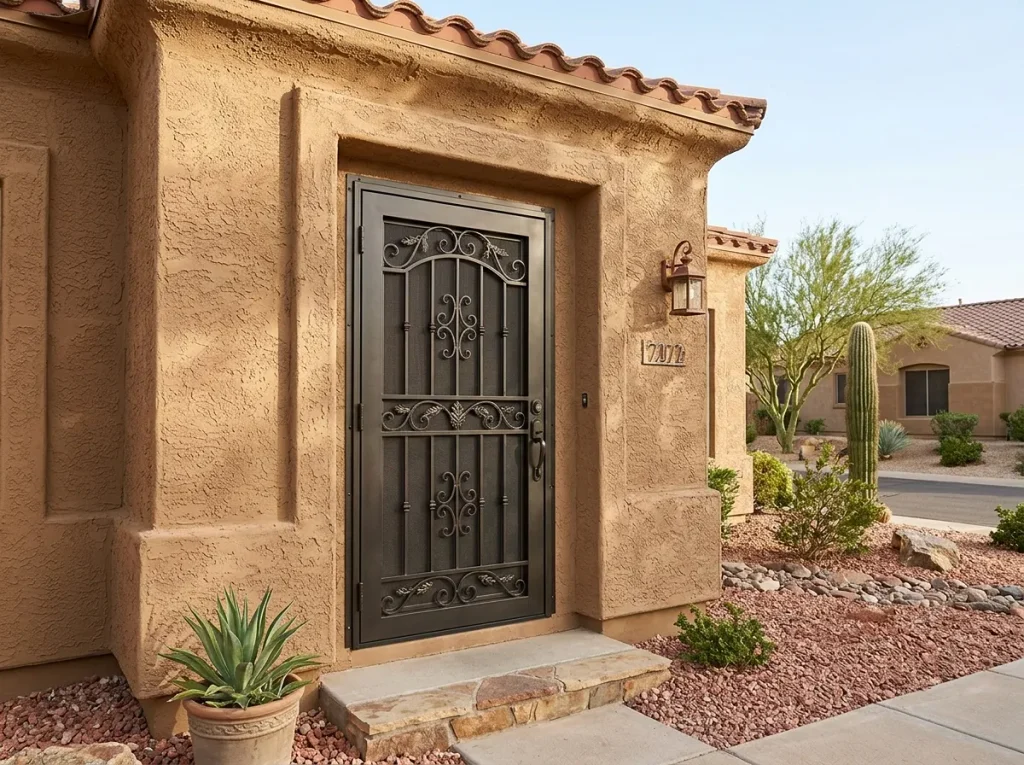
Table of Contents
The Features That Actually Matter
Real-World Conditions: The “If/Then” Guide
The Regrets Homeowners Mention Most
Key Takeaways / Quick Summary
- Steel gauge matters most—look for 12- or 14-gauge steel for the door panel and 16-gauge or thicker for the frame
- Multi-point locking systems secure the door at three or more points and are the single most important hardware upgrade
- Grade 1 or Grade 2 locks rated by the Builders Hardware Manufacturers Association (BHMA) offer the highest residential security
- A one-inch deadbolt throw is a baseline specification for real protection
- The frame and anchoring matter as much as the door—a strong door in a weak frame can be pried out as a unit
- Impact-resistant or laminated glass is essential if the door has glass panels
- Security doors typically cost 400–2,000+ installed, depending on material, size, design, and hardware
- Professional installation protects both performance and warranty coverage
What Is a Security Door?
A security door is a reinforced exterior door designed to resist forced entry. It’s typically installed outside your primary entry door as an additional barrier, though some homeowners use a heavy-duty steel door as their primary door.
Unlike a standard wood or builder-grade steel door, a true security door uses heavier-gauge steel, a reinforced frame, and heavy-duty locking hardware. The goal isn’t just to look sturdy—it’s to delay and deter an intruder long enough that the attempt isn’t worth continuing.
Most residential burglaries are opportunistic. A door that looks and performs like a real barrier changes the calculation.
The Features That Actually Matter
1. Steel Gauge and Construction
Gauge refers to steel thickness, and lower numbers mean thicker steel. A 12- or 14-gauge door panel resists cutting and prying far better than thin 18- or 20-gauge material.
What to look for:
- Door panel: 12- or 14-gauge steel
- Frame: 16-gauge or thicker
- Reinforced corners: welded or mechanically reinforced, not just bent metal
If the spec sheet doesn’t list the gauge, ask. If the seller can’t tell you, that’s a warning sign.
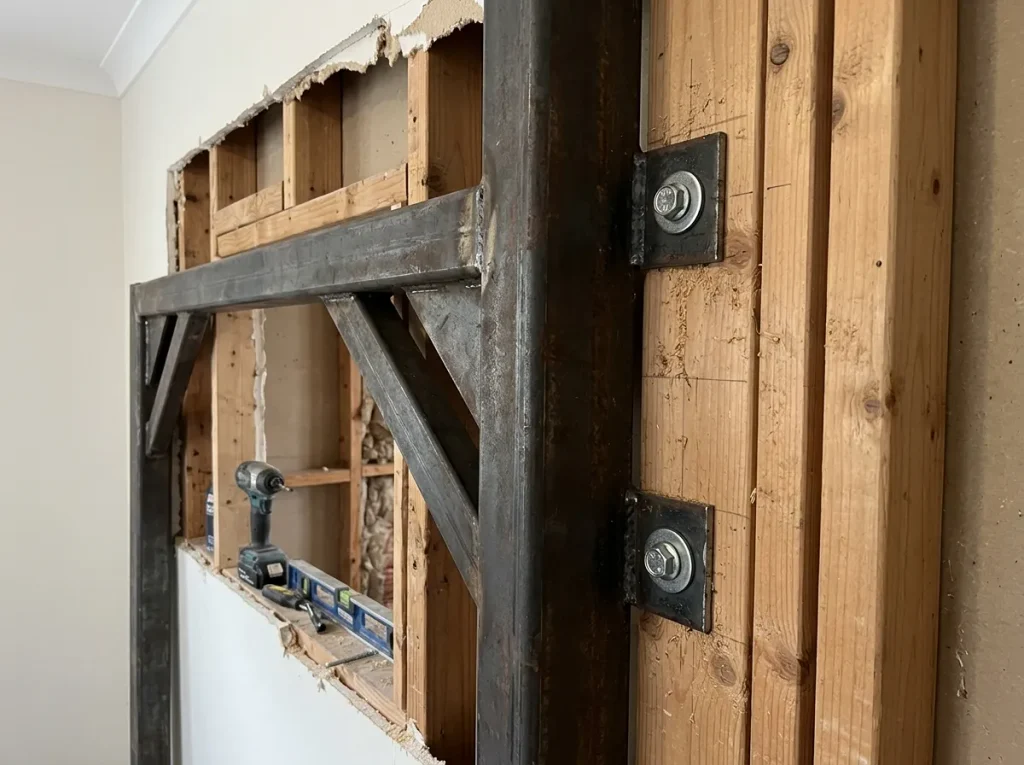
2. Frame and Anchoring
This is where most security doors fail. A heavy steel door hung in a light frame anchored only into stucco or drywall can be pried out of the wall as a unit.
What to look for:
- A steel or reinforced frame
- Multiple anchor points
- Fasteners long enough to reach structural framing
- Proper flashing and sealing around the frame
3. Locks and Hardware
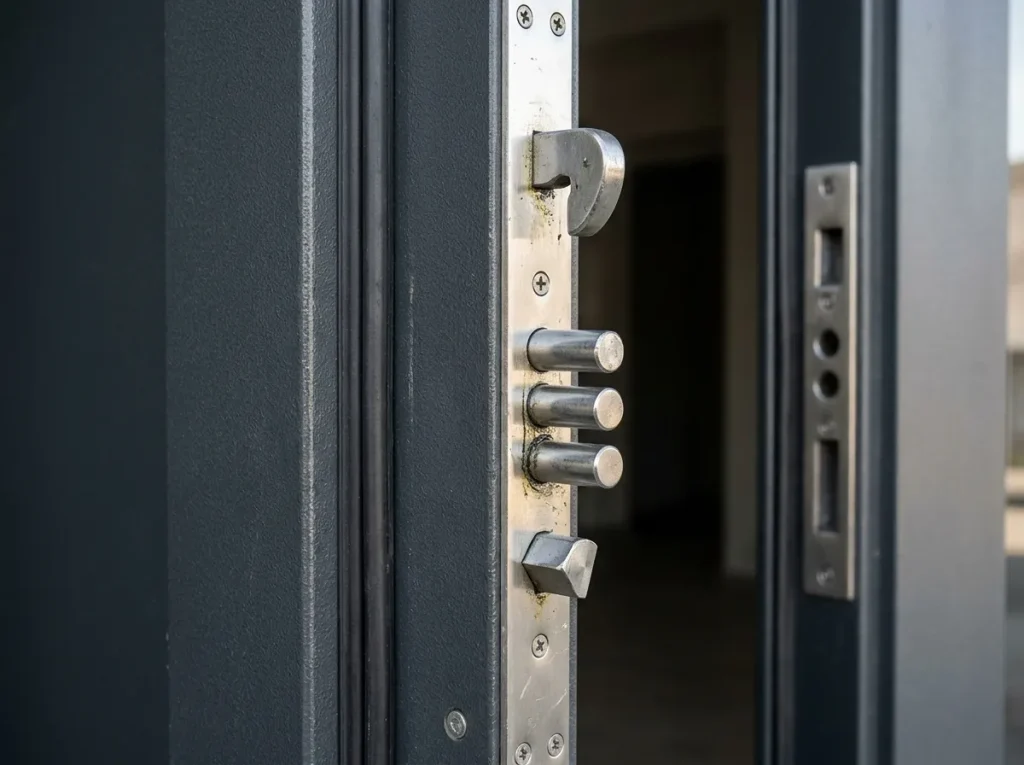
A single latch does not secure a door.
What to look for:
- Multi-point locking engaging at three or more points
- Grade 1 or Grade 2 deadbolts rated by BHMA
- One-inch deadbolt throw into the frame
- Reinforced strike plates secured with long screws into framing
- Security hinges with non-removable pins
4. Glass and Screen Options
If the door has glass panels, standard annealed glass breaks easily. Laminated or impact-resistant glass stays in the frame after impact, preventing the quick “break and reach” entry.
If you’re considering a screen door instead, the screen material matters—heavy-duty stainless steel mesh resists cutting far better than standard insect screen.
5. Design and Finish
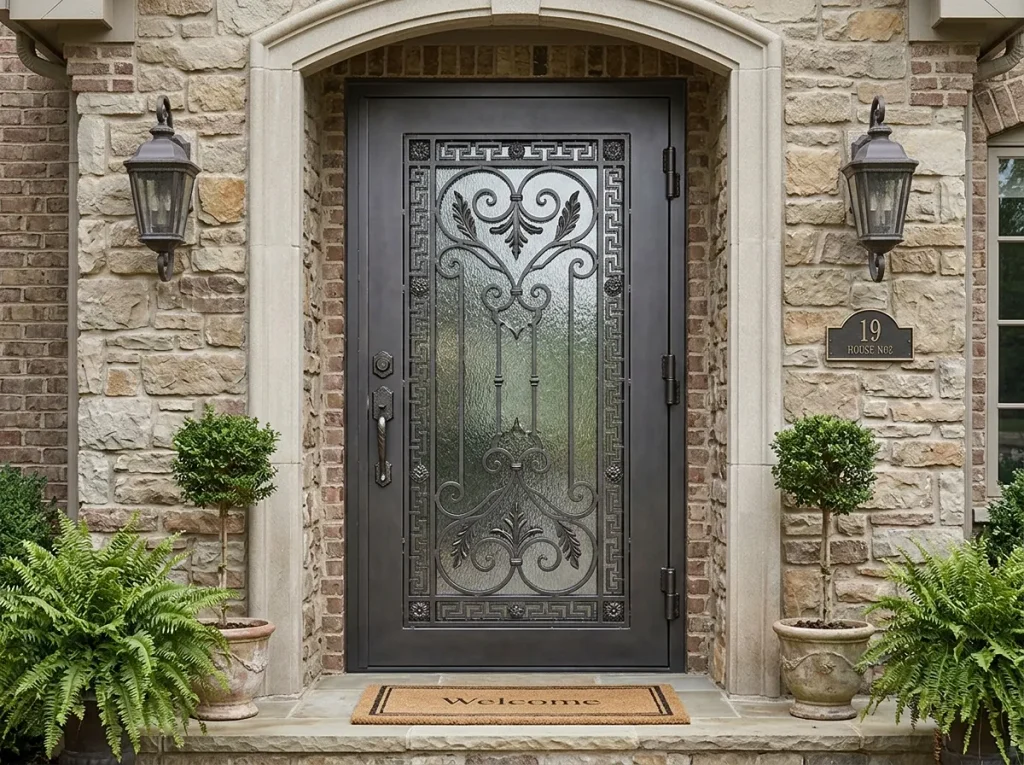
Security doors come in a wide range of designs, from plain steel panels to decorative ironwork and glass-panel styles. Powder-coated finishes resist rust, fading, and scratching far better than paint—important in Arizona’s sun.
If you want a deeper dive into steel specifically, our guide on choosing a steel security door covers gauge, frame construction, and hardware in more detail.
Security Door Types Compared
| Door Type | Security Level | Ventilation | Best For |
| Solid steel security door | Highest | Low | Maximum protection, rear and side entries |
| Steel security door with glass panel | High | Low to moderate | Entryways where light matters |
| Security screen door | Moderate | High | Ventilation and visibility with added security |
| Decorative iron-style door | High | Moderate | Curb appeal plus physical barrier |
| Standard exterior door | Low | None | Not a security solution on its own |
If maximum protection is the goal → Then choose a solid steel door with multi-point locking and impact-resistant glass.
If you want ventilation and visibility → Then a security screen door may suit you better, but understand it’s a different level of protection.
Real-World Conditions: The “If/Then” Guide
If you’re on a tight budget → Then prioritize steel gauge and locking hardware over decorative finishes. A 14-gauge door with a multi-point lock and professional installation will protect you far better than a thin door with fancy trim.
If you have a stucco exterior → Then confirm your installer knows how to anchor into structural framing. Stucco alone provides almost no holding power.
If the door has glass panels → Then upgrade to laminated or impact-resistant glass. Standard glass breaks easily and undermines the door’s security.
If you have young children or pets → Then choose hardware that can’t be easily manipulated from the outside, and avoid heavy removable bars that could be misused.
If you live in a high-crime area → Then prioritize the door, frame, and locks—and pair them with lighting and visibility improvements.
If you want a decorative look → Then choose a powder-coated decorative steel door that still meets the gauge and locking standards above.
If you’re replacing an older door → Then have the rough opening inspected for rot before installation. Repair it first.
If you’re comparing screen and solid doors → Then decide based on ventilation needs versus maximum protection. They serve different purposes.
If you’re preparing to sell your home → Then a well-installed security door is a visible, marketable feature that reads as care and quality.
The Regrets Homeowners Mention Most
Regret 1: Buying a “security” door that’s mostly cosmetic
Thin gauge steel and a single latch look like security but don’t perform like it. Ask about gauge and locking systems before you buy.
Regret 2: Anchoring into stucco only
A strong door in a weak frame can be pried out as a unit. Anchoring into structural framing is what makes the door matter.
Regret 3: Skipping impact-resistant glass
Standard glass breaks easily. If the door has glass, upgrade it—otherwise the glass becomes the weak point.
Regret 4: Choosing a cheap lock
A Grade 3 latch is not the same as a Grade 1 deadbolt. Cheap locks can be defeated quickly.
Regret 5: Hiring an installer without stucco experience
Improper flashing and anchoring in stucco leads to water intrusion and security failures—often discovered years later.
Regret 6: Not keeping the warranty paperwork
Hardware and finish warranties matter. File the documentation where you can find it.
Common Questions We Get Asked
What should I look for in a security door?
Steel gauge (12–14 gauge panel, 16+ gauge frame), a reinforced frame anchored into structural framing, multi-point locking with Grade 1 or 2 deadbolts, and impact-resistant glass if the door has glass.
What’s the best material for a security door?
Steel is the strongest choice for forced-entry resistance. Fiberglass offers good impact resistance and low maintenance but is generally not as strong as steel.
How much does a security door cost?
Typically 400–2,000+ installed, depending on material, size, design, and hardware. Custom decorative doors cost more.
Are security screen doors as secure as solid security doors?
No. A screen door adds a barrier and ventilation, but a solid steel door with multi-point locking offers a higher level of protection.
Do I need a permit for a security door in Arizona?
In most cases, no permit is required for installing a security door on an existing home. Check with your local building department to be sure.
How long do security doors last?
Quality steel security doors can last 25–40 years with minimal maintenance, especially with a powder-coated finish.
Can I install a security door myself?
We strongly recommend professional installation. Proper anchoring into structural framing and correct flashing are critical—and most manufacturer warranties require professional installation.
Why Talk to Windowz4Less Arizona
A security door only works when the whole system is right: the steel, the frame, the anchors, the locks, and the installation. A gap in any one of those turns a barrier into decoration.
Windowz4Less Arizona works with homeowners across Mesa, Phoenix, Scottsdale, Gilbert, Chandler, and the surrounding Valley communities. We can help you compare door types, understand which hardware actually performs, and get a clear, itemized quote—no pressure, no hidden fees.
Your Next Step
If you’re ready to choose a security door for your home, start with a professional assessment. A free in-home estimate tells you what your entry requires and what the project will cost.
Contact Windowz4Less Arizona today for a free, no-obligation estimate. We’ll help you choose the right security door for your home, your budget, and your safety needs.