You know you want a stronger barrier at your entry. You’ve seen both terms used sometimes interchangeably and now you’re trying to figure out what the actual difference is. Is a security screen door just a lighter version of a security door? Or are they solving completely different problems?
Here’s the honest answer: they’re different products with different jobs. A security door is a solid, heavy-gauge barrier designed to resist forced entry. A security screen door is a reinforced mesh door designed to add a layer of protection while preserving airflow and visibility.
Neither is “better” in every situation. The right choice depends on whether you’re prioritizing maximum protection, ventilation, visibility, or budget. This guide breaks down the differences so you can choose with confidence. If you’re in the Phoenix metro area and want local help, Windowz4Less Arizona works with homeowners across the Valley.
Key Takeaways / Quick Summary
- A security door is a solid barrier typically steel designed to resist forced entry
- A security screen door is a reinforced mesh door that adds protection while allowing airflow and visibility
- Security doors offer the highest level of protection; screen doors offer moderate protection with ventilation
- Security doors typically cost 400–2,000+ installed; screen doors run 200–800+
- Both require anchoring into structural framing stucco alone provides almost no holding power
- Security doors are best for rear and side entries where visibility is less important than protection
- Screen doors are best for front entries and patios where you want airflow and a visible deterrent
- Professional installation matters for both and most warranties require it
What Is a Security Door?
A security door is a reinforced exterior door designed to resist forced entry. It’s typically installed outside your primary entry door as an additional barrier, though some homeowners use a heavy-duty steel door as their primary door.
Key characteristics:
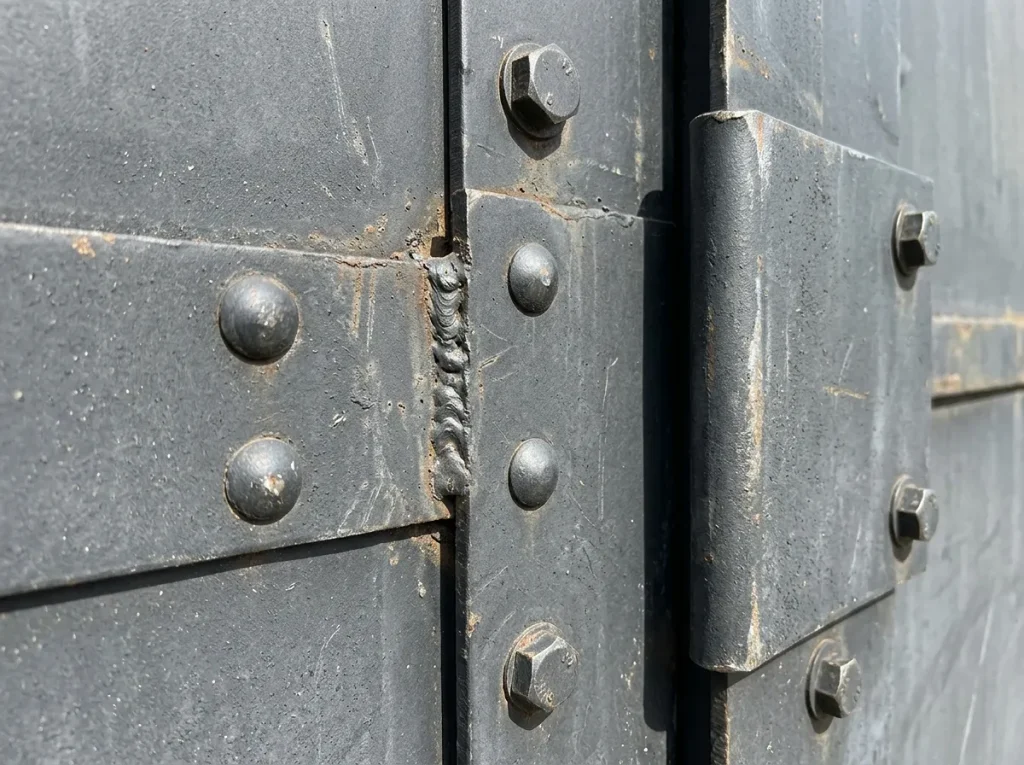
- Heavy-gauge steel construction (12- or 14-gauge panel, 16-gauge or thicker frame)
- Solid panel no mesh, though some models include glass panels
- Multi-point locking systems engaging at three or more points
- Reinforced frame anchored into structural framing
- Designed to delay and deter forced entry
What it’s good at: Maximum physical protection. A properly installed steel security door is one of the hardest barriers to defeat without heavy tools and a lot of noise.
What it’s not good at: Ventilation. A solid door blocks airflow. If you want fresh air, a security door alone won’t provide it.
What Is a Security Screen Door?
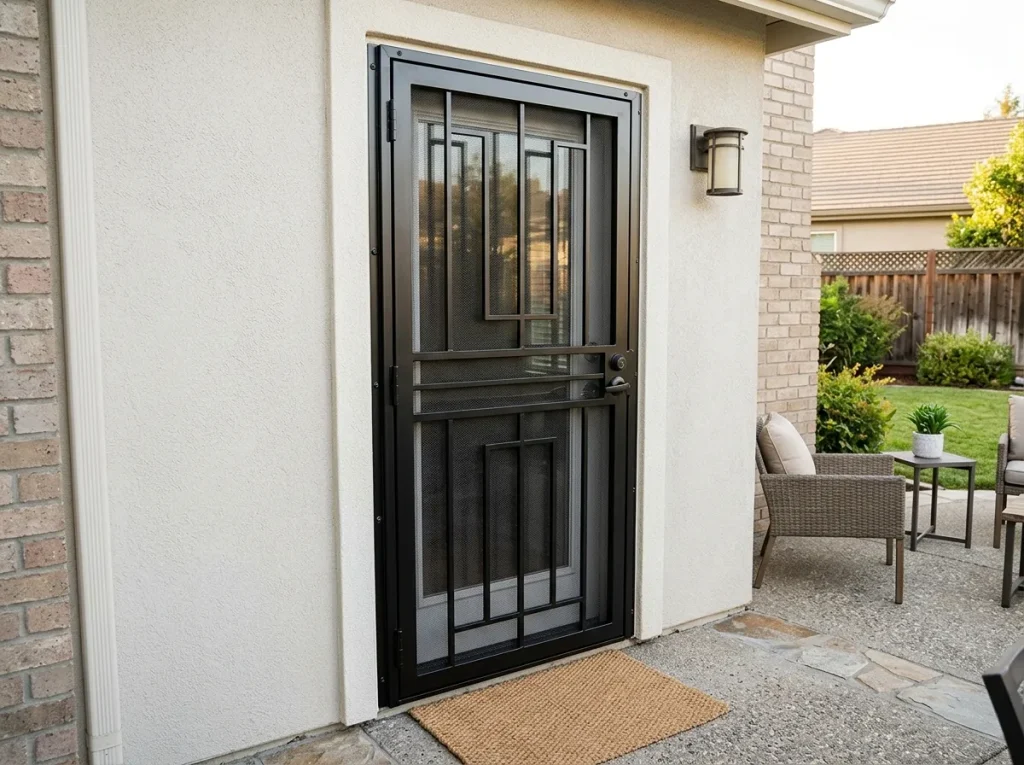
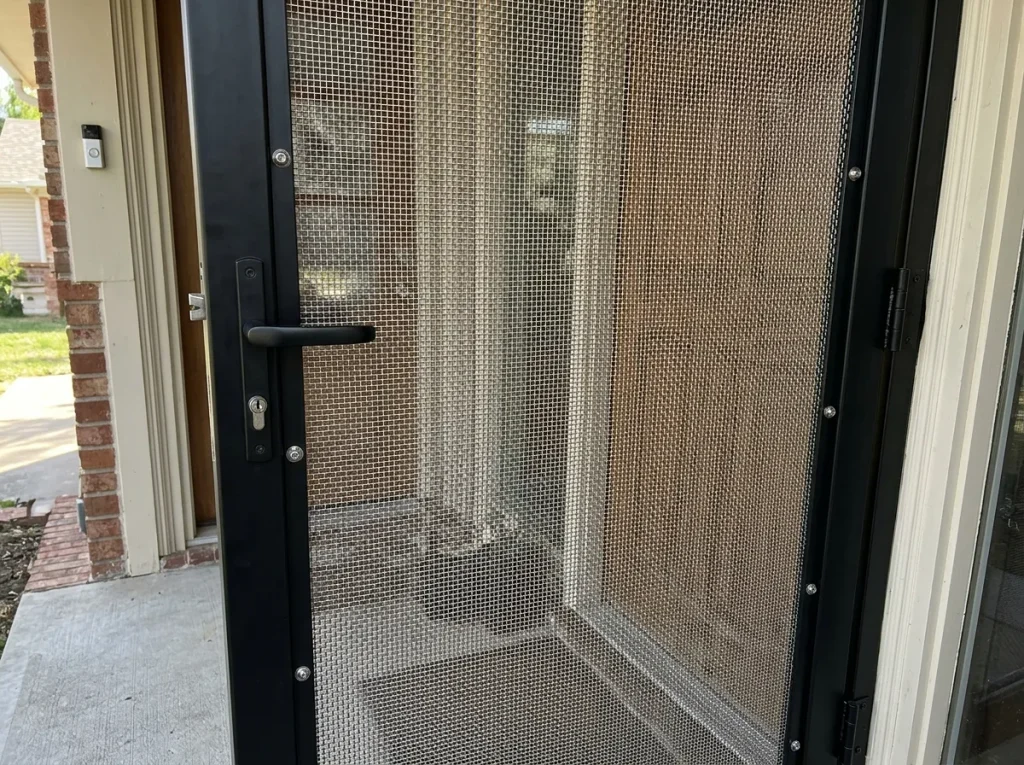
A security screen door is a door frame fitted with heavy-duty mesh typically stainless steel that provides a physical barrier while allowing air to pass through.
Key characteristics:
- Reinforced mesh (stainless steel is far stronger than standard insect screen)
- Metal frame (steel or aluminum)
- Locking hardware often a keyed latch or deadbolt
- Allows ventilation and visibility
- Adds a layer of protection without blocking light or air
What it’s good at: Ventilation, visibility, and a visible deterrent. It lets you open your primary door for airflow while keeping the entry secured.
What it’s not good at: Maximum forced-entry resistance. A screen door is a barrier, but it’s not designed to withstand the same level of impact as a solid steel door.
For a deeper dive into this product category, see our security screen door guide.
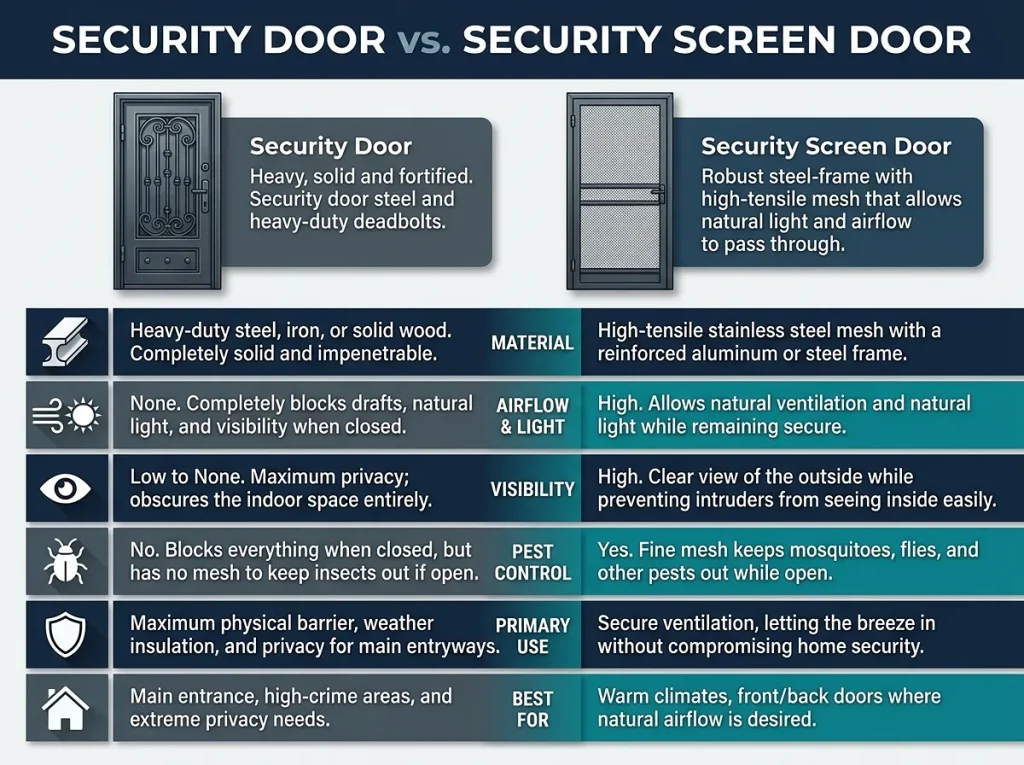
Security Door vs. Security Screen Door: Side-by-Side Comparison
Here’s the direct comparison that matters most when you’re deciding between security doors vs security screen doors.
| Feature | Security Door | Security Screen Door |
| Barrier Type | Solid steel panel | Reinforced mesh |
| Protection Level | Highest | Moderate |
| Ventilation | None (unless glass panel) | Excellent |
| Visibility | Low (solid) | High (mesh) |
| Typical Cost (Installed) | $400 – $2,000+ | $200 – $800+ |
| Best For | Rear and side entries, maximum security | Front entries, patios, airflow |
| Locking | Multi-point systems common | Keyed latch or deadbolt |
| Installation Complexity | Higher (heavier, more anchoring) | Moderate |
| Arizona Suitability | Excellent for security | Excellent for ventilation |
The short version: security doors prioritize protection; screen doors prioritize airflow and visibility while adding a barrier. Many homeowners eventually install both a solid door on the rear entry and a screen door on the front or patio.
When to Choose a Security Door
If maximum protection is your priority → Then choose a security door. A solid steel door with multi-point locking and proper anchoring is the strongest residential barrier available.
If you have a rear or side entry → Then choose a security door. These entries are often less visible from the street and more attractive to intruders making a solid barrier especially valuable.
If you live in a high-crime area → Then choose a security door. The physical resistance and deterrence value are highest with a solid barrier.
If you don’t need ventilation at that entry → Then choose a security door. If the door is rarely opened for airflow, the lack of ventilation isn’t a drawback.
If you want the strongest possible lock setup → Then choose a security door. Multi-point locking systems are standard on quality security doors and far less common on screen doors.
When to Choose a Security Screen Door
If ventilation matters → Then choose a security screen door. It lets you open your primary door for airflow while keeping the entry secured a major benefit in Arizona’s climate.
If you want visibility → Then choose a security screen door. You can see who’s at the door without opening the primary door.
If you have a front entry where aesthetics matter → Then choose a security screen door. Decorative screen doors add curb appeal while providing a barrier.
If you’re on a tighter budget → Then choose a security screen door. They cost significantly less than solid security doors.
If you want a visible deterrent → Then choose a security screen door. The mesh and frame are clearly visible from outside, which signals that the home is secured.
Real-World Conditions: The “If/Then” Guide
If you have a stucco home → Then confirm that your installer will anchor into structural framing for either door type. Stucco alone provides almost no holding power.
If your entry faces west or south → Then choose a security door with a powder-coated finish to resist UV fading, and consider a screen door with UV-resistant mesh.
If you have young children or pets → Then choose hardware that can’t be easily manipulated from outside, and avoid heavy removable bars that could be misused.
If you want both protection and airflow → Then consider installing a security door on the rear entry and a security screen door on the front or patio.
If you’re replacing an older door → Then have the rough opening inspected for rot before installation. Repair it first.
If you’re in a rental → Then check with your landlord before modifying the entry. Some screen doors can be installed without permanent modification.
If you’re preparing to sell your home → Then both door types are visible, marketable features that read as care and quality to buyers.
If you want the strongest possible barrier → Then choose a solid steel security door with multi-point locking and impact-resistant glass.
If you want the best ventilation → Then choose a security screen door with stainless steel mesh.
The Regrets Homeowners Mention Most
Regret 1: Expecting a screen door to provide the same protection as a solid door
They serve different purposes. A screen door is a barrier, but it’s not designed to withstand the same level of impact as a solid steel door.
Regret 2: Choosing a screen door with standard insect mesh
Standard fiberglass insect screen provides almost no security. Look for heavy-duty stainless steel mesh.
Regret 3: Anchoring either door into stucco only
A strong door in a weak frame can be pried out as a unit. Anchoring into structural framing is what makes the barrier work.
Regret 4: Skipping professional installation to save money
Poor installation undermines both door types and voids most manufacturer warranties.
Regret 5: Not considering ventilation needs before buying
Homeowners who choose a solid security door for a front entry sometimes regret losing the ability to open the door for airflow.
Regret 6: Buying a cheap lock on a good door
A Grade 3 latch on a heavy steel door is a mismatch. The lock should match the door’s security level.
Common Questions We Get Asked
What’s the difference between a security door and a security screen door?
A security door is a solid, heavy-gauge barrier designed to resist forced entry. A security screen door is a reinforced mesh door that adds protection while allowing airflow and visibility.
Which is more secure: a security door or a security screen door?
A security door offers the highest level of protection. A screen door provides moderate protection with ventilation.
Can a security screen door be used as a primary door?
It’s typically installed outside a primary door as an additional barrier. Some heavy-duty screen doors can serve as primary doors, but they’re not designed for maximum forced-entry resistance.
How much does each type cost?
Security doors typically run 400–2,000+ installed. Security screen doors run 200–800+.
Do both types require professional installation?
We strongly recommend professional installation for both. Proper anchoring into structural framing and correct flashing are critical and most manufacturer warranties require it.
Can I install a security screen door myself?
While some screen doors are marketed as DIY-friendly, proper anchoring and alignment still matter. For best results and warranty coverage, use a professional.
Do security screen doors block airflow?
No they’re designed to allow airflow while providing a barrier. That’s their primary advantage over solid security doors.
Are security screen doors good for Arizona’s heat?
Yes. They allow ventilation while keeping the entry secured, which is valuable in our climate.
What type of mesh is best for a security screen door?
Heavy-duty stainless steel mesh resists cutting far better than standard fiberglass insect screen.
Do I need a permit for either type in Arizona?
In most cases, no permit is required for installing a security door or screen door on an existing home. Check with your local building department to be sure.
Why Talk to Windowz4Less Arizona
Choosing between a security door and a security screen door comes down to what you need at that entry: maximum protection, ventilation and visibility, or both across different doors. Getting the anchoring and installation right is what makes either barrier actually work.
Windowz4Less Arizona works with homeowners across Mesa, Phoenix, Scottsdale, Gilbert, Chandler, and the surrounding Valley communities. We install both security doors and security screen doors, know Arizona’s stucco construction, and can help you choose the right barrier for each entry. We’ll give you a straight answer about what your home needs and what it doesn’t.
Your Next Step
If you’re ready to choose between a security door and a security screen door or want both for different entries start with a professional assessment. A free in-home estimate tells you what each entry requires and what the project will cost.
Contact Windowz4Less Arizona today for a free, no-obligation estimate. We’ll help you choose the right barrier for your home, your budget, and your safety needs.