Your sliding patio door used to glide open with one finger. Now it grinds, drags, and needs a shoulder to close. You’ve tried lifting it, shoving it, and spraying something from the garage—and it’s still fighting you.
Here’s the good news: most sliding door problems are fixable. And most of them start with the same two culprits—dirt in the track and worn or misadjusted rollers. According to the U.S. Department of Energy, windows and doors account for 25–30% of residential heating and cooling energy use, so a door that doesn’t seal properly isn’t just annoying—it’s costing you money every month.
The better news: basic sliding door maintenance and repair is something most homeowners can handle. A monthly track cleaning and an annual lubrication routine prevents the majority of problems before they start. And when something does break, knowing whether it’s a ten-minute fix or a call to a professional saves you both time and money.
This guide covers the routine that prevents problems, the eight most common issues and how to solve them, and the point at which repair stops making sense.
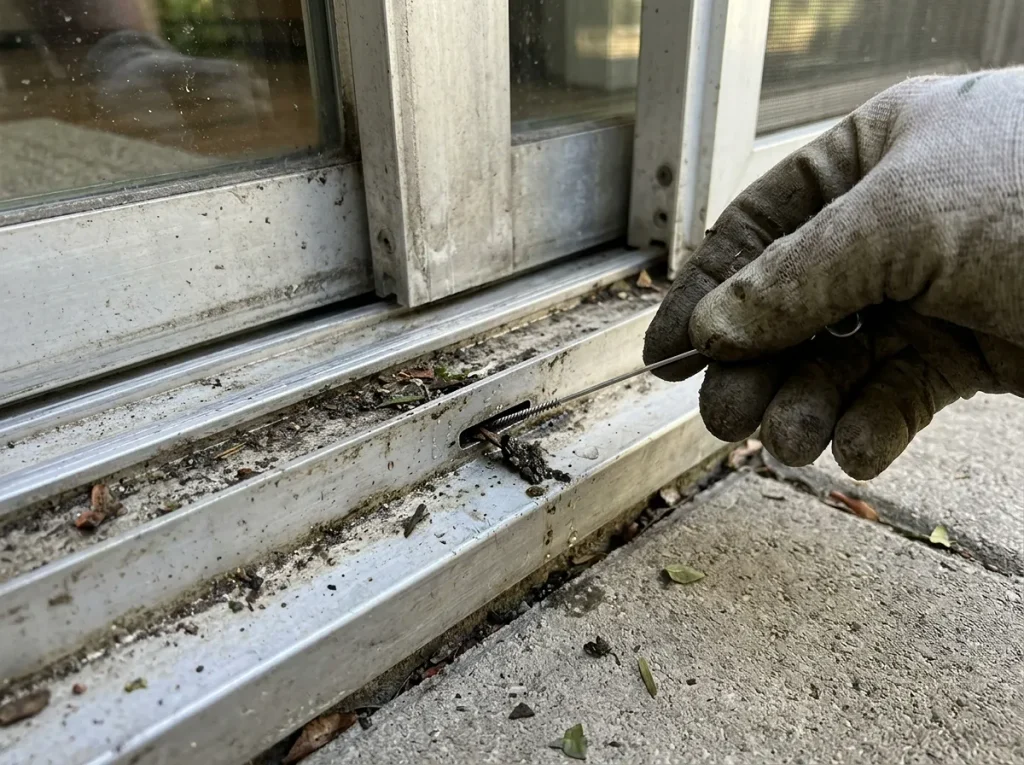
Table of Contents
Why Sliding Doors Fail in Arizona
The Maintenance Routine That Prevents Most Problems
Common Sliding Door Problems and How to Solve Them
Problem-by-Problem: What’s Actually Involved
Repair Cost vs. Replacement: Making the Call
Real-World Conditions: The “If/Then” Guide
The Regrets Homeowners Mention Most
Key Takeaways / Quick Summary
- Dirty tracks cause most sliding door problems—clean them monthly in Arizona’s dusty climate
- Use silicone spray only—oil and grease attract dust and make sticking worse
- Most sticking doors are fixed by cleaning the track and adjusting the rollers, not replacing the door
- A door that jumps the track usually means a worn roller or a bent track, not a failed door
- Clear the weep holes in the bottom track so monsoon water drains out
- Foggy glass means the seal has failed and cannot be repaired—the insulated unit must be replaced
- Repairs typically run 100–500; a door that needs multiple fixes may be a replacement candidate
- Professional repair is worth it when the issue involves the frame, glass, or track replacement
Why Sliding Doors Fail in Arizona
Arizona is hard on sliding doors. The combination of dust, heat, and monsoon moisture creates a specific set of failure patterns.
Dust is the primary enemy. It blows into the bottom track and mixes with any existing lubricant to form a gritty paste. That paste grinds against the rollers every time you open the door. Over months, it wears the rollers flat and scores the track.
Extreme heat causes frames and tracks to expand and contract, which can throw a panel slightly out of alignment. Rollers that were fine in spring may bind in July.
Monsoon moisture pools in the bottom track if the weep holes are clogged. Trapped water corrodes the track, rots the adjacent framing, and degrades the weatherstripping.
UV exposure breaks down weatherstripping and seals, which lets in more dust and moisture—accelerating everything else.
The pattern is clear: most sliding door failures start small and are cheap to fix early. They get expensive when they’re ignored.
The Maintenance Routine That Prevents Most Problems
This routine takes about 15 minutes a month and prevents the majority of sliding door issues.
Monthly: Clean the Track
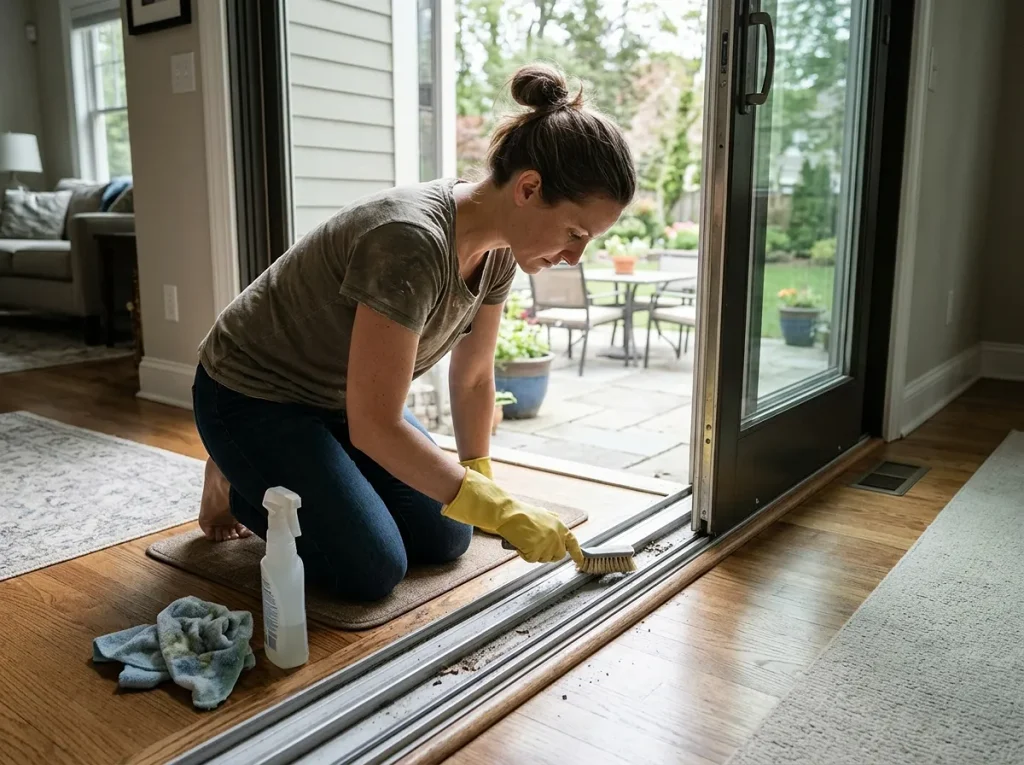
Vacuum the bottom track with a crevice tool, then wipe it with a damp cloth. Use an old toothbrush for the corners. Remove every bit of grit—if you can feel particles, they’re grinding your rollers.
Why it matters: This single habit prevents more problems than any other. Most “broken” sliding doors are just dirty ones.
Monthly: Clear the Weep Holes
Look for small drainage slots or holes in the bottom track. Push a pipe cleaner or piece of wire through each one to confirm it’s clear.
Why it matters: In Arizona, monsoon rain can fill a clogged track in minutes. Standing water against the frame leads to corrosion and rot.
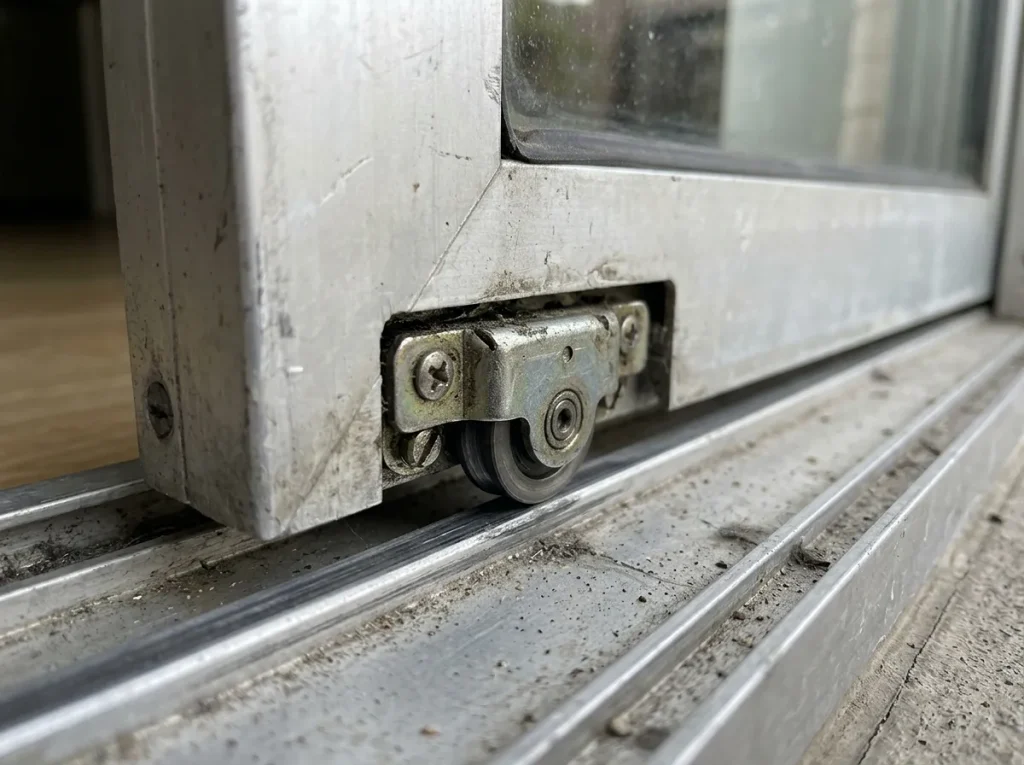
Quarterly: Lubricate the Rollers and Track
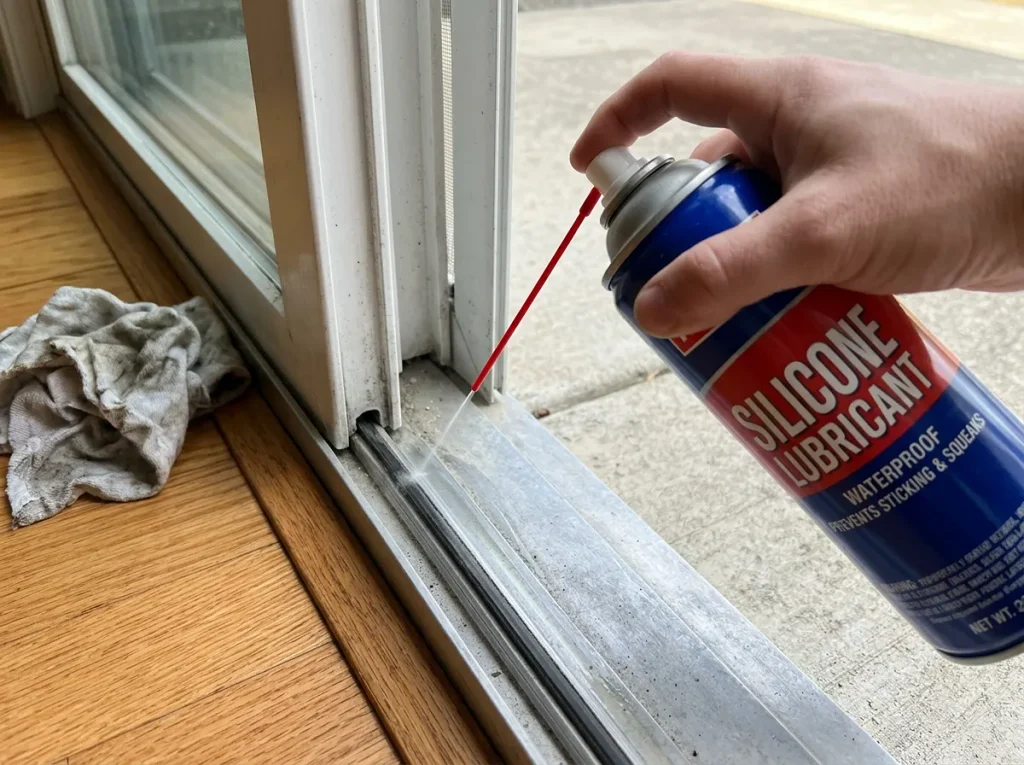
Apply a small amount of silicone-based lubricant or dry PTFE spray to the track and roller assemblies. Slide the door back and forth several times to distribute it.
Never use oil, grease, or WD-40. They attract dust and turn into the gritty paste that wears out rollers. This is the single most common maintenance mistake.
Twice a Year: Inspect the Weatherstripping
Check the weatherstripping around the door perimeter for cracks, gaps, and worn spots. Do the candle test on a breezy day—if the flame flickers near the edges, you have an air leak.
Twice a Year: Check the Glass Seal
Look at the edges of the glass unit for fogging or a white haze between the panes. That’s the first sign of seal failure.
Annually: Tighten Hardware
Check the handle, lock, and track screws. Loose screws allow the track to shift and the panel to misalign.
Related note: If you have other sliding products in the home—windows, for instance—the care routine is nearly identical. Our guide to sliding window maintenance covers the track cleaning, lubrication, and seal checks that apply to sliders of all kinds.
Common Sliding Door Problems and How to Solve Them
Here’s a diagnostic table for the eight issues homeowners call about most.
| Problem | Likely Cause | DIY Fix | When to Call a Pro |
| Door drags or sticks | Dirty track, worn rollers, misaligned panel | Clean track, lubricate, adjust roller screws | If adjustment doesn’t help or rollers are flat |
| Door grinds or squeals | Debris in track, dry rollers, worn roller bearings | Clean thoroughly, apply silicone spray | If noise persists after cleaning and lubrication |
| Door jumped the track | Worn roller, bent track, damaged panel edge | Re-seat the panel if it’s light and undamaged | Yes—jumped tracks often signal deeper damage |
| Door won’t lock | Misaligned panel, worn latch, frame shift | Adjust roller height to realign the panel | If the latch itself is damaged or the frame has shifted |
| Water pools in the track | Clogged weep holes, failed weatherstripping | Clear weep holes with wire or pipe cleaner | If water has damaged the track or framing |
| Draft or dust infiltration | Worn weatherstripping, gaps at frame | Replace weatherstripping | If the frame itself has gaps or sealant has failed |
| Foggy glass between panes | Failed insulated glass seal | Not repairable | Yes—the glass unit must be replaced |
| Track screws won’t stay tight | Stripped holes, movement in framing | Replace with slightly larger screws | If screws won’t hold, the framing needs assessment |
Problem-by-Problem: What’s Actually Involved
1. A Door That Sticks or Drags
This is the most common call, and it’s usually the easiest fix.
Start here: Clean the track completely. Vacuum, wipe, and scrub the corners with a toothbrush. Then apply silicone lubricant and test the door.
If it’s still dragging: Locate the adjustment screw on the bottom roller (usually under a small cap or plug on the bottom edge of the panel). Turn it a quarter turn at a time to raise or lower that corner. Test after each adjustment.
If it’s still dragging after that: The rollers are likely worn flat or the track is bent. That’s a repair, not a cleaning.
2. A Door That Grinds or Squeals
Grinding is almost always friction. Friction is almost always debris or a dry roller.
Start here: Clean the track, then lubricate with silicone. If the noise is coming from inside the panel rather than the track, the roller bearings themselves are worn.
Roller replacement is a moderate DIY job on many doors—the panel usually lifts out and the roller assemblies unscrew. But panels are heavy, and a dropped glass panel is a serious safety and cost issue. If you’re not confident, that’s a professional job.
3. A Door That Jumped the Track
This one deserves respect. A panel that’s jumped the track means either the roller has failed or the track has bent.
Do not force it back into place. Forcing a jumped panel can crack the glass, bend the track further, or injure you. Panels on a large slider can weigh well over 100 pounds.
Call a professional unless it’s a small, light panel and you can clearly see an undamaged track.
4. A Door That Won’t Lock
Nine times out of ten, this is alignment—not a broken lock.
Start here: Open and close the door slowly and watch where the lock meets the strike. If the panel is sitting slightly too high or too low, the latch won’t engage. Adjust the roller height a quarter turn and retest.
If alignment doesn’t fix it: The latch mechanism itself may be worn or damaged. Replacement hardware is inexpensive, but matching the existing hardware profile can be tricky.
5. Water Pooling in the Track
This is an Arizona monsoon-specific problem, and it’s more serious than it looks.
Start here: Clear the weep holes with a pipe cleaner or wire. Test by pouring a small amount of water into the track—it should drain out the exterior side.
If water still pools: The weatherstripping or exterior sealant may have failed, allowing water in where it shouldn’t go. Persistent pooling leads to corrosion and rot, so don’t ignore it.
6. Drafts and Dust Infiltration
In a dusty climate, a door with failed weatherstripping lets in grit constantly—which then accelerates track and roller wear.
Start here: Inspect the weatherstripping along both sides and the bottom sweep. Replace any section that’s cracked, flattened, or missing.
If drafts persist: Check the sealant around the exterior frame. Gaps there let in air and water regardless of interior weatherstripping condition.
7. Foggy Glass Between Panes
This one has no DIY fix. Fogging means the insulated glass unit’s seal has failed and the gas fill has escaped. The window is no longer insulating, and it can’t be repaired—only replaced.
What to do: Check your warranty documentation first. Seal failures are often covered for a set number of years. If the door is older, weigh glass replacement against full door replacement.
8. Track Screws That Won’t Stay Tight
Loose track screws allow the track to shift, which misaligns the panel and causes sticking.
Start here: Replace stripped screws with slightly larger ones. Add a small amount of thread-locking compound.
If they still won’t hold: The framing behind the track may be damaged or softened. That’s a professional assessment.
Repair Cost vs. Replacement: Making the Call
Here’s a rough guide to repair costs versus replacement.
| Service | Typical Cost | Notes |
| Track cleaning and roller adjustment | $0 (DIY) – $150 | Most common fix |
| Roller replacement | $100 – $300 | Includes labor and parts |
| Weatherstripping replacement | $50 – $200 | Inexpensive, high impact |
| Lock or latch replacement | $75 – $250 | Hardware-dependent |
| Glass unit replacement | $300 – $800+ | Only if frame and track are sound |
| Track replacement | $200 – $600+ | Labor-intensive |
| Full door replacement | $1,500 – $5,000+ | When multiple systems have failed |
The rule of thumb: If a single repair costs less than a third of replacement and the door is under 15 years old, repair it. If you’re facing multiple repairs—rollers, track, glass, and weatherstripping all failing—replacement usually delivers better value.
Consider replacement when:
- The door is 20+ years old
- The glass seal has failed and the frame is also worn
- The track is corroded or bent beyond repair
- The door no longer seals and drafts are driving up energy bills
- Multiple components are failing at once
When to Call a Professional
Some jobs are genuinely DIY-friendly. Others aren’t.
Safe to DIY:
- Cleaning tracks and weep holes
- Lubricating rollers
- Adjusting roller height
- Replacing weatherstripping
- Tightening or replacing screws
Call a professional for:
- Panels that have jumped the track
- Roller replacement on heavy or large panels
- Glass unit replacement (seal failure)
- Track replacement or repair
- Persistent water intrusion
- Frame damage, rot, or shifting
Why it matters: A glass patio door panel is heavy, awkward, and expensive to replace if dropped. The risk-to-savings ratio on DIY panel removal is poor for most homeowners—especially on large sliders.
Real-World Conditions: The “If/Then” Guide
If your door is under 10 years old and sticking → Then clean the track and adjust the rollers. It’s almost certainly maintenance, not failure.
If your door is 15–20+ years old with multiple issues → Then price replacement alongside repair. The math often favors a new door.
If you live near construction or open desert → Then clean the track every two weeks, not monthly, and lubricate quarterly instead of annually.
If your door faces west or south → Then inspect weatherstripping and seals more often—UV degrades them faster on these exposures.
If you have monsoon pooling in the track → Then clear weep holes before the season starts, not after the first storm.
If the glass is foggy but the frame is sound → Then glass unit replacement may be worthwhile. Get a quote before assuming you need a whole new door.
If the door has jumped the track → Then don’t force it. Call a professional—forcing it risks cracking the glass.
If you have sliding windows with similar problems → Then the same track-and-roller logic applies. Our guide to sliding window maintenance covers the equivalent routine for windows.
If your energy bills are climbing → Then check the door’s seal and weatherstripping. A poorly sealing slider wastes conditioned air year-round.
If you’re preparing to sell → Then fix the sticking door before showings. A door that grinds reads as deferred maintenance to buyers.
The Regrets Homeowners Mention Most
Regret 1: Spraying WD-40 on the track
It feels like it helps for a week. Then it attracts dust, forms a gritty paste, and makes the problem worse than before. Silicone spray only.
Regret 2: Ignoring the track until the door fails
A monthly two-minute cleaning prevents the roller wear that leads to a $300 repair. Almost every homeowner who’s replaced rollers wishes they’d cleaned the track more often.
Regret 3: Forcing a jumped panel back into place
This is how glass panels get cracked. If the panel has jumped the track, stop and call someone.
Regret 4: Overlooking the weep holes
Arizona homeowners often discover this after the first monsoon floods the track—and by then the frame has been sitting in water.
Regret 5: Assuming foggy glass is repairable
It isn’t. The insulated unit must be replaced, and homeowners who delay often find the warranty period has lapsed.
Regret 6: Replacing a door that only needed new rollers
A $150 repair is a lot cheaper than a $3,000 door. Get a diagnosis before you replace.
Common Questions We Get Asked
How often should I clean my sliding door track?
Monthly in Arizona. Every two weeks if you live near open desert or active construction.
What’s the best lubricant for a sliding door?
Silicone-based spray or dry PTFE spray. Never oil, grease, or WD-40—they attract dust and make sticking worse.
Why does my sliding door stick?
Most often: dirty track, worn rollers, or a panel that’s out of alignment. Clean the track first, then adjust the roller screws.
Can I fix a sliding door that jumped the track myself?
Only if it’s a small, light panel and the track is visibly undamaged. Larger panels are heavy and risky—call a professional.
Why won’t my sliding door lock?
Usually alignment, not a broken lock. Adjust the roller height a quarter turn and retest. If it still won’t engage, the latch hardware may need replacement.
Why is water collecting in my door track?
Clogged weep holes or failed weatherstripping. Clear the holes with a pipe cleaner and check the seals.
Can foggy sliding door glass be repaired?
No. Fogging means the seal has failed and the insulated unit must be replaced. Check your warranty first.
How much does sliding door repair cost?
Most repairs run 100–500, depending on the issue. Roller replacement and weatherstripping are on the low end; glass and track replacement are higher.
When should I replace instead of repair?
When the door is 20+ years old, multiple components are failing, or the glass seal has failed alongside frame wear.
Does a poorly sealing sliding door affect energy bills?
Yes. Windows and doors account for 25–30% of residential heating and cooling energy use, according to the U.S. Department of Energy. A door that doesn’t seal wastes conditioned air.
How long do sliding doors last?
Quality units last 20–30 years with regular maintenance. Neglected tracks and rollers shorten that considerably.
Why Talk to Windowz4Less Arizona
Some sliding door problems are a fifteen-minute fix. Others are a sign the door has reached the end of its service life—and telling the difference takes experience.
Windowz4Less Arizona works with homeowners across Mesa, Phoenix, Scottsdale, Gilbert, Chandler, and the surrounding Valley communities. We can diagnose a sticking or leaking door, handle the repairs that make sense, and give you a straight answer when replacement is the better investment. We also know Arizona’s stucco construction, which matters when water intrusion has reached the framing.
Your Next Step
If your sliding door is sticking, leaking, or refusing to lock, the best move is a proper diagnosis. It’s usually cheaper than you fear—and sometimes simpler than you expect.
Contact Windowz4Less Arizona today for a free, no-obligation estimate or repair consultation. We’ll tell you whether you’re looking at a quick fix, a sliding door maintenance and repair job, or a replacement—and what each will cost.