You go to open your sliding window on a beautiful Arizona morning—and it won’t budge. You push harder. Nothing. You give it a good shove, and it finally grinds open with a sound that makes you cringe.
If this sounds familiar, you’re not alone. Sliding windows are one of the most common window types in Arizona homes, and they’re also one of the most neglected when it comes to maintenance.
Here’s the thing: sliding windows are simple machines. They slide on rollers along a track. And like any machine, they need regular care to keep working properly. The good news? Basic sliding window maintenance is easy, cheap, and takes just a few minutes per window.
In this guide, we’ll walk you through everything you need to know to keep your sliding windows operating smoothly—from basic cleaning to fixing common problems. Whether you’re dealing with a window that sticks, grinds, or just doesn’t slide like it used to, we’ve got you covered.
Table Of Content
Key Takeaways / Quick Summary
Why Sliding Windows Need Regular Maintenance in Arizona
The #1 Rule: Clean Your Tracks Regularly
Lubricate the Right Way (This Matters More Than You Think)
When Your Window Still Sticks: Diagnose the Problem
Check and Replace Weatherstripping
Check Your Window’s Drainage System
Screen Maintenance: Don’t Forget This
Real-World Conditions: The “If/Then” Guide to Sliding Window Maintenance
The Regrets Arizona Homeowners Mention Most
Frequently Asked Questions
Why Choose Windowz4Less Arizona?
Your Next Step: Start Your Maintenance Routine Today
Key Takeaways / Quick Summary
- Clean tracks monthly during dust season in Arizona to prevent sticking and grinding
- Use silicone-based lubricant only — never oil or grease, which attract dust and cause more problems
- Dirty tracks can increase HVAC energy load by 4% to 7% in hot climates like Arizona
- Inspect and replace weatherstripping when worn to prevent drafts and air leaks
- Most sliding window issues are caused by dirt, debris, or worn rollers
- Clean tracks with a vacuum and brush before applying any lubricant
- Replace worn rollers when cleaning and lubricating no longer solves sticking issues
Why Sliding Windows Need Regular Maintenance in Arizona
Let’s be honest: Arizona is tough on windows. The desert dust, extreme heat, and occasional monsoon storms create a perfect storm of problems for sliding windows.
Desert dust is the number one enemy. It gets into everything—including your window tracks. In Phoenix, Scottsdale, and across the Valley, dust storms can load debris into tracks within hours. A quick wipe with a paper towel helps for a day, then the grit comes right back.
Heat makes things worse. Arizona’s extreme temperatures can cause frames to expand and contract, which throws off alignment. When a window isn’t perfectly aligned, it drags, sticks, and wears out rollers faster.
The result? A window that used to glide open with one finger now takes two hands and a lot of effort. And if you ignore it long enough, you could end up with a window that’s completely stuck or damaged beyond simple repair.
What most people don’t realize is that uncleaned tracks don’t just make windows hard to open—they can also increase your energy costs. In hot climates like Arizona, debris buildup in tracks can increase HVAC energy load by 4% to 7% because of restricted airflow and poor sealing.
The #1 Rule: Clean Your Tracks Regularly
This is the single most important thing you can do for your sliding windows. And it’s also the most overlooked.
How often should you clean? At least once a month during dust season (typically spring through fall in Arizona). If there’s been a dust storm, clean them immediately afterward.
Here’s the step-by-step process:
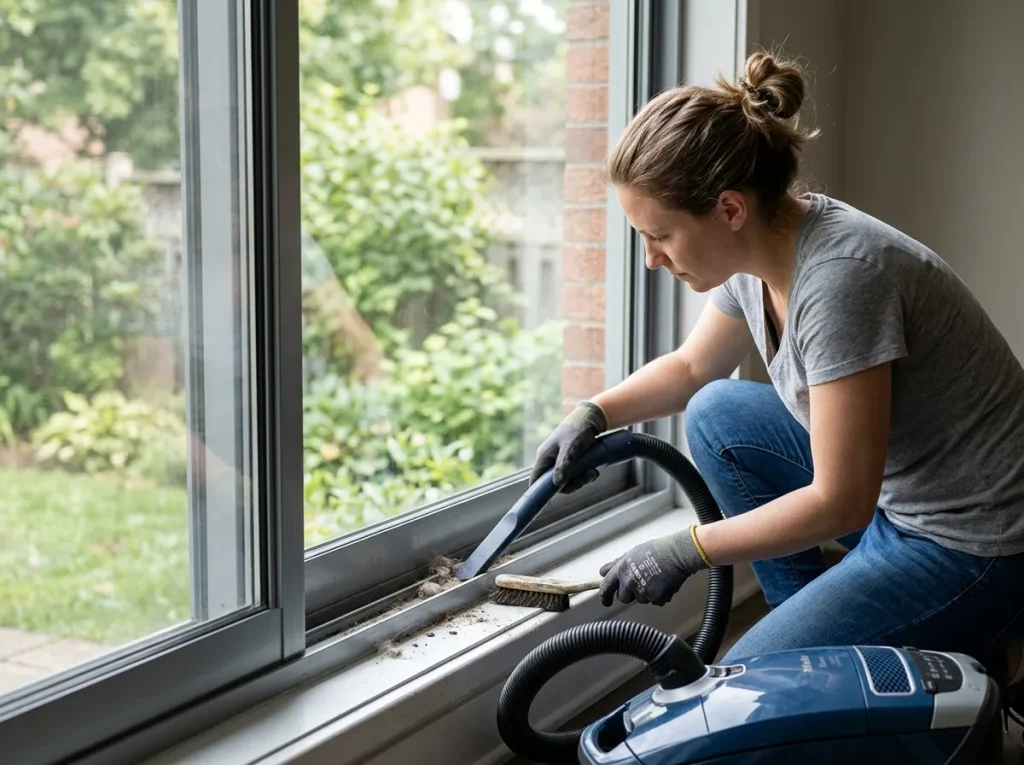
Step 1: Vacuum the tracks. Use a vacuum cleaner with a brush attachment or crevice tool to remove loose dirt, dust, and debris from the tracks. Pay special attention to the corners where dirt tends to accumulate.
Step 2: Scrub with soapy water. Mix warm water with a few drops of mild dish soap. Dip an old toothbrush or stiff nylon brush into the solution and scrub the track channels thoroughly. For stubborn grime, a 1:1 mixture of white vinegar and water works well.
Step 3: Wipe clean and dry. Use a microfiber cloth or paper towels to wipe the tracks clean. Make sure the tracks are completely dry before moving to the next step.
Step 4: Clean the glass and frame. While you’re at it, clean the window glass and frame with the same soapy water solution. This keeps your windows looking great and prevents dirt from migrating into the tracks.
Pro tip: If you have an air compressor with a spray nozzle, it works great for removing debris from hard-to-reach areas after cleaning.
Lubricate the Right Way (This Matters More Than You Think)
Here’s where a lot of people get it wrong.
The most common mistake is using the wrong type of lubricant. WD-40, oil, and grease might seem like good ideas, but they actually make things worse in the long run. They attract dust and grit, which turns into a sticky paste that jams up your tracks.
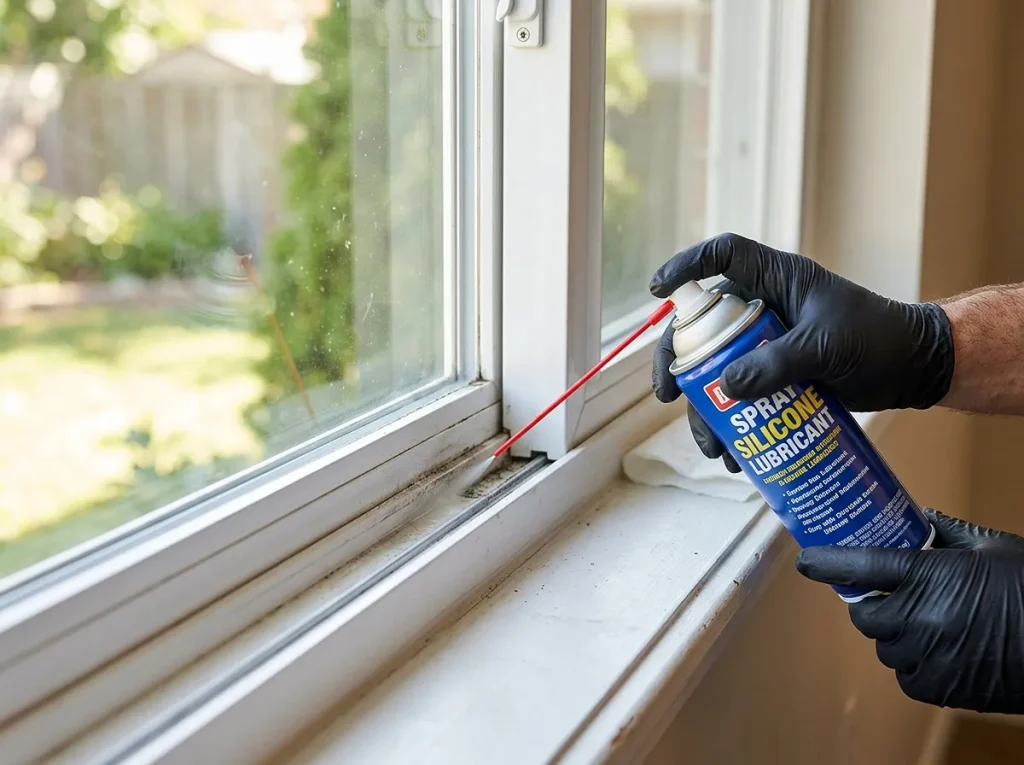
What you should use: A silicone-based lubricant or a dry PTFE spray (a friction-reducing compound that doesn’t attract dust). These products lubricate the tracks and rollers without leaving a sticky residue.
In Arizona’s desert environment, the recommendation is even more specific: use a dry silicone spray that lubricates the track and then dries. Oil-based products stay wet and attract even more dust.
Here’s how to lubricate properly:
Step 1: Make sure the tracks are clean and completely dry.
Step 2: Apply a small amount of silicone lubricant to the tracks and rollers. A little bit is enough—you don’t need to soak the tracks.
Step 3: Spread it evenly with a cloth.
Step 4: Slide the window back and forth a few times to distribute the lubricant.
How often? Most experts recommend lubricating sliding windows every three months or whenever you notice the window starting to drag.
When Your Window Still Sticks: Diagnose the Problem
If you’ve cleaned and lubricated your tracks and the window still sticks, it’s time to dig deeper.
Problem 1: Worn or damaged rollers
The rollers are the wheels at the bottom of the window sash that allow it to glide along the track. Over time, they wear out, especially in dusty environments like Arizona.
Signs of worn rollers: The window drags, feels uneven, or makes a grinding sound when you try to open it.
What to do: Locate the adjustment screws on the bottom of the window frame. Try adjusting them to raise or lower the sash. If that doesn’t work, the rollers may need to be replaced—a job best left to a professional.
Problem 2: Misaligned tracks
Heat-related frame movement can cause tracks to become misaligned. When tracks aren’t perfectly parallel, the window binds and sticks.
Signs of misalignment: The window feels like it’s catching on something, or it’s harder to slide in one direction than the other.
What to do: Check if the tracks are level. Minor misalignments can sometimes be fixed with a screwdriver. Severe warping may require professional repair.
Problem 3: Debris buildup you missed
Sometimes dirt gets into places you can’t see—like behind the rollers or in the upper track.
What to do: Try opening the window as far as it will go and vacuuming the track again. Use a small brush or cotton swab to get into tight corners.
Check and Replace Weatherstripping
Weatherstripping is the material that seals the gap between the window sash and the frame. It keeps out drafts, dust, and moisture.
In Arizona, weatherstripping takes a beating from the heat and UV exposure. Over time, it becomes brittle, cracks, or wears down.
Signs of worn weatherstripping:
- You feel a draft near the window
- Dust is getting into your home around the window
- The window doesn’t seal tightly when closed
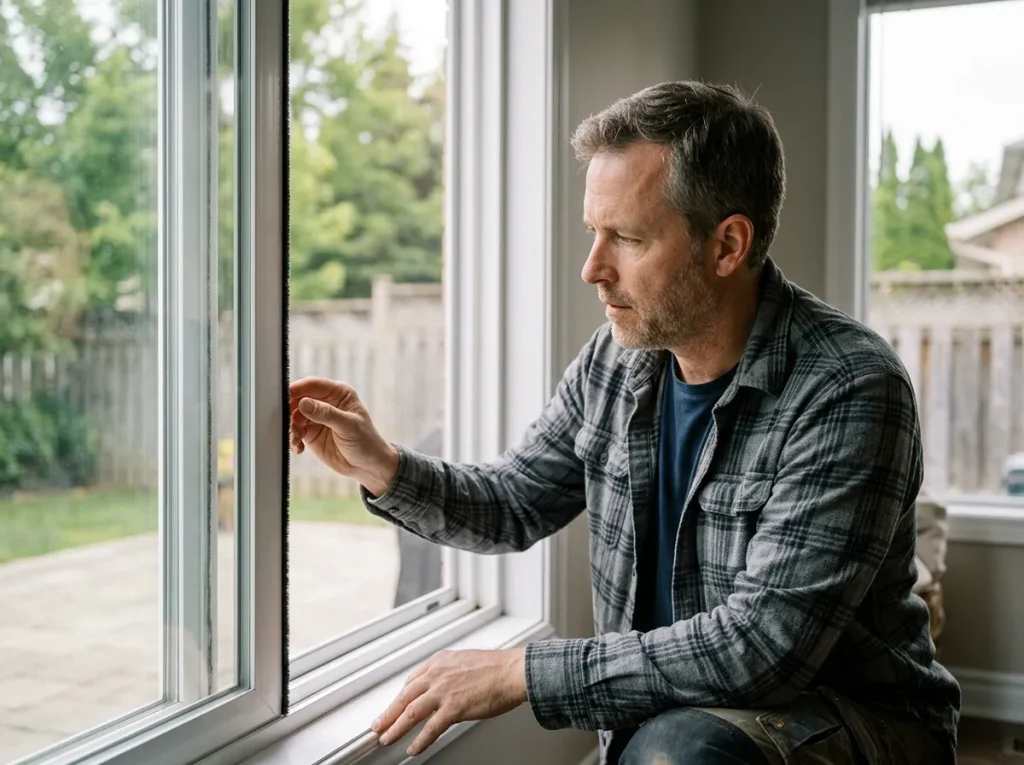
What to do: Inspect the weatherstripping around the perimeter of the window frame. If you see cracks, gaps, or signs of wear, replace it.
Replacement weatherstripping is available at most hardware stores for $5 to $15 per window. It’s a simple DIY fix: clean the old surface with rubbing alcohol, measure and cut the new weatherstripping, press it firmly into place, and test the window.
According to the U.S. Department of Energy, sealing air leaks around windows is one of the quickest energy- and money-saving tasks you can do, saving 10% to 20% on energy costs.
Check Your Window’s Drainage System
Here’s something most homeowners don’t think about: sliding windows have drainage systems built into the tracks to channel water away from your home.
In Arizona, we don’t get a lot of rain, but when the monsoon hits, it hits hard. If your window’s drainage holes are blocked by dirt or debris, water can back up and cause damage.
What to do: Check the drainage holes in the bottom track. Make sure they’re clear of debris. If they’re blocked, use a small wire or pipe cleaner to clear them.
Screen Maintenance: Don’t Forget This
Sliding windows in Arizona almost always have screens. And those screens take a beating from the sun, dust, and monsoon winds.
What to do:
- Inspect screens regularly for tears or holes
- Clean screens with mild soap and water
- For sun-facing windows, consider upgrading to solar screen mesh—it blocks a significant portion of heat and UV, helps lower cooling costs, and protects your interiors
- Make sure screens slide smoothly in their tracks and seal tightly when closed
Real-World Conditions: The “If/Then” Guide to Sliding Window Maintenance
Here’s how to adjust your maintenance routine based on your specific situation:
If you live in an area with frequent dust storms → Then clean your tracks immediately after every storm and at least monthly during dust season. Don’t wait—dust left in tracks can cause permanent damage to rollers.
If your windows face west → Then inspect weatherstripping more frequently. West-facing windows get the most intense afternoon sun and UV exposure, which degrades seals faster.
If you have older windows → Then consider having a professional inspect your rollers. Worn rollers are the most common cause of sticking in older sliding windows.
If you notice a draft → Then check and replace weatherstripping immediately. Even small air leaks can significantly increase your energy costs.
If your window is hard to open after cleaning → Then check for misalignment or worn rollers. Adjust the rollers using the screws at the bottom of the frame.
If you have sliding doors too → Then use the same maintenance routine. Sliding doors have the same tracks, rollers, and weatherstripping issues as sliding windows. For more detailed guidance, check out our sliding door maintenance and repair guide.
If you’re not comfortable doing repairs yourself → Then call a professional. Some issues—like replacing rollers or realigning tracks—are better left to experts.
The Regrets Arizona Homeowners Mention Most
After helping thousands of Arizona homeowners maintain their windows, here are the most common regrets we hear:
Mistake 1: Using the wrong lubricant
A lot of people grab whatever’s in the garage—WD-40, motor oil, grease—and spray it on their tracks. Then they wonder why their windows are even stickier a month later. Oil-based lubricants attract dust like a magnet. Use silicone spray only.
Mistake 2: Not cleaning before lubricating
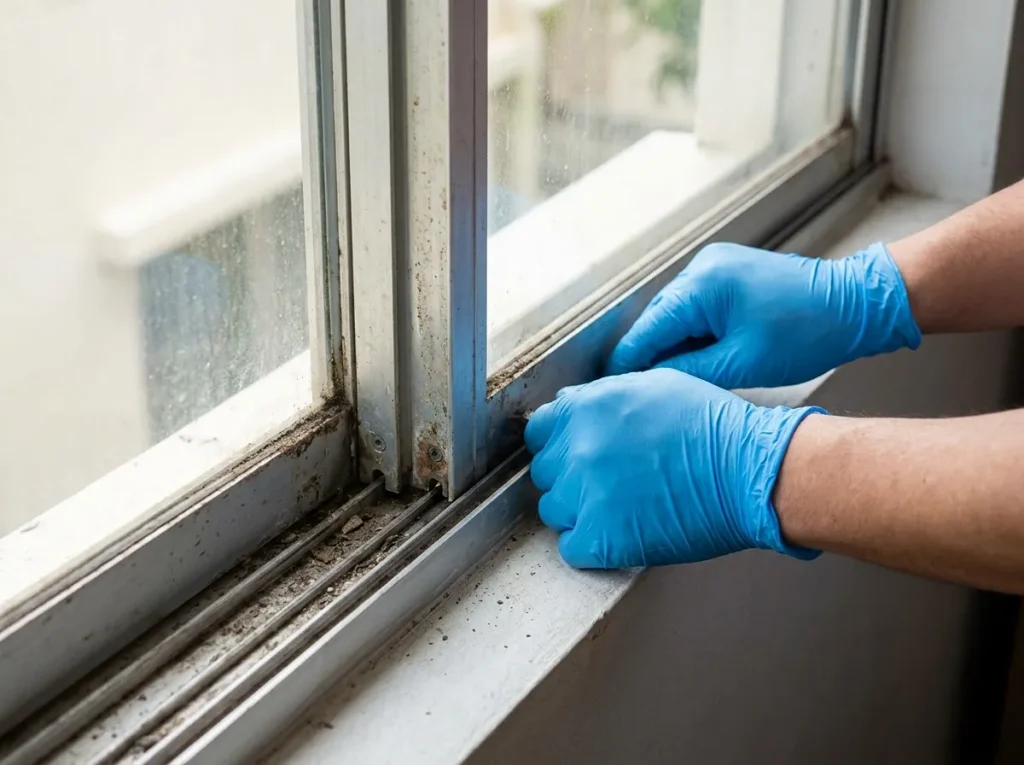
Some homeowners skip the cleaning step and just spray lubricant onto dirty tracks. This creates a gritty paste that makes the problem worse. Always clean first, lubricate second.
Mistake 3: Ignoring the problem until it’s too late
A window that’s “a little sticky” today will be “completely stuck” in six months. And by then, you might need expensive roller replacement or track repair. A few minutes of maintenance now saves hundreds of dollars later.
Mistake 4: Forgetting about weatherstripping
Most homeowners focus on the tracks and forget about the seals. But worn weatherstripping lets in dust, drafts, and even pests. It’s cheap and easy to replace—don’t overlook it.
Mistake 5: Not cleaning screens
Dirty screens block airflow and reduce natural ventilation. And damaged screens let in bugs. A quick cleaning and inspection twice a year makes a big difference.
Frequently Asked Questions
How often should I clean my sliding window tracks?
In Arizona, clean tracks at least once a month during dust season (spring through fall). If there’s been a dust storm, clean them immediately afterward. During winter months, every other month is usually sufficient.
What’s the best lubricant for sliding windows?
Use a silicone-based lubricant or dry PTFE spray. In Arizona’s desert environment, a dry silicone spray that dries after application works best. Never use oil, grease, or WD-40—they attract dust and make problems worse.
Why does my sliding window stick after I clean it?
If your window sticks after cleaning, you may have missed debris in hard-to-reach areas, the tracks may be misaligned, or your rollers may be worn. Try vacuuming again with a crevice tool, then check the alignment.
How long do sliding window rollers last?
In Arizona’s dusty environment, rollers typically last 10–15 years with regular maintenance. Without maintenance, they can fail much sooner.
Can I replace sliding window rollers myself?
It’s possible, but it requires removing the window sash, which can be heavy and awkward. If you’re not comfortable with DIY repairs, call a professional. Windowz4Less Arizona offers professional maintenance and repair services.
How do I know if my weatherstripping needs replacing?
Check for visible cracks, gaps, or wear. You can also do a simple test: close the window and hold a candle or lighter near the edges. If the flame flickers, you have an air leak that needs sealing.
Can dirty tracks really increase my energy bills?
Yes. In hot climates like Arizona, uncleaned tracks can increase HVAC energy load by 4% to 7% because of restricted airflow and poor sealing. Properly maintained windows seal better and keep your home cooler.
Should I clean the top track too?
Yes. Many homeowners only clean the bottom track, but dirt accumulates in the top track as well. Use a vacuum with a brush attachment to clean both tracks.
How do I clean window screens?
Remove the screen carefully. Wash it with mild soap and water using a soft brush. Rinse thoroughly and let it dry completely before reinstalling. For sun-facing windows, consider upgrading to solar screen mesh.
When should I call a professional?
Call a professional if:
- Your window is completely stuck and won’t move at all
- You’ve cleaned and lubricated but the window still doesn’t slide smoothly
- You hear grinding or scraping sounds when opening the window
- The window is misaligned or won’t close completely
- You need roller replacement or track repair
Why Choose Windowz4Less Arizona?
Keeping your sliding windows in top condition isn’t just about convenience—it’s about protecting your home, your comfort, and your energy bills. And when you need professional help, you want a team that understands Arizona’s unique challenges.
Windowz4Less Arizona specializes in sliding windows and doors for homes across the Phoenix metro area.
- Local expertise — We know how Arizona’s dust, heat, and monsoons affect your windows
- Quality service — From basic maintenance to complete repairs, we do the job right
- Professional installation — Our team is trained, insured, and takes pride in quality work
- Transparent pricing — No hidden fees, no surprises
- Serving Mesa, Phoenix, Scottsdale, and surrounding areas — We’re your local experts
Whether you need sliding window maintenance, repairs, or a complete replacement, we’re here to help.
Your Next Step: Start Your Maintenance Routine Today
Don’t wait until your sliding windows are stuck or damaged. A few minutes of maintenance today can save you hundreds of dollars in repairs tomorrow—and keep your home more comfortable and energy-efficient year-round.
Start with a thorough cleaning of your tracks. Then apply the right lubricant. Inspect your weatherstripping and screens. And if you run into problems you can’t solve, we’re here to help.
Contact Windowz4Less Arizona today for professional sliding window maintenance, repair, or replacement. We’ll keep your windows sliding smoothly for years to come.