Most homes have one door that’s easier to get into than the rest. It isn’t the front door. It’s the sliding glass door at the back of the house—the one facing the yard, often out of sight from the street.
Here’s the uncomfortable truth: a lot of sliding doors are the softest entry point in a home. Not because the glass is weak, but because the hardware that secures them is often an afterthought. A basic latch, a hollow track, and a panel that can be lifted straight out of its rails. Burglars know this.
The good news is that sliding door security isn’t complicated or expensive to improve. A handful of upgrades—some costing under $30—can take a patio door from “easy target” to “not worth the effort.” In this guide, we’ll break down where sliding doors are actually vulnerable, what security features matter, and what you can do about it.
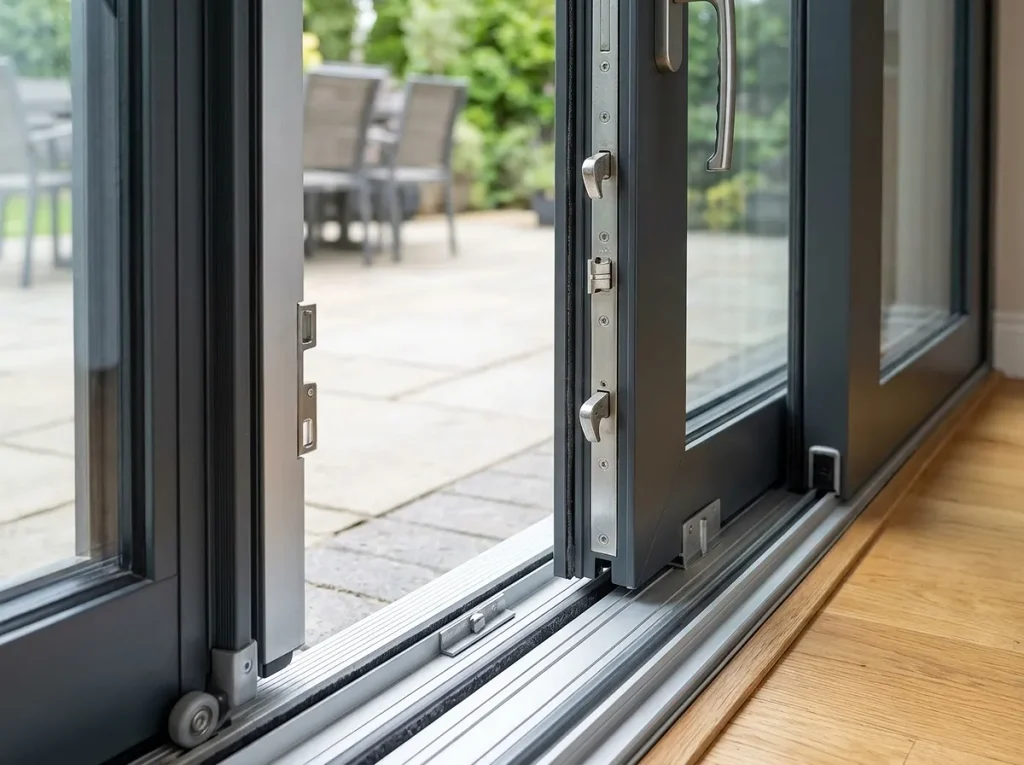
Table of Contents
Where Sliding Doors Are Actually Vulnerable
The Security Features That Actually Matter
Real-World Conditions: The “If/Then” Guide
The Regrets Homeowners Mention Most
Key Takeaways / Quick Summary
- The lock is usually the weak point on sliding doors—not the glass or the frame
- Panels can be lifted out of the track if there’s no anti-lift block or interior stop
- Multi-point locking systems secure the panel at three or more points and are the biggest single upgrade
- Laminated or impact-resistant glass resists breakage far better than standard annealed glass
- Secondary pins, bars, and track locks cost 20–100 and deliver outsized protection
- Security film can strengthen existing glass without replacing it
- Proper installation anchors the frame into structural framing—a poorly anchored door can be pried out
- Most break-ins are opportunistic—visible deterrence often matters as much as hardware
Where Sliding Doors Are Actually Vulnerable
Before you buy any hardware, it helps to understand the three ways a sliding door gets defeated. Most homeowners guess wrong about which one is the real risk.
Vulnerability 1: The Lock
A standard sliding door lock is a simple latch that catches the fixed panel’s frame. It’s often a hook or a basic lever with a shallow engagement. Some are so weak that a firm shove or a flat tool can pop them.
What makes it worse: Many latches engage at a single point. There’s nothing securing the top or bottom of the panel, so even if the latch holds, the panel can be forced at a corner.
Vulnerability 2: The Lift-Out
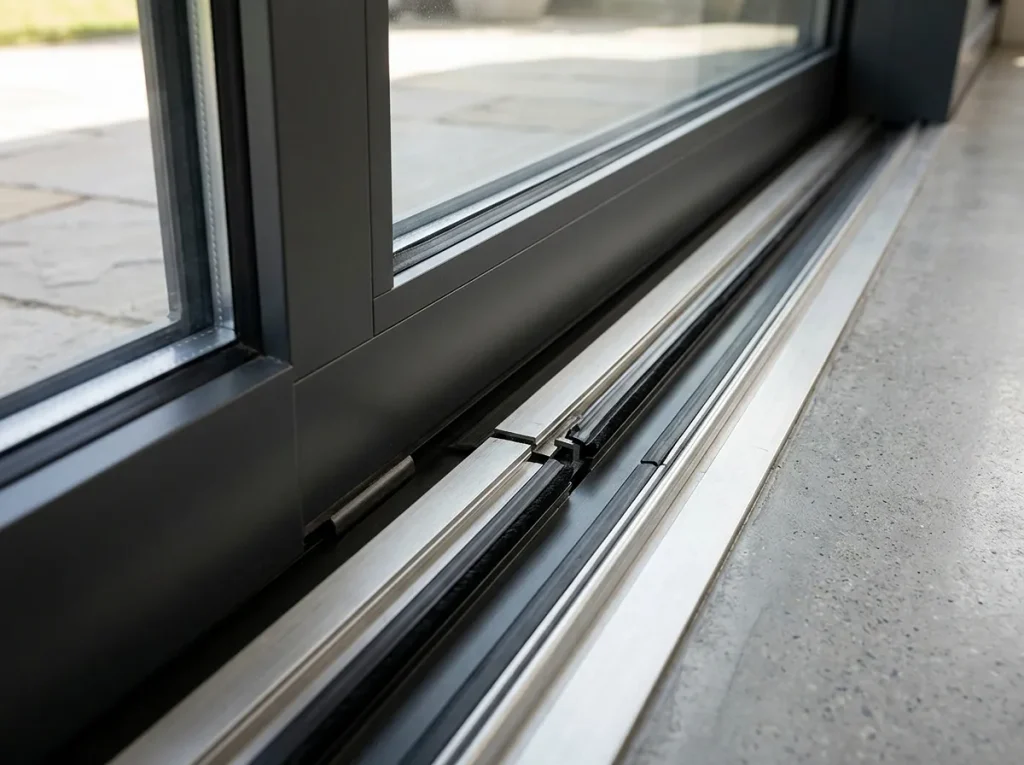
This is the one most people don’t know about. On many sliding doors, the panel sits in a bottom track and a top track. If the top track has enough clearance, the panel can be lifted up and tipped out of the frame—no glass breaking, no lock picking. Just a few seconds and a pair of hands.
What prevents it: Anti-lift blocks installed in the top track, or an interior stop that limits how far the panel can rise.
Vulnerability 3: The Glass
Standard annealed glass breaks easily. One strike with a hard object and an intruder has a hole large enough to reach through and unlock the door.
What prevents it: Laminated or impact-resistant glass, or a security film applied to existing glass. Both hold the pane together after impact, making it much harder to reach through.
If your door has a basic latch, no anti-lift block, and standard glass → Then it has all three vulnerabilities at once. That’s common—and worth fixing.
The Security Features That Actually Matter
Here’s what separates a secure sliding door from an easy one.
Multi-Point Locking Systems
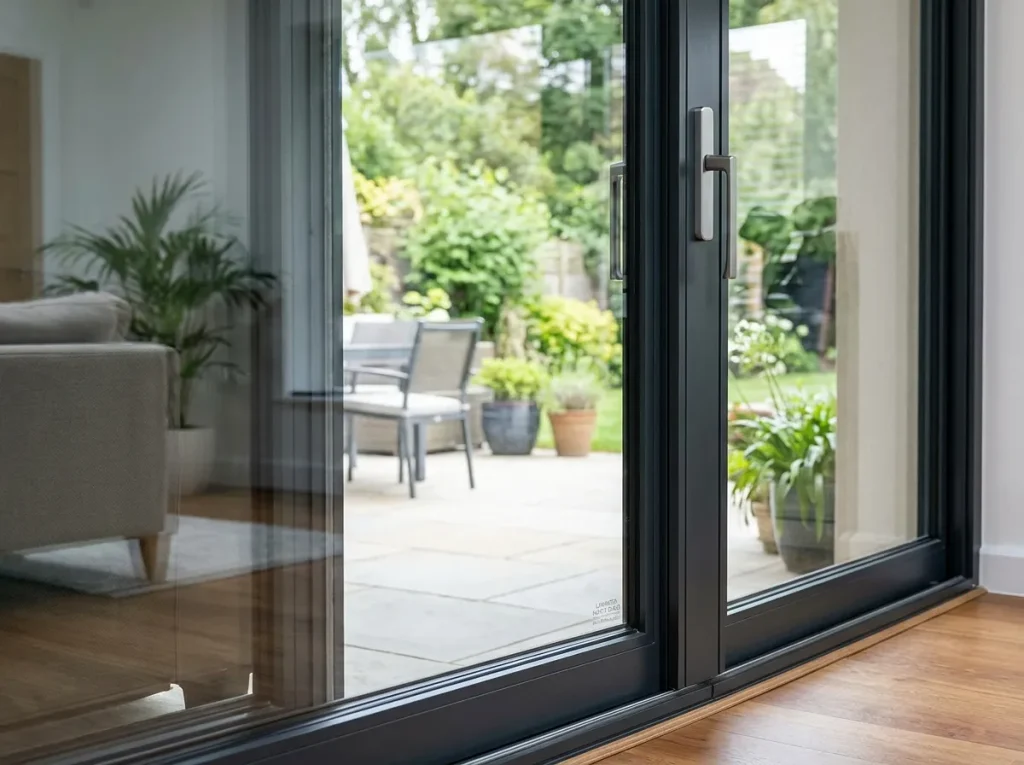
A multi-point lock secures the sliding panel at three or more points—typically top, middle, and bottom. Instead of one latch, you get several bolts engaging the frame.
Why it works: Forced entry requires defeating multiple points simultaneously. That’s dramatically harder than popping a single latch.
What to look for: At least three locking points, a Grade 1 or Grade 2 rating from the Builders Hardware Manufacturers Association (BHMA), and a solid steel or zinc construction.
Anti-Lift Blocks and Track Reinforcement
These are small hardware pieces installed in the top track that prevent the panel from being lifted out. They’re inexpensive and highly effective.
Why it works: It removes the “silent” entry method entirely. An intruder now has to defeat the lock or break glass—both louder and slower.
What to look for: Anti-lift blocks on both ends of the top track, plus a reinforced track that resists prying.
Quality Glass
Laminated glass consists of two panes bonded to a plastic interlayer. When struck, it cracks but stays in the frame. Impact-resistant glass is similar but engineered to a higher standard.
Why it works: It prevents the quick “break and reach” entry that standard glass allows.
What to look for: Laminated glass with a visible interlayer, or impact-rated glass. If you can’t replace the glass, a security film is a lower-cost alternative.
Frame Anchoring
This is installation-dependent, and it’s why a professionally installed door outperforms a DIY unit. If the frame is anchored only into stucco or drywall, an intruder can pry the entire unit out of the wall.
Why it works: Anchoring into structural framing makes the whole assembly resistant to prying.
What to look for: Fasteners that reach structural framing, multiple anchor points, and proper flashing around the frame.
Upgrades You Can Do Yourself
If you’re not replacing the door, these measures are affordable and effective.
| Upgrade | Typical Cost | What It Does |
| Secondary pin or bar | $20 – $60 | Locks the panel to the track at a second point |
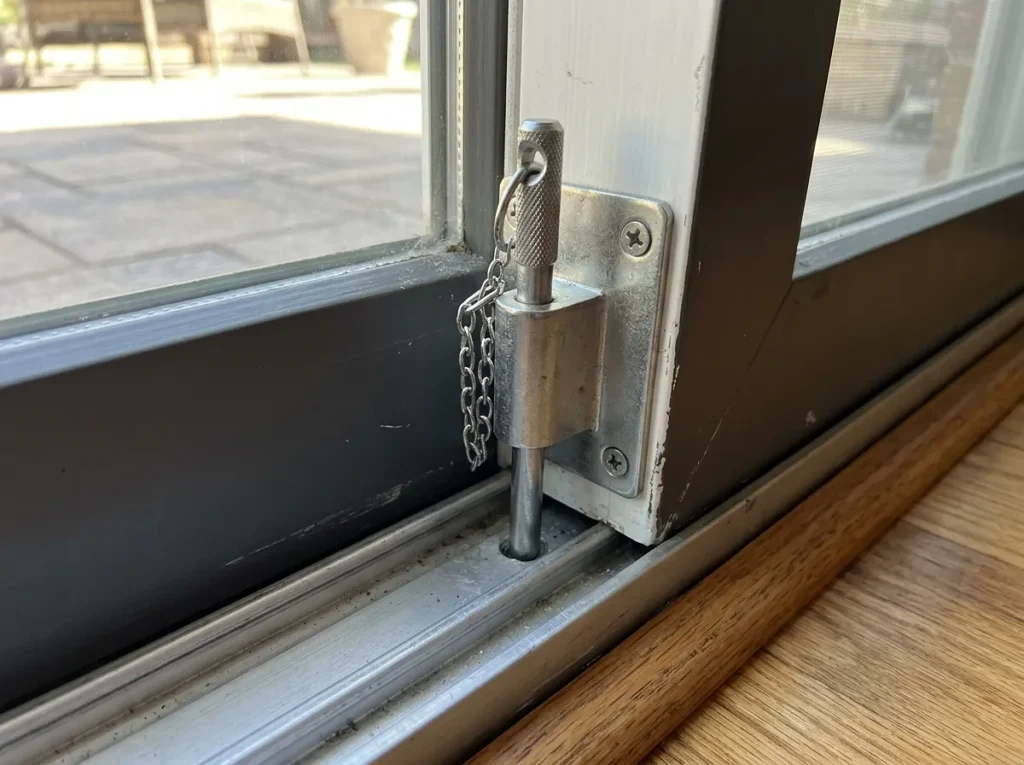
| Charley bar (track lock) | $25 – $70 | Prevents the panel from sliding or being lifted |
| Door sensor / alarm | $15 – $50 | Sounds an alert when the door opens |
| Security film | $8 – $20 per square foot | Strengthens existing glass against breakage |
| Security camera | $50 – $200 | Deterrence and evidence |
If your door is older with a basic latch → Then a Charley bar plus a secondary pin is the highest-value upgrade you can make. Together they address both the sliding and lifting vulnerabilities.
If you have standard glass and can’t replace it → Then security film is the practical option. It won’t make glass unbreakable, but it dramatically slows entry.
Real-World Conditions: The “If/Then” Guide
Here’s how to prioritize based on your situation:
If you’re buying a new sliding door → Then choose a unit with a multi-point lock, anti-lift track, and laminated glass from the start. It’s far cheaper than retrofitting later.
If you have an older door with a basic latch → Then add a Charley bar or secondary pin immediately. It’s the cheapest meaningful upgrade available.
If your door faces a yard with poor visibility from the street → Then prioritize deterrence—lighting, cameras, and visible hardware—alongside physical upgrades.
If you have young children → Then avoid heavy removable bars that could be misused. Choose fixed hardware and consider door alarms for peace of mind.
If you live in a rental → Then focus on non-invasive upgrades: a Charley bar, a door sensor, and renter-friendly security film.
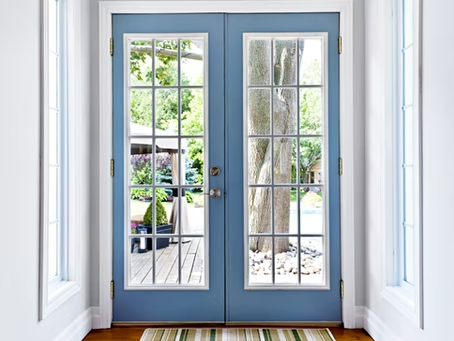
If you have French doors instead → Then the vulnerabilities are different—hinges, glass, and locks all matter. See our guide to entry door security features for the principles that apply to swinging doors.
If you’re installing a new door in a stucco home → Then make sure your installer anchors into structural framing. Poor anchoring undermines every other security feature.
If you’re concerned about break-ins in your area → Then layer your defenses: physical hardware, glass reinforcement, lighting, and monitoring. No single measure is sufficient alone.
The Regrets Homeowners Mention Most
Here’s what homeowners tell us they wish they’d known about sliding door security:
Regret 1: Assuming the lock was enough
A single latch doesn’t secure a sliding door. The lift-out vulnerability and the glass are just as important—and often easier to exploit.
Regret 2: Not knowing about the lift-out method
Most homeowners have never heard of it until after a break-in. Anti-lift blocks are cheap and effective, and they’re frequently missing on builder-grade doors.
Regret 3: Skipping the security film
Replacing glass is expensive. Security film costs a fraction as much and meaningfully slows entry. Many homeowners wish they’d applied it years earlier.
Regret 4: Choosing a cheap door to save money
Builder-grade sliding doors often have weak locks and thin tracks. The savings evaporate the first time the hardware fails—or worse, when it’s defeated.
Regret 5: Hiring an installer without structural anchoring experience
A premium door anchored only into stucco can be pried out. Anchoring into framing is what makes the hardware matter.
Regret 6: Ignoring deterrence
Most break-ins are opportunistic. Lighting, visibility, and visible hardware often prevent an attempt before it starts.
Common Questions We Get Asked
Are sliding doors easy to break into?
They can be—especially older units with basic latches and no anti-lift blocks. With a multi-point lock, anti-lift track, and laminated glass, they’re substantially harder to defeat.
What’s the best lock for a sliding patio door?
A multi-point locking system rated Grade 1 or Grade 2 by BHMA, engaging at three or more points. It’s the single biggest security upgrade available.
What is the lift-out vulnerability?
On many sliding doors, the panel can be lifted up and tipped out of the track if the top track has clearance. Anti-lift blocks or an interior stop prevent this.
Do security bars work on sliding doors?
Yes. A Charley bar or track lock prevents the panel from sliding and being lifted. They’re inexpensive and effective as a secondary measure.
Is security film worth it?
Yes, if you can’t replace the glass. It holds the pane together after impact and slows entry. It’s not a substitute for laminated glass, but it’s a meaningful improvement.
What kind of glass is best for security?
Laminated or impact-resistant glass. Standard annealed glass breaks easily and allows quick “break and reach” entry.
How much does it cost to upgrade sliding door security?
DIY upgrades range from $20 to $200. A full multi-point lock retrofit or glass replacement costs more—typically several hundred dollars per door.
Does professional installation affect security?
Significantly. A door anchored into structural framing resists prying far better than one anchored into stucco or drywall.
How do I know if my sliding door has anti-lift blocks?
Look at the top track. If there are small blocks or stops limiting how far the panel can rise, you have them. If the panel can be lifted freely, you don’t.
What about French doors—are they more secure?
They have different vulnerabilities—hinges, glass, and swing hardware. Our guide to entry door security features covers the principles that apply to swinging doors.
Why Talk to Windowz4Less Arizona
Sliding door security isn’t just about a lock. It’s the combination of hardware, glass, and installation—and getting that combination right is easier with a professional assessment.
Windowz4Less Arizona works with homeowners across Mesa, Phoenix, Scottsdale, Gilbert, Chandler, and the surrounding Valley communities. We can evaluate your existing door, recommend the security upgrades that make sense, and install new sliding doors with multi-point locking, anti-lift tracks, and laminated glass options. We also know how to anchor properly into Arizona’s stucco exteriors—which matters as much as the hardware.
Your Next Step
If you’re concerned about your patio door’s security, the best first step is an honest assessment. A quick inspection tells you whether your lock, track, and glass are actually protecting your home—or just giving the appearance of it.
Contact Windowz4Less Arizona today for a free, no-obligation estimate or security consultation. We’ll help you understand your options, prioritize the upgrades that matter, and—if you’re replacing the door—handle sliding door security from the ground up.