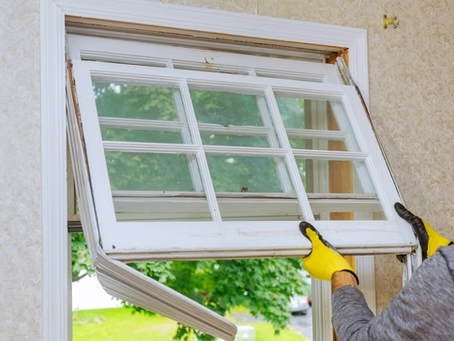
You’re standing in your kitchen, reaching awkwardly for the window above the sink. It’s a double-hung window, and you can barely get enough leverage to push it up.
There has to be a better way.
Here’s the honest answer: there is. A casement window might be exactly what you need. These windows swing outward like a door with a simple turn of a crank, giving you easy access to fresh air with zero struggle. And they’re not just convenient—they’re also some of the most energy-efficient windows you can buy .
In this complete buying guide, we’ll walk you through everything you need to know about casement windows—what they are, how they work, their pros and cons, cost, and whether they’re the right choice for your Arizona home.
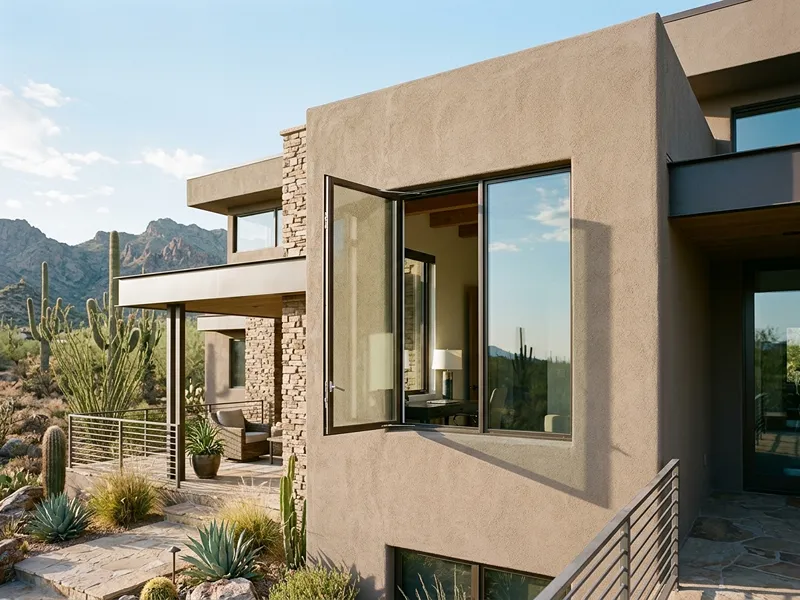
Table of Contents
What Exactly Is a Casement Window?
Pros and Cons of Casement Windows
Casement Windows vs. Sliding Windows
Energy Efficiency: Why Casement Windows Are Among the Best
Where to Install Casement Windows
Casement Window Installation: What to Expect
Key Takeaways / Quick Summary
- Casement windows are hinged at the side and open outward using a crank mechanism—like a door swinging open
- They’re among the most energy-efficient window styles because the sash compresses against the frame when closed, creating an airtight seal
- Casement windows offer 100% ventilation—the entire sash opens, unlike sliding windows which only open halfway
- Average cost ranges from $500 to $1,800 per window installed, more than sliding or double-hung windows
- Excellent for hard-to-reach spaces like above kitchen sinks, behind countertops, or in bathrooms
- They require exterior clearance to swing outward—not ideal for walkways, patios, or high-wind areas
- Screens are installed on the interior for outward-opening casement windows
What Exactly Is a Casement Window?
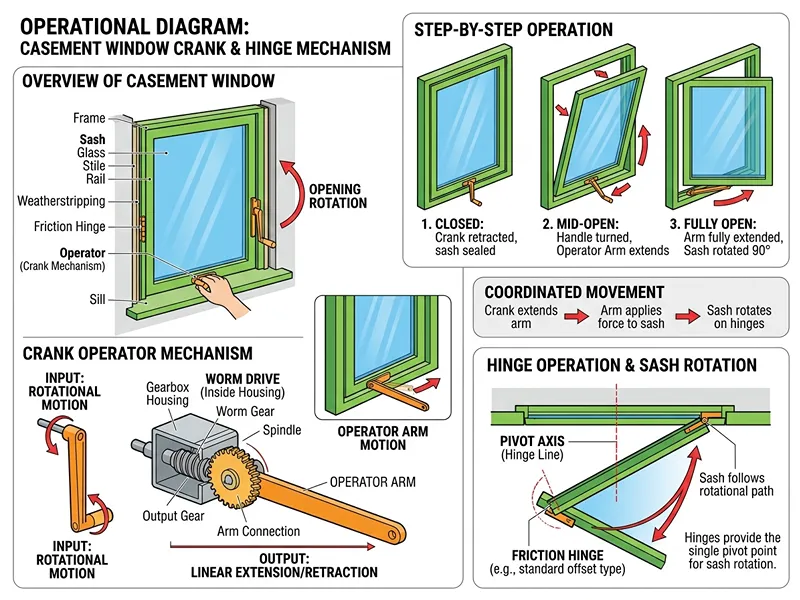
A casement window is a window that’s hinged on one side and opens outward like a door . It typically operates with a crank mechanism located at the bottom or side of the window frame. When you turn the crank, the sash swings open, allowing fresh air to flow in from top to bottom .
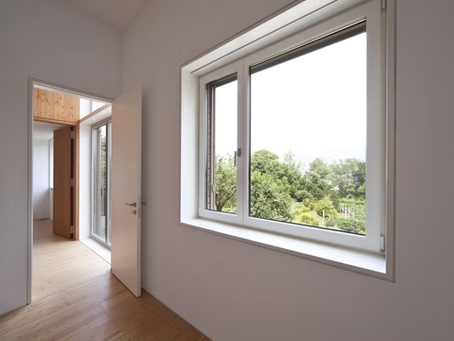
What makes casement windows distinctive is their single-sash design. Unlike double-hung windows that have two sashes sliding past each other, casement windows have one large pane of glass with minimal framing . This gives you an unobstructed view of the outdoors.
While most casement windows are hinged at the side, there are also top-hinged versions known as awning windows. Side-hinged is by far the most common configuration .
How Do Casement Windows Work?
The operation of a casement window is elegantly simple:
- The crank mechanism extends or retracts the hinges when you turn the handle. The crank might be stationary or fold in, depending on the model .
- The hinges —often called piano hinges or butt hinges—are typically located at the top and bottom of the casement window so they don’t obstruct your view when the sash is open .
- The locking handle secures and seals the window when it’s shut .
- Weatherstripping sits between the frame and sash to keep moisture and air from seeping through .
When you close a casement window, the sash gets pulled into the frame by the locking hardware. This compression creates one of the tightest seals in the window industry—which is why they’re so energy efficient .
Types of Casement Windows
Casement windows come in several configurations. Here are the most common:
Single Casement Window
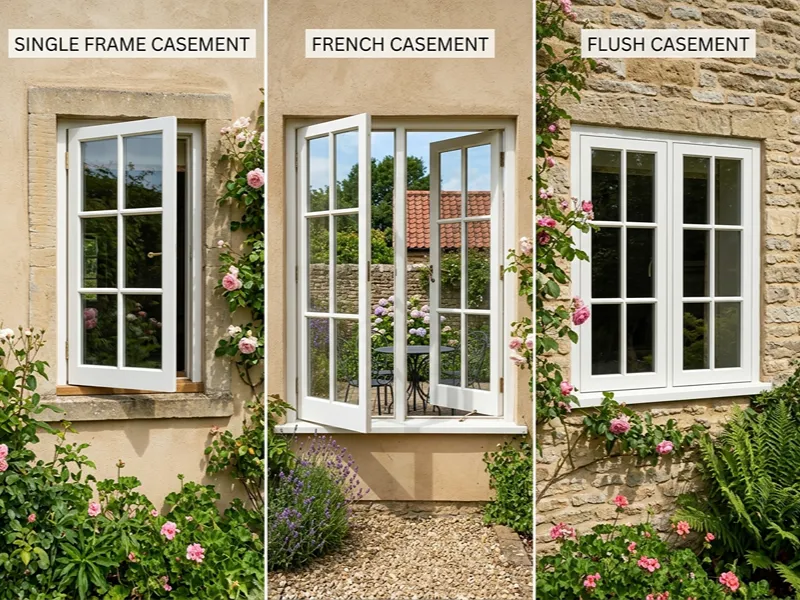
A single casement window consists of one glass pane within one window frame. It’s hinged on one side and opens outward with a crank. This style offers unobstructed views and maximum natural light .
Best for: Bedrooms, living rooms, and anywhere you want a clear view.
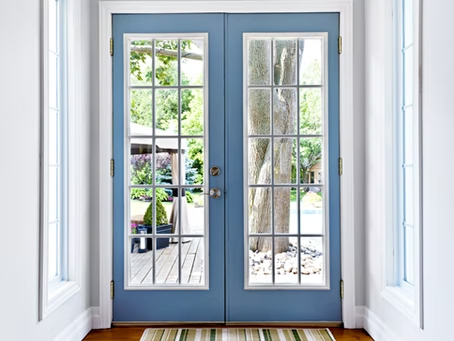
Double Casement Window (French Casement)
Also known as French casement windows, these consist of two frames with glass panes that open outward from the center, meeting in the middle when closed . Unlike traditional French doors, true French casement windows feature a floating mullion that travels with one sash, creating a wider, uninterrupted opening .
Best for: Large openings, patios, and spaces that benefit from dramatic natural light and wide ventilation.
Casement Bay Window
Casement windows are a popular choice for bay and bow window arrangements . While the traditional alternative is to use a double-hung style for a bay window, opting for casement windows allows you to open the entire pane, letting in more fresh air and providing better views.
Best for: Living rooms and master bedrooms where you want both views and ventilation.
Picture Window With Casement Flankers
A picture window features a large expanse of fixed-pane glass. Adding casement flankers on each side creates a functional window combination that offers both unobstructed views and ventilation .
Best for: Living rooms, dining rooms, and great rooms where large windows make a visual statement.
Flush Casement Windows
Flush casement windows sit perfectly flat within the frame when closed, creating a smooth, clean exterior look . Dating back to the 16th century, they’re ideal for both traditional and modern properties . Unlike standard casement windows that overlap the frame, flush versions have a level profile and clean appearance.
Best for: Modern homes and anyone seeking a sleek, minimalist aesthetic.
Fixed Casement Window
Also known as a picture window, this style looks like a standard casement window but doesn’t open . It’s ideal for unobstructed views and usually has a slimmer profile since it’s just the frame.
Best for: Areas where you want the aesthetic of a casement window without the need for ventilation.
Pros and Cons of Casement Windows
Before you decide, let’s be honest about what casement windows do well—and where they fall short.
The Pros
✅ Superior Energy Efficiency
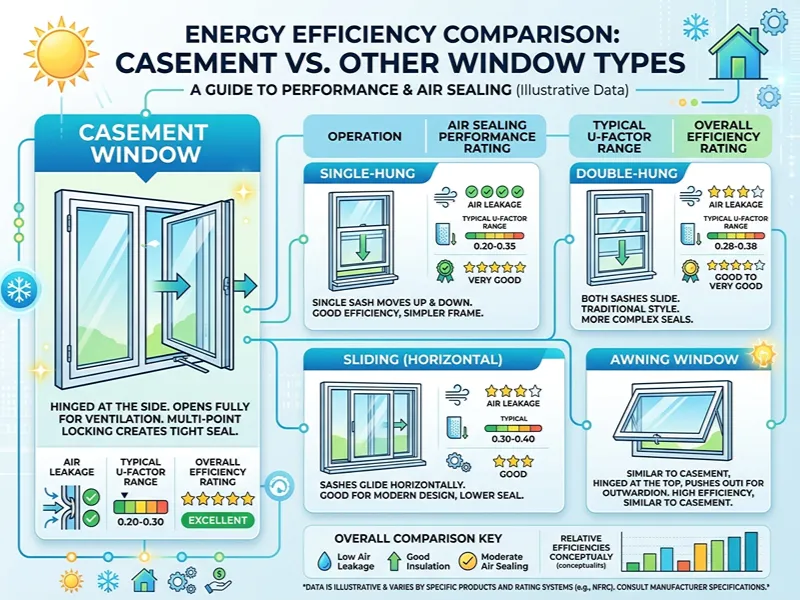
Casement windows are among the most energy-efficient window styles . When closed, the sash compresses against the frame, creating a tight seal that blocks airflow better than the uncompressed weatherstripping in sliding windows . They seal on all four sides, reducing energy bills and carbon emissions .
✅ 100% Ventilation
Unlike sliding or double-hung windows, which can only open halfway, casement windows open fully—letting in fresh air from top to bottom . They also catch side breezes and direct airflow into your home like a sail .
✅ Great for Hard-to-Reach Spaces
With just one hand on the crank, you can easily open a casement window . This makes them perfect for above kitchen sinks, behind countertops, or in bathrooms where awkward positioning makes double-hung windows a struggle .
✅ Security
It’s more difficult for an intruder to reach through a broken glass pane to access the crank than to slide up a sash window . Many casement windows offer multiple locking points for added security.
✅ Unobstructed Views
The single-sash design means no center post or vertical rail blocking your view. It’s just you and the outdoors .
The Cons
❌ Higher Cost
Casement windows typically cost $500 to $1,800 per window installed, compared to $400–$900 for sliding windows or $400–$1,000 for double-hung . The more complex crank mechanism and hinges add to the price.
❌ Exterior Clearance Required
Since casement windows swing outward, you need clear space outside. They can’t open onto walkways, patios, or areas with landscaping or furniture . In high-wind areas, they can also catch wind like a sail and potentially get damaged .
❌ More Challenging to Clean
You can’t tilt casement windows inward to clean the outside . You’ll need to go outside and clean them from there. For second-story windows, this requires a ladder or professional window cleaning service.
❌ Can’t Accommodate Standard Window AC Units
If you rely on window air conditioning units, casement windows are not compatible with standard models. You’ll need specialty AC units designed for casement windows .
❌ Crank Mechanism Requires Maintenance
The crank mechanism can wear out over time. If it fails, you may not be able to open or close the window. Repairs can be more complex than simple slider or double-hung window fixes .
❌ Screens Are on the Inside
For outward-opening casement windows, screens need to be installed on the interior . This means they don’t provide the same protection against falling branches or debris as exterior screens.
Casement Windows vs. Sliding Windows
Here’s where the rubber meets the road. Which one is right for you?
For a detailed side-by-side comparison, check out our guide on casement vs sliding comparison.
| Feature | Casement Windows | Sliding Windows |
| Opening | 100% of sash opens | Only 50% opens |
| Energy Efficiency | Superior seal | Good, but less airtight |
| Cost | $500–$1,800 | $350–$900 |
| Ventilation | Excellent—catches breezes | Good, but partial opening |
| Space Needed | Requires exterior clearance | Stays within wall plane |
| Cleaning | Requires exterior access | Easy with tilt-in sashes |
| Best For | Kitchens, bathrooms, hard-to-reach spaces | Walkways, patios, narrow spaces |
Choose casement windows if:
- Energy efficiency is your top priority
- You want maximum ventilation
- The window is in a hard-to-reach location (above a sink, behind a counter)
- You have clear exterior space for the window to swing into
Choose sliding windows if:
- You’re on a tighter budget
- The window faces a walkway, patio, or high-traffic area
- You want simple, low-maintenance operation
- You prefer windows that stay within the wall plane
Energy Efficiency: Why Casement Windows Are Among the Best
Here’s the thing that surprises most homeowners: casement windows are one of the most energy-efficient window styles available .
The secret is the compression seal. When you close a casement window, the sash presses against the frame, compressing the weatherstripping. This creates a seal that’s much tighter than the friction seal used in sliding windows .
Casement windows seal on all four sides, which helps reduce energy bills and carbon emissions . In fact, the only window that’s more energy efficient is a fixed picture window that doesn’t open at all .
For Arizona homeowners, this means:
- Less heat gain during brutal summers
- Lower cooling costs (up to 12% savings with ENERGY STAR-rated windows)
- A more comfortable home with fewer hot spots near windows
Looking for more detail on how casements perform in Arizona’s climate? Our article on casement window energy efficiency covers everything you need to know.
Where to Install Casement Windows
Casement windows can be installed in any room, but they’re particularly well-suited for certain spaces :
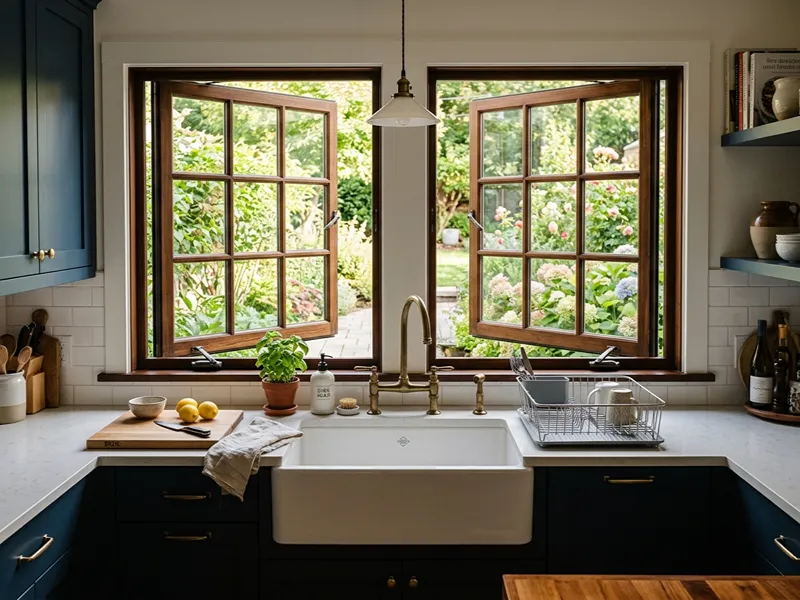
Kitchens — Above sinks or behind countertops where reaching a double-hung window is awkward. The crank makes operation effortless .
Bathrooms — High-humidity areas benefit from the superior ventilation of casement windows. The easy operation is a bonus .
Living Rooms and Bedrooms — Enjoy 100% ventilation and unobstructed views .
Sunrooms — The large, clear glass panels maximize natural light and provide an open feel.
Hard-to-Reach Spaces — Anywhere you need one-handed operation, casements deliver .
Modern Homes — The clean, single-sash design works beautifully in contemporary architecture .
Cost of Casement Windows
Let’s talk money—because it’s one of the biggest factors in your decision.
Casement windows are generally more expensive than sliding or double-hung windows due to their more complex opening mechanisms .
- Average cost: $500–$1,800 per window installed
- Vinyl casement: $500–$1,000
- Fiberglass casement: $800–$1,500
- Wood/aluminum-clad casement: $1,200–$2,000+
The final price depends on:
- Frame material (vinyl, wood, fiberglass, aluminum)
- Glass package (Low-E, gas fill, number of panes)
- Size (custom vs. standard)
- Number of windows in the project (volume discounts)
Casement Window Installation: What to Expect
Professional casement window installation is essential for performance and warranty protection.
The process includes:
- Careful removal of the old window
- Inspection and preparation of the rough opening
- Proper waterproofing and flashing
- Precise positioning and leveling
- Securing and shimming
- Insulating and sealing
- Cleanup and final inspection
The installation of casement windows requires attention to the crank mechanism and hinges, making it more complex than sliding window installation. Choose an experienced installer who understands the specific requirements of casement windows.
Common Mistakes to Avoid
After years of helping homeowners choose windows, here are the most common regrets:
Mistake 1: Not checking exterior clearance
Some homeowners install casement windows near walkways, only to realize the window can’t open fully because it hits the path. Check what’s outside the window before you choose.
Mistake 2: Choosing cheap hardware
The crank mechanism is the heart of a casement window. Cheap hardware fails, leaving you with a window you can’t open or close. Invest in quality.
Mistake 3: Ignoring screens
If you live in an area with bugs, outdoor screens aren’t optional—they’re essential. But outward-opening casements require interior screens, which can be less robust than exterior ones.
Mistake 4: Not prioritizing glass quality
In Arizona, the glass matters more than the window style. Low-E coating and low Solar Heat Gain Coefficient (SHGC) are non-negotiable.
Frequently Asked Questions
What is a casement window?
A casement window is hinged on one side and opens outward using a crank mechanism—like a door swinging open. It features a single sash that provides unobstructed views and excellent ventilation .
Are casement windows energy efficient?
Yes! Casement windows are among the most energy-efficient window styles. When closed, the sash compresses against the frame, creating a tight seal on all four sides . This reduces air leakage and helps maintain indoor temperatures.
How much do casement windows cost?
Casement windows typically cost $500–$1,800 per window installed. Vinyl casements are at the lower end, while wood and custom options are more expensive .
What’s the difference between casement and sliding windows?
Casement windows swing outward and open 100%, while sliding windows move horizontally and only open about 50% . Casement windows are more energy efficient but require exterior clearance. Sliding windows stay within the wall plane and are more affordable .
Where are casement windows best used?
Casement windows are ideal for hard-to-reach spaces like above kitchen sinks, behind countertops, and in bathrooms. They’re also excellent for modern homes and areas where maximum ventilation is desired .
Do casement windows have screens?
Yes, but for outward-opening casement windows, screens are installed on the interior of the window. This is different from sliding windows where screens are on the exterior .
Can I install casement windows myself?
Professional installation is strongly recommended. Casement windows have complex crank mechanisms and hinges that require precise installation. Improper installation can lead to operational issues, air leaks, and voided warranties.
Do casement windows need special AC units?
Yes. Standard window AC units are designed for double-hung windows. Casement windows require specialty AC units designed for their specific opening configuration .
Why Choose Windowz4Less Arizona?
Windowz4Less Arizona understands that choosing the right window is a big decision. We’re here to help.
- Local expertise — We know Arizona’s unique climate and recommend windows that perform in extreme heat
- Quality products — We offer a range of casement window options from leading manufacturers
- Professional installation — Our team is trained, insured, and follows industry best practices
- Transparent pricing — No hidden fees, no surprises
- Free estimates — No-obligation quotes with honest, straightforward advice
- Serving Mesa, Phoenix, and surrounding areas — We’re your local experts
Whether you’re exploring casement-style windows or ready to book, we’re here to help.
Your Next Step: Find the Right Window for Your Home
Casement windows offer unmatched ventilation, superior energy efficiency, and easy operation. But they’re not for every situation. The right choice depends on your home’s layout, your budget, and your priorities.
Contact Windowz4Less Arizona today for a free, no-obligation estimate. We’ll help you understand your options and choose the windows that are right for your Arizona home.