You’re standing in your living room, staring at your old windows. They’re drafty. They’re hard to open. And you’ve finally decided—it’s time for something new.
But then you start researching and hit a wall. Casement windows? Sliding windows? Double-hung? What’s the difference, and which one is actually right for your home?
Here’s the honest answer: both sliding windows and casement windows have their strengths. The “best” choice depends on your home’s layout, your budget, your ventilation needs, and even which direction your windows face.
In this guide, we’ll break down everything you need to know about sliding windows vs. casement windows—from cost and energy efficiency to maintenance and ease of use. By the end, you’ll know exactly which style makes sense for your Arizona home.
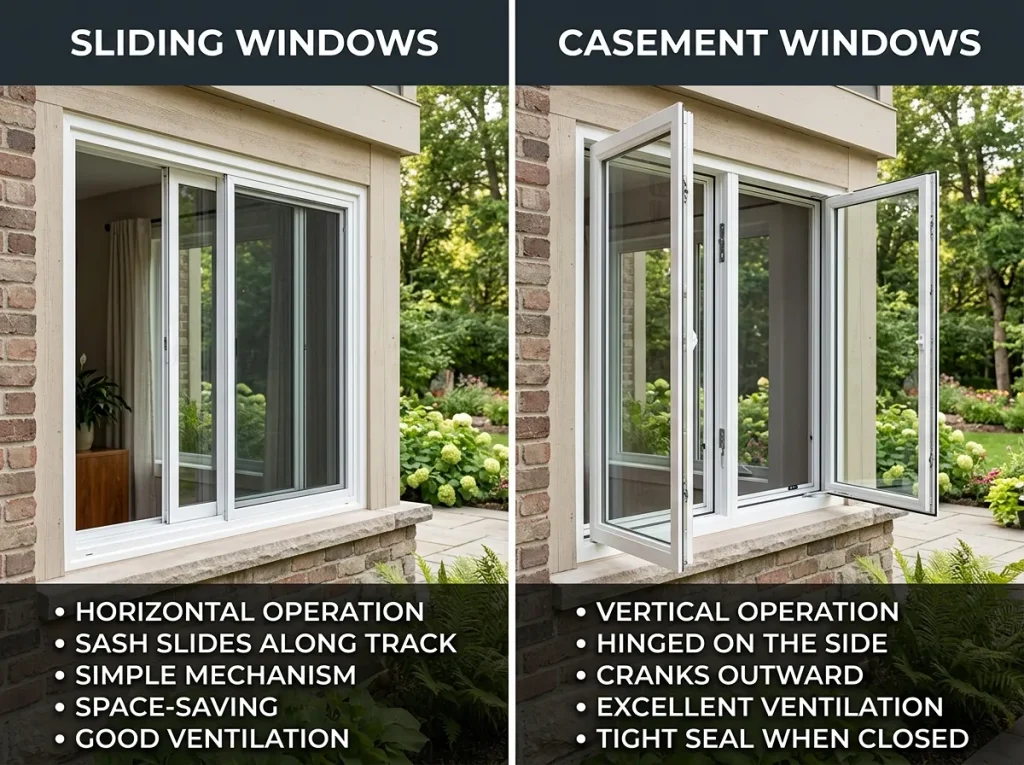
Table Of Content
Key Takeaways / Quick Summary
What Is a Sliding Window?
What Is a Casement Window?
Cost Comparison: Sliding vs. Casement Windows
Energy Efficiency: Which Window Saves More?
Ventilation and Airflow: Which One Breathes Better?
Operation and Accessibility
Space Considerations
Maintenance and Durability
Real-World Conditions: The “If/Then” Guide
The Verdict: Which Window Is Better for You?
The Regrets Homeowners Mention Most
Frequently Asked Questions
Why Choose Windowz4Less Arizona?
Your Next Step
Key Takeaways / Quick Summary
- Sliding windows cost less — average $350–$900 installed vs. $500–$1,800 for casement
- Casement windows seal tighter — they’re generally more energy efficient due to compression seals
- Sliding windows are easier to operate — no cranking, simple horizontal glide
- Casement windows offer better ventilation — they can catch side breezes and direct airflow
- Sliding windows don’t protrude outward — ideal for walkways, patios, and high-traffic areas
- Casement windows cost 30–50% more on average than sliding windows
- Both styles qualify for Energy Star ratings and federal tax credits
- Windowz4Less Arizona offers free estimates for both styles with expert local installation
What Is a Sliding Window?
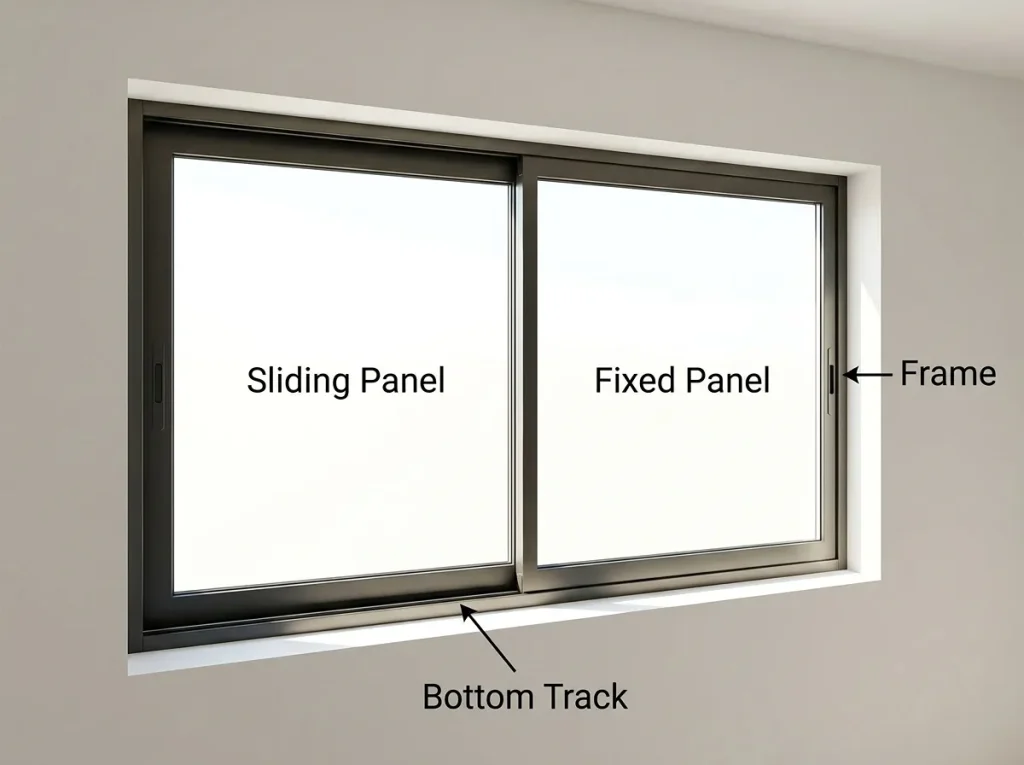
Let’s start with the basics. A sliding window—also called a slider or gliding window—opens horizontally. The sash slides left or right along a track, similar to a sliding glass door.
Most sliding windows have two sashes: one that’s fixed (stationary) and one that moves. Some newer designs have two operable sashes that both slide, allowing ventilation from either side.
Here’s what makes sliding windows stand out:
- Simple operation — no cranking or lifting, just a smooth glide
- No protrusion — the window stays within the wall plane
- Affordable — simpler design = lower cost
- Wide views — large glass areas with minimal frame obstruction
Sliding windows are one of the most common window types in Arizona homes. They’re practical, budget-friendly, and work well in a variety of spaces.
What Is a Casement Window?
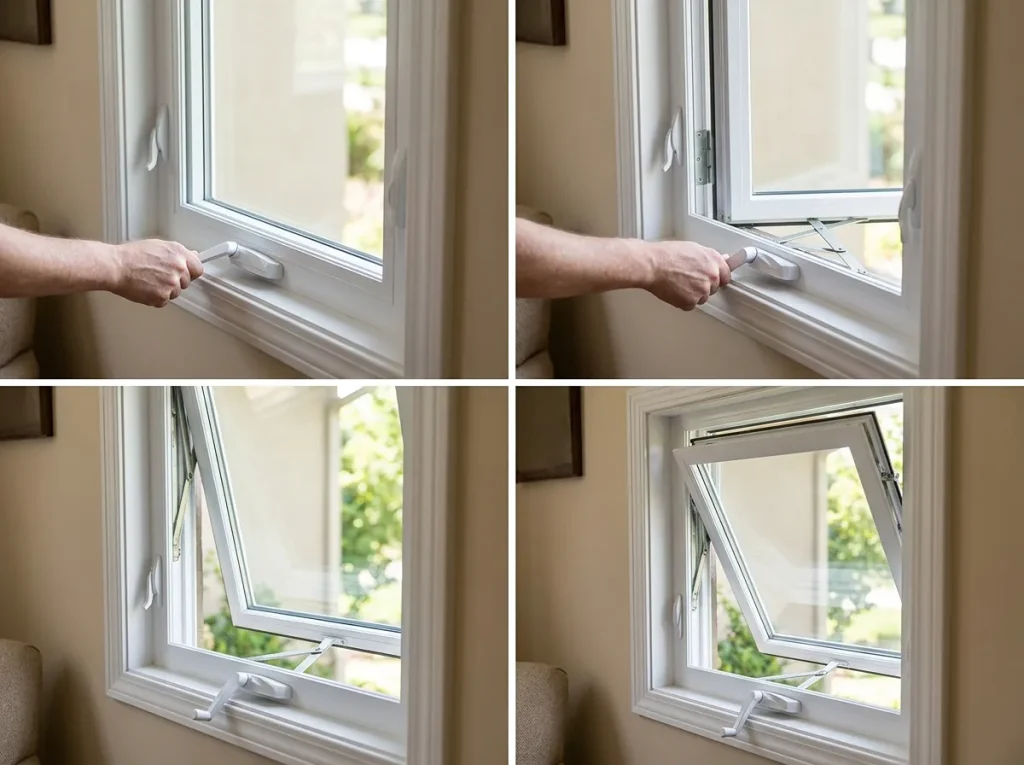
A casement window is hinged on one side and opens outward like a door. You operate it with a crank mechanism that pushes the sash open or pulls it closed.
Casement windows typically have one large pane of glass with a single operable sash, though some designs have two sashes that open outward from the center (like French doors).
Here’s what makes casement windows stand out:
- Superior ventilation — the sash opens wide, catching side breezes
- Excellent seal — the sash compresses against the frame when closed
- Clear views — one large pane with minimal visual obstruction
- Versatile placement — works well in hard-to-reach areas
Casement windows are often considered the “premium” choice, offering better performance but at a higher price point.
If you’re new to casement windows, our complete casement window buying guide covers everything you need to know about this popular style.
Cost Comparison: Sliding vs. Casement Windows
Let’s talk money, because that’s usually where the decision starts.
| Window Type | Average Cost (Installed) | Best For |
| Vinyl Sliding Window | $350 – $500 | Budget-conscious projects |
| Premium Sliding Window | $550 – $900 | Most Phoenix area homes |
| Vinyl Casement Window | $500 – $900 | Entry-level premium ventilation |
| Premium Casement Window | $800 – $1,800 | High-performance homes, upscale projects |
According to national averages, a standard double-hung window replacement costs about $650**, while a casement window typically costs **$800–$850—about 23–30% more.
Why the difference? Casement windows have more moving parts: hinges, cranks, and more complex hardware. The crank mechanism alone adds significant cost, especially with high-end hardware.
If you’re looking for more detail on choosing sliding windows for your home, our comprehensive guide covers materials, energy ratings, and design options.
Energy Efficiency: Which Window Saves More?
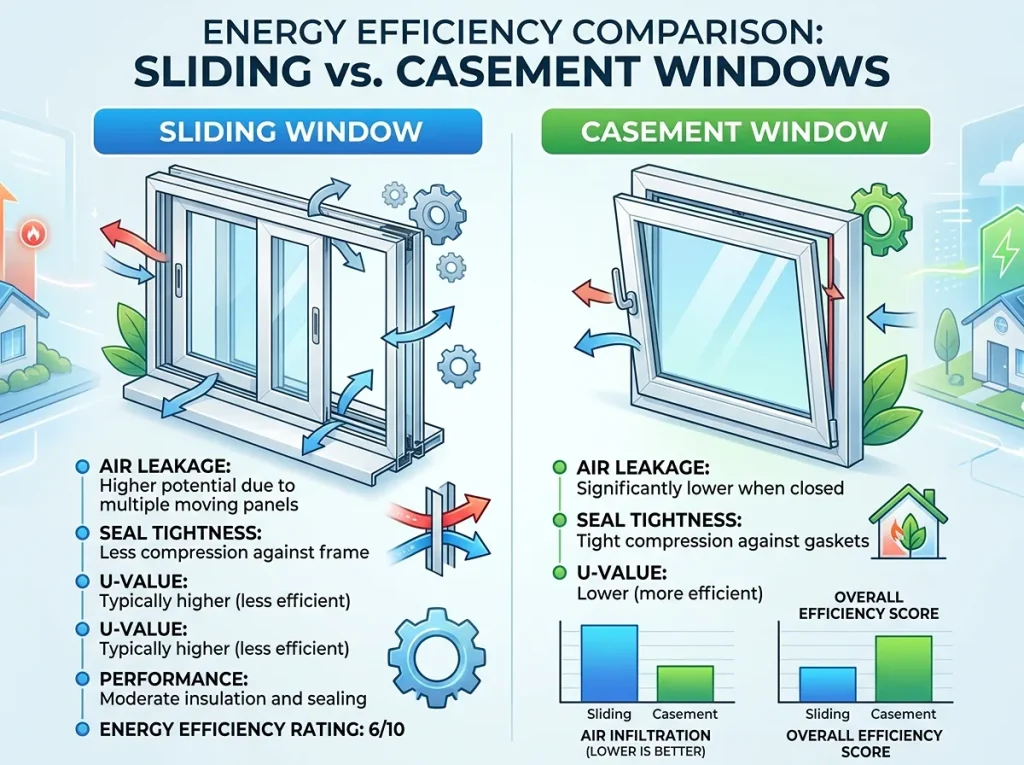
Here’s the thing that surprises most homeowners: casement windows are generally more energy efficient than sliding windows.
Here’s why:
- Tighter seal — casement windows use compression seals. When you close the window, the sash presses against the frame, creating a firm seal. Sliding windows use friction seals (like weatherstripping), which can wear out over time and allow air leakage.
- Lower air leakage — according to Energy Star guidelines, a casement window’s sash presses firmly against the frame, reducing air infiltration. In fact, hinged windows typically have the lowest air leakage rates of any window type.
According to the U.S. Department of Energy, casement windows are considered one of the most energy-efficient window styles because of their superior sealing capability.
But here’s the catch: this assumes you’re comparing apples to apples. A premium sliding window with high-quality weatherstripping and proper installation can be very energy efficient. And a cheap casement window with poor hardware can leak air just as badly as a cheap slider.
The takeaway? Window quality and installation matter more than the style itself. A well-made sliding window with proper weatherstripping can perform almost as well as a casement window in most conditions.
For Arizona homeowners, the most important factor isn’t the window style—it’s the glass. Low-E coating, argon gas fill, and low Solar Heat Gain Coefficient (SHGC) are what really make a difference in our desert climate.
Ventilation and Airflow: Which One Breathes Better?
If you like fresh air, this is where casement windows shine.
Casement windows open fully—100% of the sash area—while sliding windows only open about 50% of the total window area. That’s a significant difference.
But there’s another factor: airflow direction. A casement window can swing outward to catch side breezes and direct air into your home. Sliding windows can’t do that—they just open along the wall.
However, there’s a trade-off. If you live in a windy area, a fully open casement window can catch wind like a sail, potentially damaging the hardware over time. Sliding windows don’t have this issue since they stay within the wall plane.
Operation and Accessibility
Here’s where personal preference comes in.
Sliding windows are simple. You grab the handle and push. No cranking, no lifting, no complicated mechanics. They’re easy to operate even with one hand. If you have limited mobility, sliding windows can be much easier to use than casement windows with crank mechanisms.
Casement windows require cranking. This can be a challenge if the window is in a hard-to-reach location or if you have mobility issues. However, the crank mechanism does provide leverage, which can make them easier to open than a heavy sliding window.
Space Considerations
This is one of those details that people don’t think about until after installation.
Sliding windows don’t protrude outward. The sash stays within the wall plane. This means you can place them near walkways, patios, decks, or anywhere you don’t want a window swinging into the space.
Casement windows open outward. This can be a problem if you have:
- A narrow walkway outside the window
- A patio or deck where the window could hit furniture
- A house with a second-story deck above the window
- Window screens or shutters that could interfere
If you have landscaping, furniture, or walkways near your windows, casement windows might not be the best choice.
Maintenance and Durability
Both window styles require maintenance, but the type of maintenance differs.
Sliding windows:
- Tracks need regular cleaning to remove dirt and debris
- Rollers may need replacement every 10–15 years
- Weatherstripping wears out and needs replacement
- Relatively simple repairs
Casement windows:
- Crank mechanisms can wear out or break
- Hinges need occasional lubrication
- More complex repairs may require specialized knowledge
Sliding windows generally have simpler mechanisms, which means simpler (and cheaper) repairs. But if you keep a sliding window’s tracks clean, the window can last 20–30 years with minimal issues.
For ongoing care, our sliding window maintenance guide provides detailed tips to keep your windows operating smoothly.
Real-World Conditions: The “If/Then” Guide
Here’s how to decide based on your specific situation:
If you’re on a tight budget → Then choose sliding windows. They’re significantly more affordable upfront, and a quality vinyl slider with Low-E glass will serve you well for decades.
If ventilation is your top priority → Then choose casement windows. They offer superior airflow and can be positioned to catch breezes.
If you have walkways or patios near your windows → Then choose sliding windows. Casement windows would swing open into those spaces.
If energy efficiency is your #1 concern → Then choose casement windows. They seal tighter and generally have lower air leakage ratings. But remember: quality matters more than style.
If you’re in a high-wind area → Then consider sliding windows. Fully open casement windows can catch wind and strain the hardware.
If you have mobility limitations → Then sliding windows are easier to operate without a crank mechanism.
If you want a modern aesthetic → Then both styles work, but sliders are more common in contemporary designs while casements offer a more traditional look.
The Verdict: Which Window Is Better for You?
Here’s the honest truth: there’s no single “best” window. It depends on your priorities.
Choose sliding windows if:
- You’re on a budget
- You have walkways or patios near your windows
- You want simple, low-maintenance operation
- You prioritize wide, unobstructed views
- You want a modern look
Choose casement windows if:
- You want maximum ventilation
- Energy efficiency is your top priority
- You have hard-to-reach window locations
- You’re willing to pay a premium for performance
- You like the classic, traditional look
For most Arizona homes, sliding windows offer the best balance of affordability, ease of use, and performance. They’re practical, versatile, and cost significantly less than casement windows.
But if you have specific needs—like a room that doesn’t get enough natural airflow, or you’re designing a custom home with energy performance as the top priority—casement windows are worth the extra investment.
The Regrets Homeowners Mention Most
We’ve helped hundreds of Arizona homeowners choose between these window styles. Here are the most common regrets:
Mistake 1: Not considering window placement
Some homeowners install casement windows near their patio, only to realize the window can’t open fully because their outdoor furniture is in the way. Think about what’s outside the window before you choose.
Mistake 2: Skimping on quality to afford casement windows
Buying a cheaper casement window to get the style you want can backfire. Cheap hardware wears out, seals fail, and you end up with a window that performs worse than a well-made slider.
Mistake 3: Not prioritizing energy efficiency features
Whether you choose sliding or casement, the glass matters more than the style. Low-E coating and low SHGC are non-negotiable in Arizona. Our energy-efficient sliding windows guide explains why.
Mistake 4: Forgetting about future maintenance
Sliding windows are easier and cheaper to maintain. Some homeowners choose casement windows for the performance, then regret the higher maintenance costs and more complex repairs.
Frequently Asked Questions
Are casement windows more energy efficient than sliding windows?
Generally, yes. Casement windows seal tighter because the sash presses against the frame when closed. But a high-quality sliding window with good weatherstripping can perform almost as well. The quality of the window matters more than the style.
Which is cheaper: sliding or casement windows?
Sliding windows are significantly cheaper, averaging $350–$900 installed versus $500–$1,800 for casement windows. The simpler design and fewer moving parts keep costs down.
Do sliding windows open all the way?
No. Sliding windows open about 50% of the total window area. Casement windows open 100%, which is a major difference for ventilation.
Which window style is better for Arizona heat?
Both can work well with the right glass. For Arizona, prioritize low SHGC (below 0.25), Low-E coating, and argon gas fill. The window style matters less than the glass package and installation quality.
Can casement windows be installed with screens?
Yes. Casement windows typically have screens on the interior side. However, the screen can obstruct ventilation somewhat when the window is open.
Which window is easier to operate?
Sliding windows are generally easier—just push to open. Casement windows require cranking, which can be difficult for some people with mobility limitations.
How long do sliding windows last in Arizona?
Quality sliding windows with proper maintenance can last 20–30 years in Arizona. Cheap windows may fail in 10–15 years due to heat damage and UV exposure.
Why Choose Windowz4Less Arizona?
Whether you choose sliding windows or casement windows, the most important decision is who installs them.
Windowz4Less Arizona offers:
- Local expertise — we understand Arizona’s unique climate challenges
- Quality products — we partner with leading manufacturers for windows built to last
- Professional installation — proper installation is just as important as the window itself
- Transparent pricing — no hidden fees, no surprises
- Free estimates — no-obligation quotes for your specific home
We serve the entire Phoenix metro area, including Mesa, Gilbert, Chandler, Scottsdale, and Tempe. Our team is trained, insured, and takes pride in helping Arizona homeowners get the right windows at the right price.
Your Next Step
Still not sure which window is right for your home? That’s okay—this is a big decision, and you deserve expert guidance.
Contact Windowz4Less Arizona today for a free, no-obligation estimate. We’ll assess your home, discuss your priorities, and help you choose between sliding windows and casement windows based on what actually matters for your specific situation.