Arizona summers are brutal. When temperatures hit 110°F, your windows become either your home’s best defense or its biggest weakness. If your current windows are letting in heat, driving up your energy bills, or just looking dated, it’s time to consider an upgrade.
Here’s the thing: sliding windows are one of the most popular choices for Arizona homeowners. They’re affordable, easy to operate, and when chosen correctly, they can significantly reduce your cooling costs. But not all sliding windows are created equal—and picking the wrong ones can leave you sweating through summer.
In this guide, we’ll walk you through everything you need to know to choose the best sliding windows for your Arizona home. We’ll cover materials, energy efficiency, installation, and what to expect for costs. By the end, you’ll know exactly what to look for—and what to avoid.
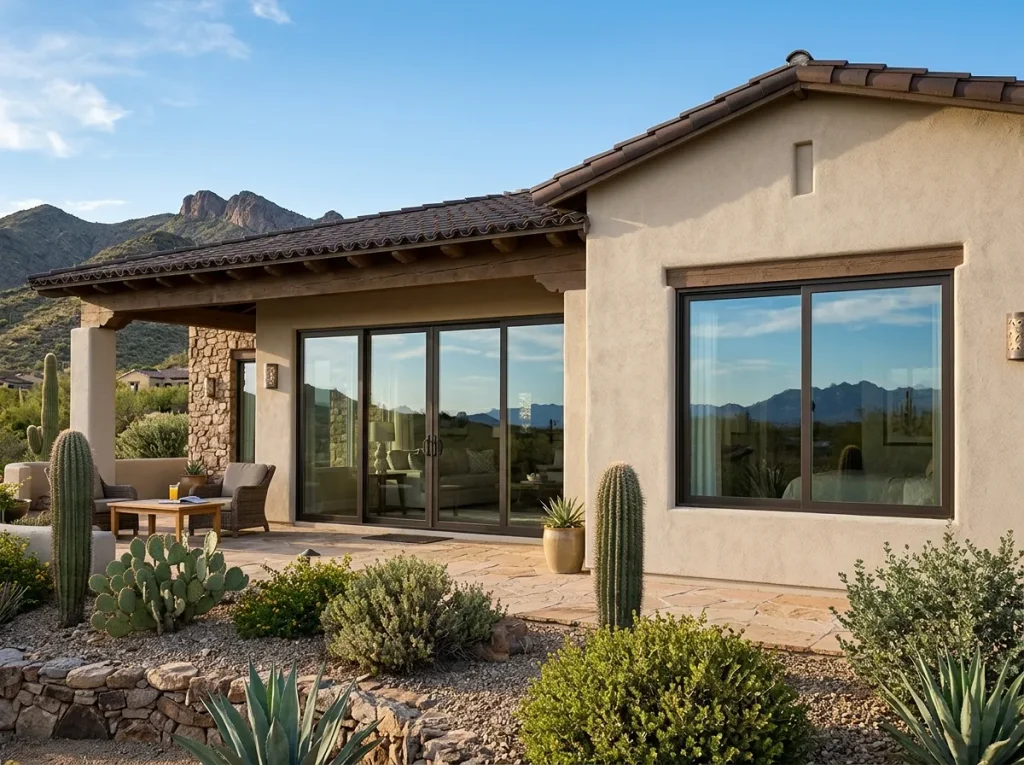
Table Of Content
Key Takeaways / Quick Summary
What Makes a Great Sliding Window for Arizona?
Sliding Windows vs. Other Window Styles
Window Frame Materials: Which One is Right for You?
Energy Efficiency: The Single Most Important Factor
Glass Options That Make a Difference
What Size Sliding Window Do You Need?
The Cost of Sliding Window Replacement in Arizona
Real-World Conditions: The “If/Then” Guide to Sliding Windows
The Installation Process: Why It Matters More Than You Think
Warranty: The Insurance Policy You Don’t Think About Until You Need It
The Regrets Arizona Homeowners Mention Most
Common Questions We Get Asked About Sliding Windows
Why Choose Windowz4Less Arizona?
Your Next Step: Get the Right Sliding Windows for Your Arizona Home
Key Takeaways / Quick Summary
- Arizona homes need windows with low Solar Heat Gain Coefficient (SHGC) — ideally below 0.25 to block desert heat
- Vinyl frames offer the best balance of affordability and insulation for most homeowners
- Energy-efficient sliding windows can reduce cooling costs by up to 30% during peak summer months
- Professional installation is just as important as the window itself—poor installation can ruin even the best windows
- Look for double-pane or triple-pane glass with argon gas fill for maximum thermal performance
- Expect to pay between $400–$900 per sliding window installed, depending on size and material
- Windowz4Less Arizona offers free estimates and expert installation tailored to Mesa and Phoenix homes
What Makes a Great Sliding Window for Arizona?
Let’s be honest: Arizona is not like other states. The heat, the sun exposure, and the dry climate create unique challenges for windows. A window that works great in Seattle or New York will fail miserably here.
The best sliding windows for Arizona homes share a few critical characteristics:
Low-E glass coating — This microscopic layer reflects infrared heat while letting visible light pass through. Without it, your windows are basically giant heat magnets.
Argon or krypton gas fill — The space between the panes is filled with inert gas instead of air. These gases are denser than air, which means they conduct less heat.
Warm edge spacers — These keep the glass panes separated while reducing heat transfer at the edges where the glass meets the frame.
Durable frames — Your frame material matters enormously in extreme temperatures. We’ll dive deeper into this in a moment.
What most people don’t realize is that the sun damage isn’t just about heat. UV rays can fade your furniture, flooring, and artwork over time. Look for sliding windows with UV-blocking capabilities to protect your interior.
Sliding Windows vs. Other Window Styles
Before you commit, it’s worth understanding how sliding windows stack up against other options. The most common alternative is casement windows, which crank outward.
Sliding windows slide horizontally on tracks. They’re simple, affordable, and don’t protrude outside your home—important if you have walkways or patios near your windows.
Casement windows, on the other hand, swing outward like a door. They can provide better ventilation and sometimes seal more tightly against air leaks. If you’re trying to decide between the two, check out our detailed casement vs sliding comparison to see which style makes more sense for your specific situation.
For most Arizona homeowners, sliding windows win on affordability and ease of use. Just make sure you’re choosing a high-quality track system—cheap rollers are a common point of failure.
Window Frame Materials: Which One is Right for You?
Here’s where a lot of people get stuck. The frame material affects everything from cost to insulation to durability.
Vinyl Frames
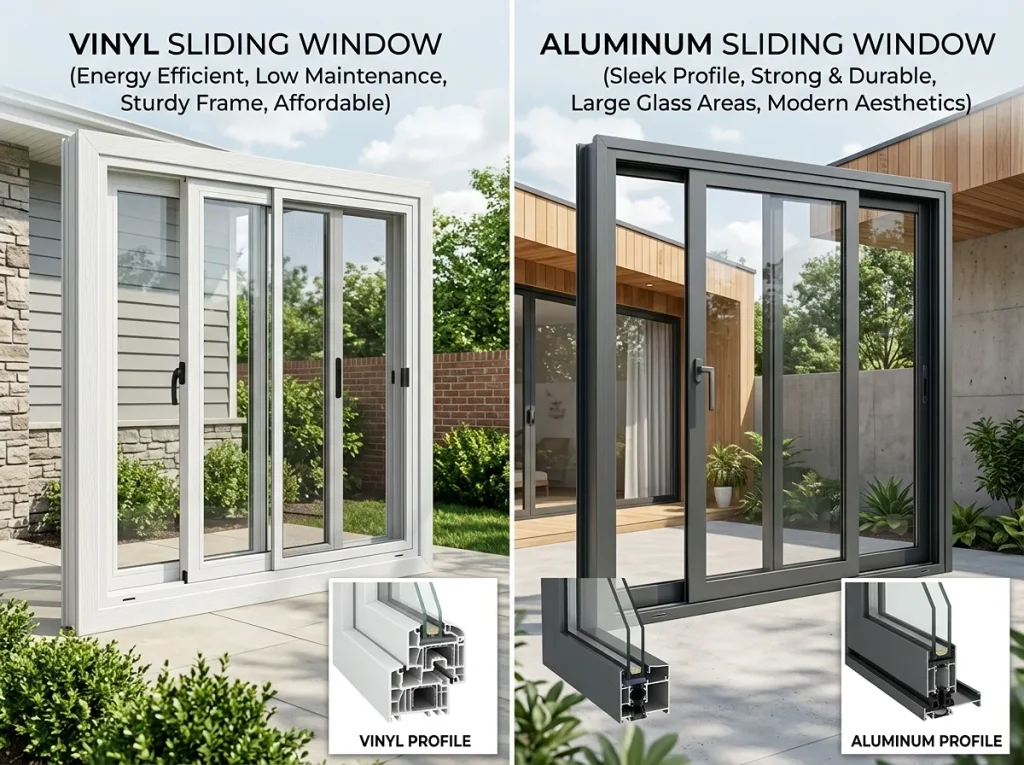
Vinyl is the most popular choice for sliding windows in Arizona, and for good reason. It’s affordable, energy-efficient, and requires almost no maintenance. Modern vinyl frames include insulation chambers that improve thermal performance.
Best for: Budget-conscious homeowners who want good energy efficiency without breaking the bank.
Watch out for: Cheap vinyl that can warp or discolor in extreme heat. Stick with quality brands.
Aluminum Frames
Aluminum is strong and lightweight, but it conducts heat extremely well—which is bad news in Arizona. Uninsulated aluminum frames can literally feel hot to the touch during summer.
Some manufacturers now offer “thermal break” aluminum that includes insulation between the interior and exterior portions. If you’re set on aluminum, make sure it has a thermal break.
Best for: Modern home designs where thin frames are desired, but only with thermal breaks.
Wood Frames
Wood is a beautiful natural insulator, but it’s high-maintenance in Arizona’s dry climate. It can crack, warp, or rot if not properly sealed and maintained. Also, it’s the most expensive option by far.
Best for: Historic homes where authenticity matters—but be prepared for ongoing maintenance.
Composite/Fiberglass Frames
These materials combine the strength of wood with the durability of vinyl. They expand and contract less than vinyl in extreme temperatures, which means fewer air leaks over time.
Best for: Homeowners willing to invest a bit more for superior performance and longevity.
If you’re still uncertain about which material fits your needs and budget, Windowz4Less Arizona can help you compare options during a free in-home consultation.
Energy Efficiency: The Single Most Important Factor
Here’s the bottom line: energy efficiency isn’t a “nice to have” in Arizona—it’s essential.
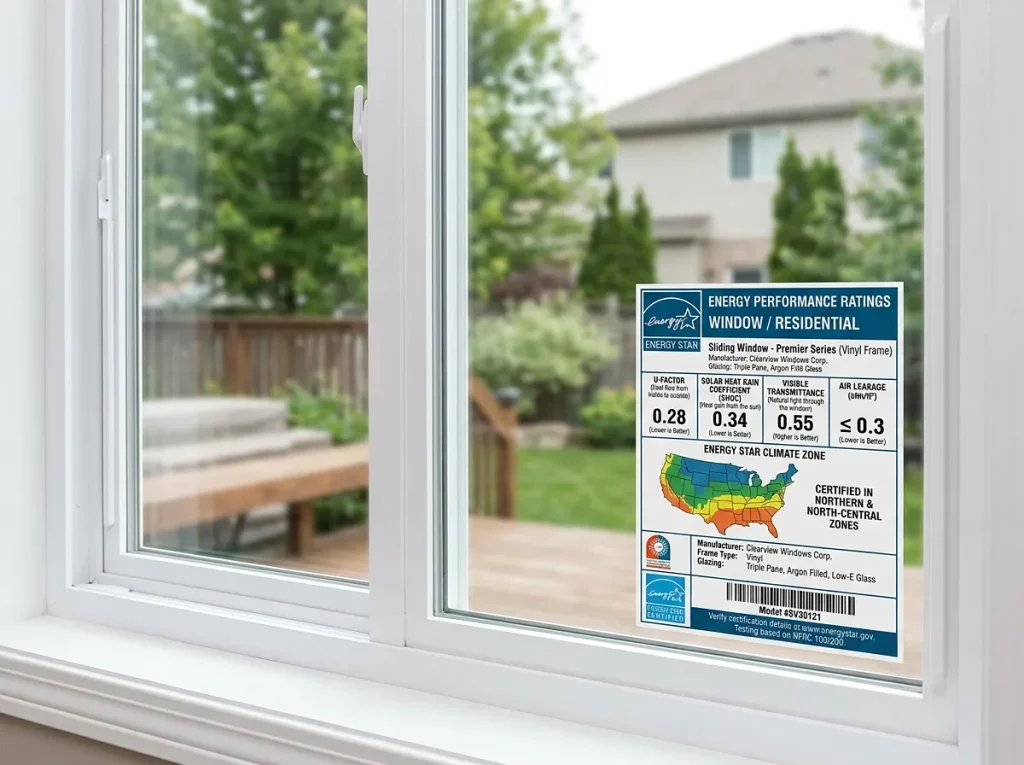
When you’re shopping for sliding windows, pay attention to these energy performance ratings:
U-Factor — Measures how well the window insulates. Lower is better. Look for 0.30 or below for Arizona homes.
Solar Heat Gain Coefficient (SHGC) — Measures how much solar heat passes through the window. This is CRITICAL in Arizona. Look for 0.25 or below. The lower the number, the less heat enters your home.
Visible Transmittance (VT) — Measures how much light passes through. Higher is better if you want bright rooms, but there’s usually a trade-off with SHGC.
Air Leakage (AL) — Measures how much air passes through the window assembly. Lower is better. Look for 0.30 or below.
The best energy-efficient sliding windows for Arizona will combine low U-factor, low SHGC, and low air leakage. That combination means your AC isn’t working overtime to compensate for heat gain.
According to the U.S. Department of Energy, windows account for 25%–30% of residential heating and cooling energy use. Upgrading to Energy Star-certified windows can save homeowners up to 12% on energy bills nationwide. (Source: U.S. Department of Energy, 2025)
For Arizona specifically, those savings can be even higher because cooling costs dominate. Replacing single-pane windows with modern energy-efficient sliding windows can reduce your cooling costs by up to 30% during the summer months.
Glass Options That Make a Difference
Not all glass is created equal. Here are the most important glass features to look for:
Double-pane vs. Triple-pane — Double-pane is standard and works well for most Arizona homes. Triple-pane offers slightly better insulation but costs significantly more. For most homeowners, the extra cost of triple-pane isn’t worth the marginal benefit in Arizona’s climate.
Low-E Coating — This is non-negotiable in Arizona. It’s the coating that reflects infrared heat while letting light through. Ask specifically about “solar control” Low-E glass, which is optimized for hot climates.
Argon Gas Fill — The space between panes should be filled with argon or krypton gas. These gases are better insulators than air. If a window doesn’t have gas fill, skip it.
Tinted Glass — Some homeowners opt for lightly tinted glass to further reduce solar heat gain. Just be aware that tinting also reduces visible light, so your rooms will be dimmer.
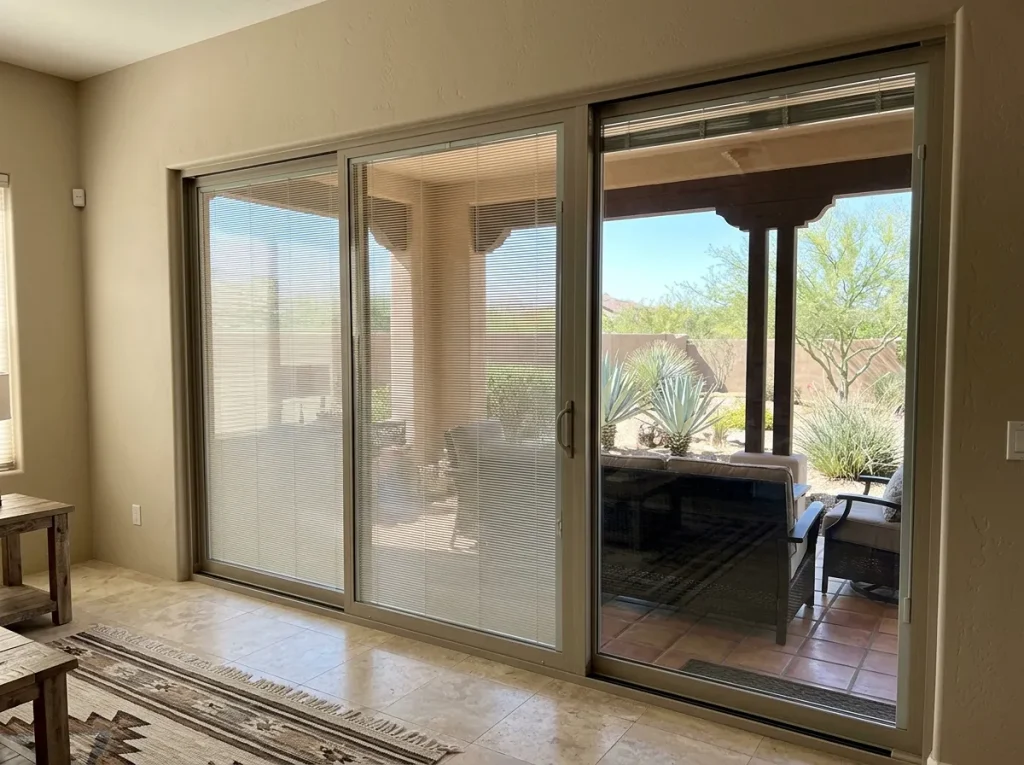
Integrated Mini Blinds — This is a unique option where mini blinds are sealed between the glass panes. They’re dust-free, maintenance-free, and offer superior light control. If you’re considering this feature, you’ll want to understand how integrated mini blinds compare to traditional blinds before making a decision.
What Size Sliding Window Do You Need?
Getting the right size is more complicated than you might think. Standard sliding window sizes range from 36 to 84 inches wide and 24 to 72 inches tall. But your home may have custom openings.
Here’s the professional approach:
Measure the rough opening — This is the framed hole in your wall where the window will go. Measure width at the top, middle, and bottom. Use the smallest measurement. Do the same for height on the left, center, and right.
Consider egress requirements — If the window is in a bedroom, it needs to be large enough for emergency escape. This is legally required for safety.
Think about glass area — Larger windows bring in more light but also more heat. Balance your desire for bright rooms against your cooling costs.
If this sounds overwhelming, don’t worry. Professional installation companies will handle all the measurements for you. This is one of those areas where a mistake can cost you hundreds of dollars, so it’s worth getting professional help.
The Cost of Sliding Window Replacement in Arizona
Let’s talk money, because that’s what most people really want to know. What does this actually cost?
For Arizona homes, here are general price ranges for sliding window replacement:
| Window Size | Vinyl Frame | Aluminum Frame (Thermal Break) | Fiberglass Frame |
| 36″ x 48″ | $400 – $600 | $500 – $750 | $650 – $900 |
| 48″ x 48″ | $500 – $700 | $600 – $850 | $750 – $1,000 |
| 60″ x 48″ | $600 – $800 | $700 – $950 | $850 – $1,100 |
| 72″ x 48″ | $700 – $900 | $800 – $1,050 | $950 – $1,200 |
These are estimated installed prices and vary based on brand, glass options, and installation complexity.
But here’s a warning that most people don’t consider: going with the absolute cheapest quote can cost you more in the long run. Cheap windows leak air, break faster, and cost you more in energy bills. When you look at sliding window replacement cost, you should factor in energy savings over time—not just the upfront price.
Windowz4Less Arizona offers free, no-obligation estimates with transparent pricing. There are no hidden fees, and they’ll walk you through every line item so you understand exactly what you’re paying for. If you want to understand the true cost breakdown, you can learn more about window replacement costs in our detailed pricing guide.
Real-World Conditions: The “If/Then” Guide to Sliding Windows
Let’s get practical. Here’s how to choose based on your specific situation:
If your home has high afternoon sun exposure → Then choose windows with the lowest possible SHGC (0.20 or less) and consider integrated blinds or solar shades. East- and west-facing windows are your biggest heat-gain culprits.
If you’re on a tight budget → Then choose vinyl frames with standard double-pane glass and Low-E coating. Skip the extras. Vinyl offers the best value for money, and you can always upgrade later.
If you live in a historic neighborhood → Then consider wood or wood-clad frames to maintain your home’s character. Just remember that you’ll need to budget for ongoing maintenance.
If you’re concerned about security → Then look for sliding windows with multi-point locking systems and reinforced frames. Also consider how security doors and gates can add an extra layer of protection to your home.
If you’re in a windy area → Then choose windows with low air leakage ratings and heavier-duty tracks. Some manufacturers offer “hurricane-rated” windows that perform well in extreme weather.
If you’re doing a full home renovation → Then consider coordinating your sliding windows with your entry doors and security doors for a cohesive look.
If you want the best energy savings → Then prioritize triple-pane glass with krypton gas fill and the best Low-E coating available. Yes, it costs more upfront, but the annual savings on your electric bill can make it worthwhile.
The Installation Process: Why It Matters More Than You Think
Here’s the thing most people don’t realize: a great window installed poorly performs worse than an average window installed perfectly.
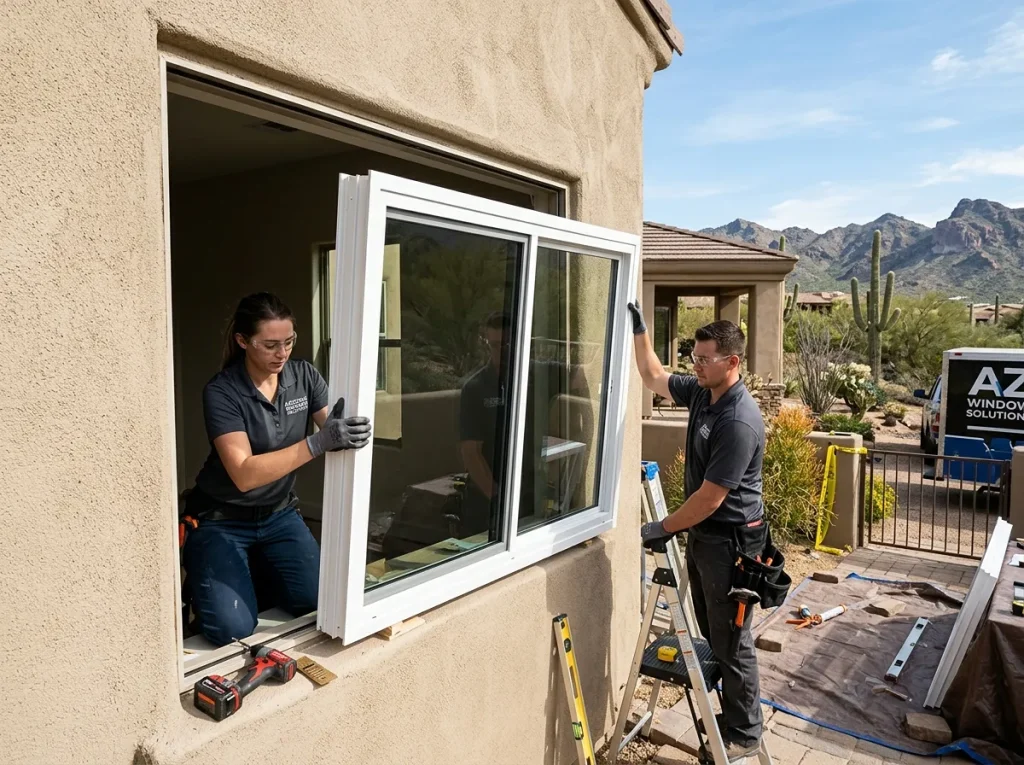
Professional sliding window installation ensures your window is:
- Perfectly square and level
- Properly shimmed and anchored
- Completely weatherproofed with flashing and caulking
- Insulated around the frame
The national average cost to install windows is $100–$300 per window in labor alone. When you factor in materials, a professional installation is one of the smartest investments you can make.
Common installation mistakes include:
- Failing to properly flash the window (leading to water damage)
- Over-tightening screws (which can warp the frame)
- Using the wrong type of caulk or expanding foam
- Not leveling the window correctly (leading to sticking)
These aren’t just minor issues. They can cause air leaks, water damage, and premature window failure. If you’re wondering what the actual window installation process looks like, our step-by-step guide breaks it all down.
And if you’ve ever considered DIY installation to save money—pause and reconsider. The complexity of modern windows, combined with the importance of proper weatherproofing, makes this one of those projects that’s almost always better to leave to professionals. Check out the common window installation mistakes to avoid before you decide.
Warranty: The Insurance Policy You Don’t Think About Until You Need It
Window warranties are often overlooked, but they’re critically important.
Most quality windows come with:
- Glass breakage warranty (often 10–20 years)
- Frame and finish warranty (often 20 years to lifetime)
- Parts and hardware warranty (often 5–10 years)
But here’s the catch: many warranties are voided if the windows are installed incorrectly. This is another reason to use a certified professional.
Also, pay attention to what’s NOT covered. Does the warranty cover labor for replacement? Does it cover accidental damage? Does it cover damage from weather events?
When you choose Windowz4Less Arizona, you get clear warranty information upfront. We’ll explain exactly what’s covered, for how long, and what your responsibilities are as the homeowner.
To get the full picture of what to look for in a warranty—and what questions to ask your installer—our guide on window installation warranties is an essential read.
The Regrets Arizona Homeowners Mention Most
After working with thousands of Arizona homeowners, here are the most common regrets we hear:
Mistake 1: Choosing the wrong glass
Some homeowners save a few hundred dollars by skipping Low-E coating or going with single-pane glass. Then they’re shocked by their first $400 electric bill in July. The upfront savings aren’t worth the long-term cost. Always choose Low-E glass in Arizona.
Mistake 2: Not prioritizing SHGC
A lot of people focus on the U-factor (insulation) and ignore the SHGC (heat gain from the sun). In Arizona, SHGC is actually more important. A window with great U-factor but poor SHGC will still make your home heat up like a greenhouse.
Mistake 3: Using an inexperienced installer
Some of the most regretful homeowners are the ones who hired the cheapest installation crew they could find. They saved $200 on installation and ended up with windows that leaked air, fogged up between the panes, or simply didn’t work correctly. Professional installation isn’t a luxury—it’s a necessity.
Mistake 4: Not thinking about the future
Windows last 20–30 years. When you’re choosing, think about your future needs. Are you planning to age in place? Maybe you want windows that are easier to operate. Are you planning to sell your home? Energy-efficient windows are a major selling point. Think ahead.
Common Questions We Get Asked About Sliding Windows
Are sliding windows energy efficient?
Yes—when they’re properly designed and installed. Look for double-pane or triple-pane glass with Low-E coating and argon gas fill. Also, ensure the window has a good weather seal. Sliding windows can be highly energy efficient, but the quality of the product and installation matters enormously.
How long do sliding windows last in Arizona?
High-quality sliding windows with vinyl frames typically last 20–30 years in Arizona. Aluminum frames without thermal breaks may fail sooner. The extreme heat and UV exposure in Arizona can shorten the lifespan of cheaper windows, so investing in quality materials is essential.
Can I install sliding windows myself?
We strongly recommend against it. Modern windows are complex, and proper installation requires specialized tools, knowledge, and experience. A DIY installation may save you money upfront but will likely cost you more in the long run through air leaks, water damage, and early failure. Use a professional window installation company for the best results.
What’s the difference between sliding windows and casement windows?
Sliding windows move horizontally on tracks, while casement windows crank outward like a door. Sliding windows are generally more affordable and don’t protrude outside your home. Casement windows can provide better ventilation and sometimes seal more tightly. Our casement vs sliding comparison breaks down the pros and cons of each.
How do I clean sliding windows?
Most sliding windows have tilt-in sashes that make cleaning both sides of the glass easy from inside your home. For windows that don’t tilt in, you’ll need to clean the exterior from outside. The tracks should be cleaned annually with a vacuum and a damp cloth to remove debris that can cause sticking.
Why do my sliding windows stick?
Sticking is usually caused by dirt or debris in the tracks, worn rollers, or misaligned tracks. Regular cleaning and maintenance can prevent most sticking issues. If your windows are sticking frequently, have a professional inspect them. Our sliding window maintenance guide offers detailed solutions for common issues.
Should I replace all my windows at once?
It depends on your budget and the condition of your windows. If your windows are all the same age and failing simultaneously, replacing them all at once makes sense. If only a few are failing, you can replace them in phases. However, replacing in phases may be more expensive in the long run due to multiple installation visits. Consider doing a full replacement to take advantage of energy savings and efficiency improvements.
How much does a sliding window cost in Arizona?
Expect to pay $400–$900 per sliding window installed, depending on size, material, and glass options. Larger windows and premium materials cost more. For a detailed breakdown, check out our article on sliding window replacement cost.
Why Choose Windowz4Less Arizona?
Windowz4Less Arizona isn’t just a catchy name. It reflects our core mission: helping Arizona homeowners get the highest quality windows at the best possible price.
Here’s what sets us apart:
- Local expertise — We know Arizona’s unique climate challenges better than anyone. We’ll recommend the right windows for your specific home and needs.
- Quality products — We partner with leading manufacturers to offer windows that are built to last in Arizona’s extreme conditions.
- Professional installation — Our team is trained, certified, and insured. We take pride in doing the job right the first time.
- Transparent pricing — No hidden fees, no surprises. You’ll know exactly what you’re paying for.
- Serving Mesa, Phoenix, and the surrounding areas — We’re your local experts, not a national chain that doesn’t understand the local market.
When you work with us, you’re getting decades of experience, a commitment to quality, and a team that genuinely cares about your satisfaction.
Your Next Step: Get the Right Sliding Windows for Your Arizona Home
Choosing the right sliding windows for your Arizona home doesn’t have to be complicated. Focus on energy efficiency, choose the right material for your budget, and hire a professional for installation. Those three factors will get you 90% of the way there.
The rest comes down to working with a partner you can trust. Windowz4Less Arizona is here to help you every step of the way—from choosing the perfect windows to professional installation that ensures they perform for years to come.
Ready to get started? Contact Windowz4Less Arizona today for a free, no-obligation estimate. See for yourself why we’re the trusted choice for homeowners across the Phoenix metro area.