You’ve picked the perfect windows. You’ve chosen a reputable installer. You’re ready to move forward.
But there’s one more thing you need to understand before you sign on the dotted line: the warranty.
Here’s the honest truth: window warranties can be confusing. There are manufacturer warranties, installer warranties, parts coverage, labor coverage, transferability clauses, and exclusion after exclusion. And what most people don’t realize is that not all warranties are created equal—some “lifetime” warranties don’t cover the expensive labor to install the replacement part.
In this guide, we’ll break down everything you need to know about window installation warranties. You’ll learn the difference between manufacturer and installer warranties, what to look for, what to watch out for, and how to make sure you’re fully protected.

Table of Content
The Two Types of Window Warranties (And Why Both Matter)
Manufacturer Warranty (Product Warranty)
Installer/Workmanship Warranty (Labor Warranty)
What a Strong Window Warranty Should Cover
Common Warranty Exclusions (What’s NOT Covered)
Coastal and High-Exposure Conditions
Manufacturer vs. Installer: Who’s Responsible for What?
What to Look For in an Installer’s Warranty
Transferability: What Happens When You Sell Your Home?
Real-World Conditions: The “If/Then” Guide to Window Warranties
The Regrets Homeowners Mention Most
Why Choose Windowz4Less Arizona?
Your Next Step: Protect Your Investment with the Right Warranty
Key Takeaways / Quick Summary
- There are two distinct types of window warranties: manufacturer (covers the product) and installer/workmanship (covers the labor)
- Most “lifetime” warranties cover the replacement part but NOT the labor to install it
- A strong warranty should cover glass, frame materials, hardware, AND professional installation
- The most important question: does it cover both parts AND labor? Labor is the expensive part
- Your installer must be licensed, bonded, and insured—if an uninsured installer is injured at your home, the liability falls on you
- Manufacturer warranties typically last 10–25 years; installer labor warranties are often shorter, usually 1–10 years
- DIY installation typically voids manufacturer warranties
- In Arizona, any window project over $1,000 requires a licensed contractor
The Two Types of Window Warranties (And Why Both Matter)
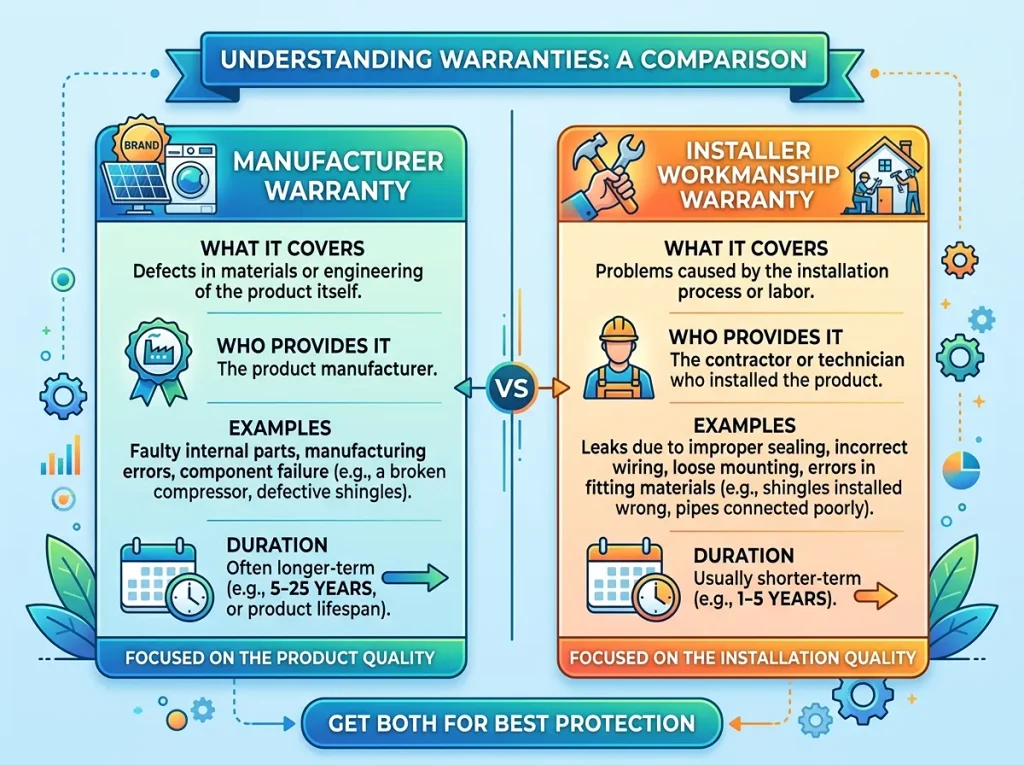
Here’s the first thing you need to understand: every window project involves two separate warranty types. They’re connected to the same project, but they cover completely different things.
Manufacturer Warranty (Product Warranty)
The manufacturer warranty protects the window materials themselves. It covers defects in the product:
- Glass — seal failure (fogging between panes), breakage due to manufacturing defects
- Frame materials — cracking, warping, or other defects in the vinyl, wood, fiberglass, or aluminum
- Hardware components — locks, hinges, cranks, and other moving parts
Manufacturer warranties typically last 10 to 25 years for standard coverage. Some offer “lifetime” coverage, but as we’ll discuss below, that doesn’t always mean what you think.
Installer/Workmanship Warranty (Labor Warranty)
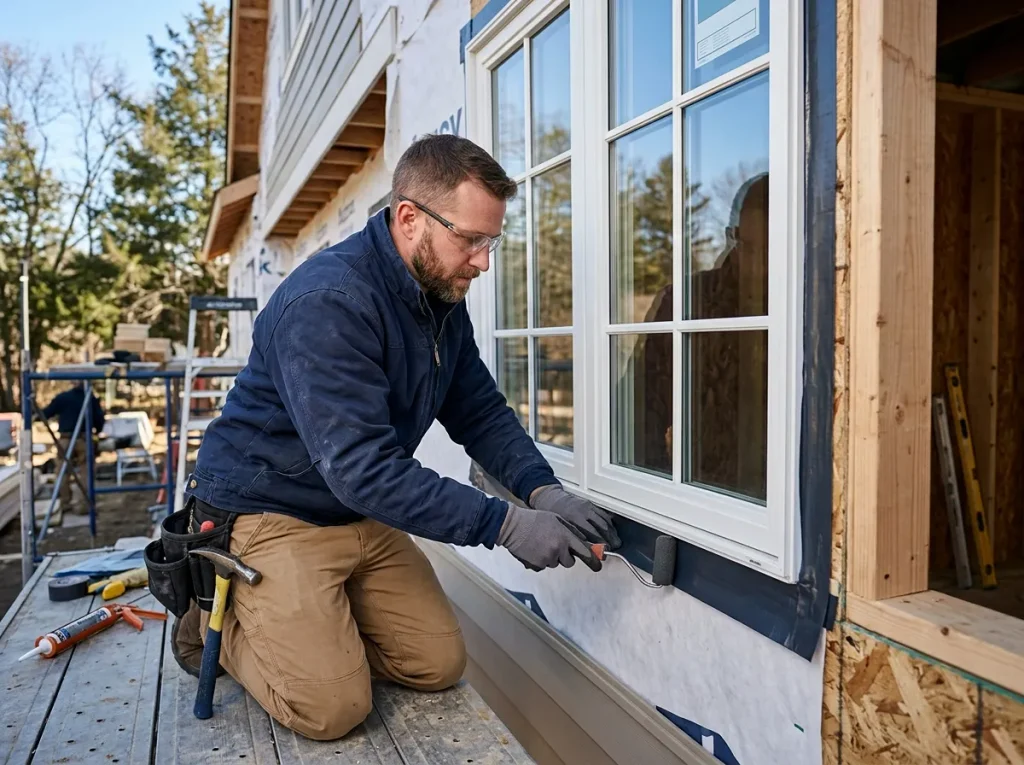
The workmanship warranty comes from the contractor and covers problems caused by the installation:
- Installation-related defects
- Water intrusion caused by improper sealing
- Misalignment, sticking, or operational issues
- Labor required to correct installation errors
Installer warranties are typically shorter than manufacturer warranties—often 1 to 10 years. Some contractors offer a 10-year guarantee covering labor defects, water infiltration, and air leaks.
The critical point: Manufacturer warranties cover the parts, and installer warranties cover the labor. You need both to be fully protected.
What a Strong Window Warranty Should Cover
A strong window warranty should cover glass, frame materials, hardware components, and professional installation—not just the product itself.
Here’s what to look for in each category:
Glass Coverage
- Seal failure — the most common glass issue, where moisture gets between panes causing fogging
- Thermal stress cracks — cracks caused by extreme temperature differences
- Breakage due to manufacturing defects
What to ask: “How long is the glass warranty? Does it cover seal failure for the full term?”
Frame and Material Coverage
- Cracking, warping, or splitting
- Peeling, blistering, or discoloration of finishes
- Structural defects
What to ask: “Is the frame warranty prorated over time, or is it full coverage for the entire term?”
Hardware Coverage
- Locks, handles, and operators
- Hinges and cranks
- Rollers and tracks
Hardware components typically carry 5–10 year mechanical warranties.
What to ask: “Are hardware components covered for parts AND labor, or just parts?”
Installation/Labor Coverage
- Correction of installation errors
- Replacement labor if a covered part fails
- Water infiltration and air leak repairs
What to ask: “Does the labor warranty cover the full cost of replacement, or just a portion?”
The “Lifetime” Warranty Trap
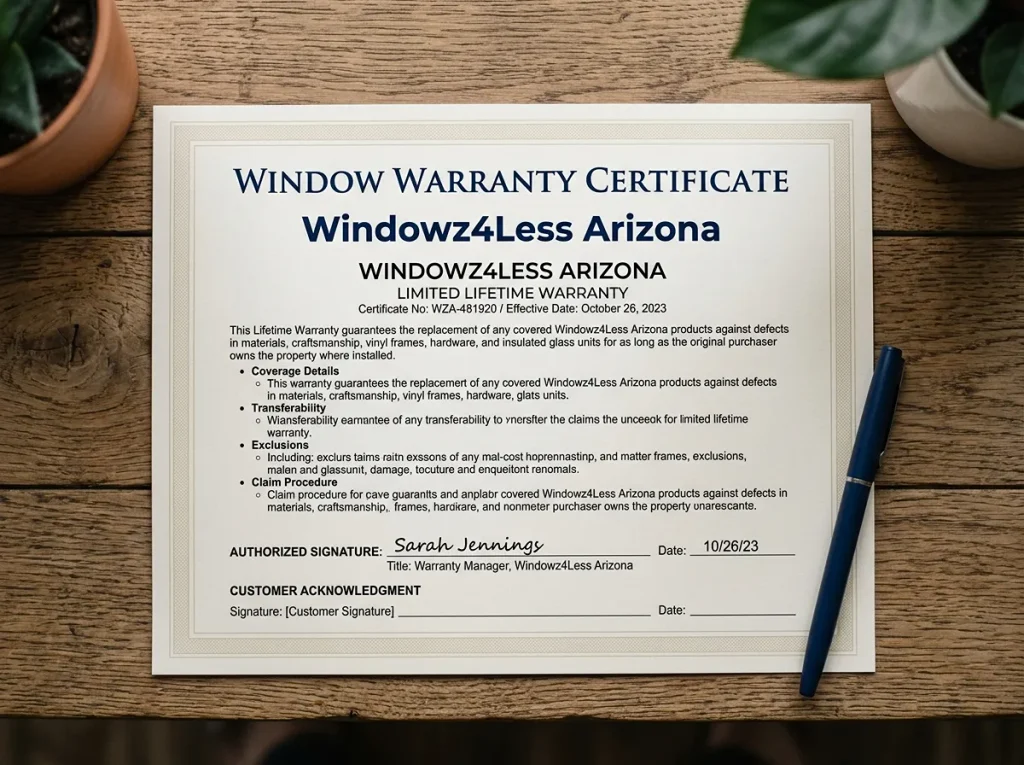
Here’s something most people don’t realize: “lifetime” doesn’t always mean forever.
Most “lifetime” warranties cover the replacement part—the vinyl or the glass—but do not cover the expensive labor required to install it. So if your window seal fails 15 years from now, you might get a free piece of glass but still have to pay hundreds of dollars to have it installed.
What to look for:
- Does the warranty cover both parts AND labor?
- Is the “lifetime” coverage transferable to a new homeowner if you sell your house?
- Are there maintenance requirements that could void the warranty if not followed?
Some “lifetime” warranties are excellent. Others are marketing fluff. Read the fine print.
Common Warranty Exclusions (What’s NOT Covered)
Even the best warranties have exclusions. Here are the most common:
DIY Installation
Most manufacturer warranties require professional installation to remain valid. DIY installation typically voids the warranty. If you install the windows yourself and something goes wrong, you’re on your own.
Improper Installation
Even if you hire a professional, the manufacturer’s warranty may be voided if the installation doesn’t follow their specifications. This is why choosing a manufacturer-approved installer matters.
Misuse or Abuse
Warranties don’t cover damage from:
- Impact (like a baseball through the window)
- Accidental damage
- Negligence or lack of maintenance
Coastal and High-Exposure Conditions
Some warranties exclude damage from salt spray, extreme weather, or other environmental factors. In Arizona, this is less of a concern, but it’s worth checking.
Normal Wear and Tear
Warranties cover defects, not normal aging. Weatherstripping that wears out after 15 years may not be covered.
What to ask: “What are the most common reasons claims are denied? What do I need to do to keep my warranty valid?”
Manufacturer vs. Installer: Who’s Responsible for What?
Understanding who’s responsible for what is critical when filing a claim.
| Issue | Who Covers It |
| Glass seal failure (fogging between panes) | Manufacturer — covers the replacement part |
| Frame cracking due to defect | Manufacturer — covers the replacement frame |
| Window doesn’t open/close smoothly due to installation error | Installer — covers the labor to fix it |
| Water leaking around the window due to poor sealing | Installer — covers the labor to reseal |
| Hardware malfunction | Manufacturer (parts) + Installer (labor to replace) |
The manufacturer covers defects in the product itself. The installer covers installation errors.
What to ask: “If a part fails under the manufacturer’s warranty, who pays for the labor to install the replacement?”
What to Look For in an Installer’s Warranty
Not all installer warranties are created equal. Here’s what to look for:
Length of Coverage
Installer labor warranties typically range from 1 to 10 years. A 10-year labor warranty is excellent. A 1-year warranty is the bare minimum.
What’s Covered
- Labor defects — will they come back and fix it?
- Water infiltration — will they address leaks caused by poor installation?
- Air leaks — will they seal gaps that were missed?
The Installer’s Credentials
The most important warranty question isn’t about the coverage—it’s about the installer.
Your installer must be:
- Licensed — in Arizona, any project over $1,000 requires a license from the Arizona Registrar of Contractors (ROC)
- Bonded — provides financial protection if the contractor fails to complete the work
- Insured — protects you from liability if someone is injured on your property
- Manufacturer-approved — ensures the installation meets the manufacturer’s specifications
Warning: If an uninsured installer is injured at your home, the liability falls on you. Never hire an installer who can’t provide proof of insurance.
Transferability: What Happens When You Sell Your Home?
If you sell your home, does the warranty transfer to the new owner?
Some warranties are transferable, some are not, and some are transferable for a fee.
What to look for:
- Unrestricted transferability — the warranty transfers automatically
- Transfer fee — some warranties charge a fee to transfer
- Time limit — some warranties are only transferable for a certain number of years
A transferable warranty can be a selling point when you list your home. It gives buyers confidence that the windows are protected.
Real-World Conditions: The “If/Then” Guide to Window Warranties
Here’s how to approach warranties based on your specific situation:
If you’re planning to sell your home within 5–10 years → Then prioritize warranties with unrestricted transferability. A transferable warranty adds value for potential buyers.
If you’re staying in your home for the long term → Then prioritize labor coverage and long-term parts coverage. You’ll be the one dealing with any issues that arise.
If you’re on a tight budget → Then don’t assume a cheaper window has a worse warranty. Some budget-friendly brands offer excellent warranties. Read the fine print.
If you’re in Arizona’s extreme heat → Then pay attention to UV and heat-related exclusions. Make sure your warranty covers damage from extreme temperatures and sun exposure.
If you’re replacing windows in a historic home → Then check if the warranty covers custom or non-standard sizes. Some warranties only apply to standard sizes.
If you’re considering DIY → Then understand that DIY installation typically voids manufacturer warranties. The money you “save” on installation could cost you thousands in voided coverage.
If you want to maximize your protection → Then choose a manufacturer-approved installer who offers a long labor warranty and uses high-quality materials.
The Regrets Homeowners Mention Most
After years of helping Arizona homeowners with window warranties, here are the most common regrets:
Mistake 1: Not reading the fine print
A lot of homeowners assume all warranties are the same. Then they’re shocked when they discover their “lifetime” warranty doesn’t cover labor, or that their installer’s warranty expired after one year. Read every word before you sign.
Mistake 2: Not asking about labor coverage
The most important warranty question is whether it covers both parts AND labor. Labor is the expensive part. A free replacement part is useless if you have to pay $300 to have it installed.
Mistake 3: Hiring an unlicensed installer
In Arizona, any window project over $1,000 requires a licensed contractor. Yet some homeowners hire unlicensed “handymen” to save money. If something goes wrong, they have no recourse.
Mistake 4: Not verifying insurance
If an uninsured installer is injured on your property, you could be liable. Always verify insurance before any work begins.
Mistake 5: Assuming DIY won’t void the warranty
Most manufacturer warranties require professional installation. DIY installation typically voids the warranty entirely. You save money on installation but lose all warranty protection.
Frequently Asked Questions
What’s the difference between a manufacturer warranty and an installer warranty?
A manufacturer warranty covers defects in the window product itself—glass, frame, and hardware. An installer (workmanship) warranty covers installation errors—water leaks, misalignment, sticking, and other issues caused by poor installation. You need both to be fully protected.
What does a window warranty typically cover?
A strong window warranty should cover glass, frame materials, hardware components, and professional installation. Standard coverage ranges from 10 to 25 years. Hardware components like locks and cranks typically carry 5–10 year warranties.
Does a “lifetime” warranty really last forever?
Not always. Most “lifetime” warranties cover the replacement part but do not cover the expensive labor to install it. Some “lifetime” warranties also exclude labor costs or include maintenance requirements that can limit coverage.
Can I install windows myself and keep the warranty?
Usually not. Most manufacturer warranties require professional installation. DIY installation typically voids the warranty, leaving you responsible for all repairs if something goes wrong.
How long do installer labor warranties last?
Installer labor warranties typically range from 1 to 10 years. Some contractors offer a 10-year guarantee covering labor defects, water infiltration, and air leaks. Always ask about the length and scope of the labor warranty before hiring.
What happens to my warranty if I sell my home?
It depends on whether the warranty is transferable. Some warranties transfer automatically to new owners. Others charge a transfer fee. Some are not transferable at all. Look for warranties with unrestricted transferability.
Does my installer need to be licensed in Arizona?
Yes. In Arizona, any project with a total cost of $1,000 or more requires a license from the Arizona Registrar of Contractors (ROC). Contractors performing window installation for hire must hold a valid Arizona ROC license. You can verify a license at azroc.gov.
What voids a window warranty?
Common warranty voiding actions include: DIY installation, improper installation that doesn’t follow manufacturer specs, misuse or abuse, lack of maintenance, and damage from extreme weather or environmental factors.
Should I choose the cheapest installer with a basic warranty?
Not unless you enjoy paying for repairs out of pocket. The most important warranty question is whether it covers both parts AND labor. A cheap installer with a 1-year labor warranty leaves you exposed if problems arise later.
What should I look for in a window warranty?
Look for coverage of glass, frame materials, hardware, and professional installation. Ask about labor coverage, transferability, exclusions, and the installer’s credentials (licensed, bonded, insured, and manufacturer-approved).
Why Choose Windowz4Less Arizona?
Windowz4Less Arizona understands that a great warranty is only as good as the company standing behind it.
- Licensed and insured — We hold a valid Arizona ROC license and carry full insurance
- Manufacturer-approved — We install to manufacturer specifications so your warranty stays intact
- Professional installation — Our team follows industry best practices for every installation
- Transparent warranties — We explain exactly what’s covered and what’s not—no surprises
- Labor warranty — We stand behind our work with a comprehensive labor warranty
- Local expertise — We know Arizona’s unique climate and install windows that perform in extreme heat
- Serving Mesa, Phoenix, and surrounding areas — We’re your local experts
Whether you’re exploring window installation or ready to book, we’re here to help.
Your Next Step: Protect Your Investment with the Right Warranty
Understanding window warranties doesn’t have to be complicated. Remember the two types, ask the right questions, and choose a licensed, insured, manufacturer-approved installer.
Contact Windowz4Less Arizona today for a free, no-obligation estimate. We’ll walk you through the window installation process, explain our warranties in plain English, and provide professional installation you can trust.